Ding Zi Yao: The Wearable Medicine and Incense Ornament
Ding zi yao (Ingot-shaped Medicine) is medicine pressed into small, hard, carved ingots: powdered herbs bound with glutinous rice paste and molded the way ink sticks are molded. These medicinal ingots are convenient to store and ready for immediate use, making them suitable for daily emergency care and long-distance military marches. Consequently, they were ideal for the Emperor to bestow as rewards on significant occasions. For example, in Qing dynasty China, in the Dragon Boat Festival, the emperor handed them out as gifts: garlic-shaped ingots, gourd-shaped ingots, bead ingots strung into bracelets that hung from the lapel.

They represent a unique fusion of art, medicine, ritual protocol, and the culture of incense. And the technique behind them, powder, binder, mold, dry, is the same craft behind today's wearable incense: the pendants and fragrance incense beads that traditional Chinese incense makers still shape by hand.
Now the full story, because it is a good one.
What a "ding" actually is
Traditional Chinese medicine has a classical family of dosage forms that pharmacies still recite: wan (pills), san (powders), gao (pastes), dan (pellets). The ding (the ingot) sits in that family as the compact one. Take dried herbs, grind them to powder, bind them with cooked glutinous rice paste, press the mass into a carved mold, and dry it slowly. What comes out is a small, dense, hard block that will not crumble in a sleeve, will not spoil quickly, and can be shaved, dissolved, ground against a stone, or simply worn.

That last property is the interesting one, and it separates the ding from every other form in the family. A decoction you drink on the spot. A powder you measure out. But an ingot is an object. It survives a pocket, a pouch, a journey. You can carry your pharmacy the way you carry a seal or a coin.
The Pharmacopoeia of the People's Republic of China still manufactures ding the old way. Zijin Ding (Purple Gold Ingot), the most famous medicinal ingot, is formulated from over twenty precious traditional Chinese medicinal ingredients, including cinnabar, realgar, musk, and agarwood. Medicinally, it serves to prevent epidemics and counteract the accumulation of toxins in the body. During the Qing Dynasty, emperors, empresses, and high-ranking nobles frequently used it as a fragrance, incorporating it into sachets, wristbands, or prayer beads worn on the person, to exude an aroma that signified their noble status.
If you look at the carved wooden ingot molds preserved in the Palace Museum, you are looking at the same logic as an ink cake mold: a design carved in reverse, a pressed impression, a clean edge. Scholars of Chinese material culture have long noted that ink making and medicine making shared workshops, techniques, and even customers. An ingot of medicine and a stick of ink were, physically, cousins.

The court that gave medicine as a gift
Here is where ding zi yao becomes something no other dosage form ever was.
The fifth lunar month was the dangerous one: heat rising, insects multiplying, disease moving through crowded rooms. Folk tradition named it the "month of poisons" and populated it with the "five venomous creatures" (snake, centipede, gecko, toad, scorpion). The Dragon Boat Festival (Duanwu端午) on the fifth day of that month, was the annual counterattack: hanging mugwort and calamus, drinking realgar wine, hanging herb sachets. The custom of wearing a mugwort tiger at the temple line or on the door, is recorded in the sixth-century Jing-chu Sui-shi-ji.
The Qing court industrialized this tradition. According to Palace Museum researcher, Guo Xueling, the Imperial Household Department's workshop ran a dedicated Ding zi yao workshop, ingot workshop, which produced a huge batch of medicinal ingots every year before Duanwu, and this continued from the Yongzheng reign all the way to the end of the dynasty. The product line included Zijin Ding, Chansu Ding, Ligong Ding, Yanshui Ding, Wanying Ding, and, our favorite, bishu xiangzhu, "heat-relief incense beads," which the scholar Zhu Jiajin described as "a bracelet that has been through artistic processing, hung from the lapel".
The court archives put real numbers on it. A 1737 workshop record orders, for the upcoming Duan-wu: 440 mixed-design scent pouches, 40 velvet charm pouches, 20 Sichuan pepper pouches, 750 plain satin pouches in red, yellow, and white, and assorted medicinal ingots, "made to the standard count, as usual". That phrase, to the standard count, as usual, is the sound of a court ritual running on an annual production quota.
Then the emperor gave them away. In 1729, on the first day of the fifth month, the Yongzheng Emperor granted the Minister of War, Yue Songqi, sixteen cases of Zijin Ding scent pouches along with a pair of osmanthus incense jars. In 1733, the same emperor sent ingots to two army camps on the frontier: each camp received five large sets, itemized in the archive as ten packets of Zijin Ding, ten of Chansu Ding, ten of Ligong Ding, twenty-six of Yanshui Ding, four melt-in-the-mouth ingots, and seventy strings of tasseled ingots. Those medicine shipped to soldiers at the edge of the empire, are counted by the packet and strung by the string.
And the shapes carried meaning. Court ingots came molded as various shapes. Garlic because folk belief held that its shape countered the five poisons; gourd because a gourd traps misfortune and sounds like the word for fortune; the Daoist master, Zhang Tianshi, because he subdues demons. The Manchu court added its own layer: cutting gourd-flower sachets to "trap" the five venomous creatures. An ingot was legible the way a coin is legible. Even the last emperor's household was still running on ingots.
Why wear it at all?
The historical logic of wearing aromatic medicine had a name: fang xiang bi hui, roughly, "aromatics to ward off foul airs." Chinese medicine classified many aromatics as opening, drying, and clarifying, and held that a room, or a body, that smelled of them was harder for the bad season to settle into. The fifth-month tradition put that belief literally on the body: pouches at the waist, beads at the lapel, ingots in the sleeve.
What the record does support is narrower and, we'd argue, more interesting: aromatics genuinely shape the air of a small personal space; scent is one of the strongest triggers of memory and mood; and the practice of marking the dangerous season with a deliberate scent ritual survived two thousand years because it did something for the people doing it, whatever a lab would measure.
So when we describe our own pieces, we stay inside that narrow truth. An herbal tablet or fragrance bead is scent, craft, and ritual. The Qing court could hand a soldier an ingot as both gift and remedy; we can only offer you the gift half. Fortunately, that is the half that survived best.
From imperial ingot to incense tablet: the same hands, the same craft
Strip the medicine out of ding zi yao and what remains is a manufacturing technique: aromatic plant materials, powdered; a starch binder, cooked; a carved mold; a slow dry. That technique did not die with the court. It migrated into the fragrance crafts, where it remains the core method of traditional Chinese incense, and it is the direct ancestor of three objects you can still buy and wear:
The incense pendant (xiang pai, 香牌). Finely powdered aromatic herbs and woods, bound and pressed into a carved plaque, drilled, and worn on a cord. This is ding zi yao's craft lineage almost unchanged, minus the pharmacy: the mold-work, the low-temperature drying, even the iconography of gourds and auspicious beasts carries over. Worn against the chest, a tablet warms with body heat and releases scent all day, which is precisely what the court's lapel-hung fragrance beads were doing in 1737.
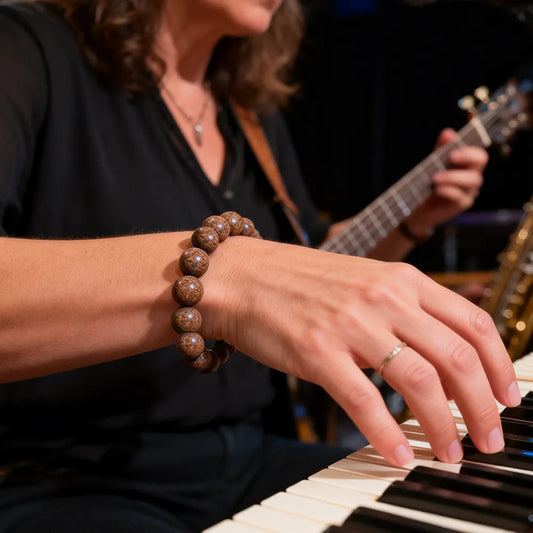
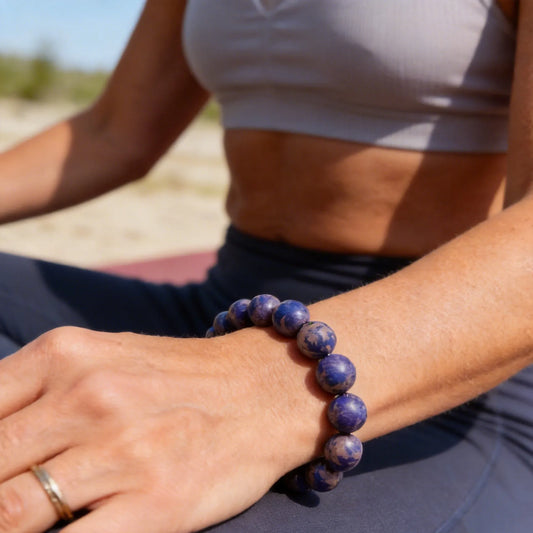
The incense bead bracelet (he xiang zhu, 合香珠). The same dough of blended aromatics, rolled and strung instead of pressed flat. Zhu Jiajin's description of the court's heat-relief beads as an artfully made bracelet for the lapel reads like a product sheet written 300 years early.
The scent sachet (xiang nang, 香囊). The soft-bodied cousin: the same ingredients loose inside silk, refreshed by refilling rather than re-carving. The 750 satin pouches in the 1737 workshop order were this object, in three colors of plain satin, at court scale.

Panda incense are built from herbs, woods, resins, roots, and leaves, with no artificial and no synthetic, because a thing you wear against your skin all day should clear a much higher bar than a thing you keep in a display case. That bar, not nostalgia, is the real standard of the craft.
If you want to hold the lineage in your hand: wear a incense pendant at the chest, string a incense bracelet at the wrist, or hang a scented sachet where the season collects. Same craft, three carriers.
Caring for a wearable herbal piece
A few practical notes, because these are natural materials, not plastics:
- Keep it dry. Humidity is the enemy of both the scent and the surface. The court's own registers show ingots stored covered against dust and damp.
- Expect the scent to soften, not die. Depending on the blend and the climate, a wearable piece carries a noticeable scent for several months, then settles into a close-range one. Scrubbing by fingers recharges it.
- Do not soak or scrub it. A dry cloth is the whole toolkit.
- Not food. Obvious for adults, worth saying around children and pets: these are scent objects, not candy.
- Sensitive skin? Wear it over a layer of clothing for the first week. Everything in it is plant-derived, but any concentrated aromatic deserves a polite introduction.
FAQ
Can you still buy real ding zi yao as medicine? In China, yes: Zijin Ding remains a listed prescription medicine, sold in pharmacies under a doctor's direction. Note what that means: it is a drug, with dosing rules, contraindications, and a pregnancy warning, not a perfume. Do not self-dose, and do not confuse the collectible with the remedy.
I've seen antique medicinal ingots for sale. Should I wear one? No. Antique ingots commonly contain mercury and arsenic minerals, and their provenance is often unverifiable. Treat them the way museums do: behind glass, admired, not worn.
Do your pendants and beads contain other materials? No. They are made from herbs, woods, resins, roots, and leaves, with no artificial and no synthetic.
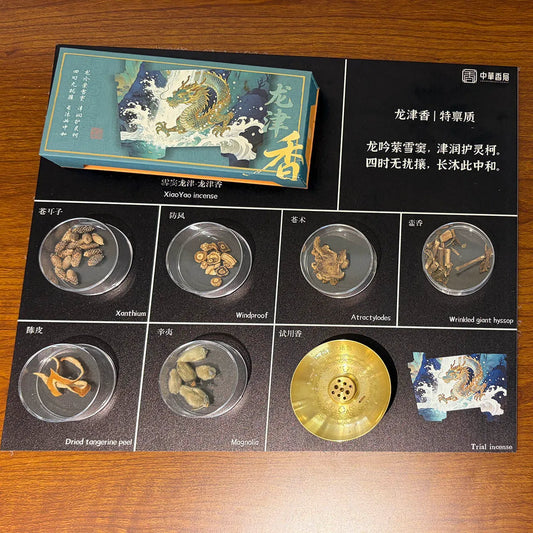
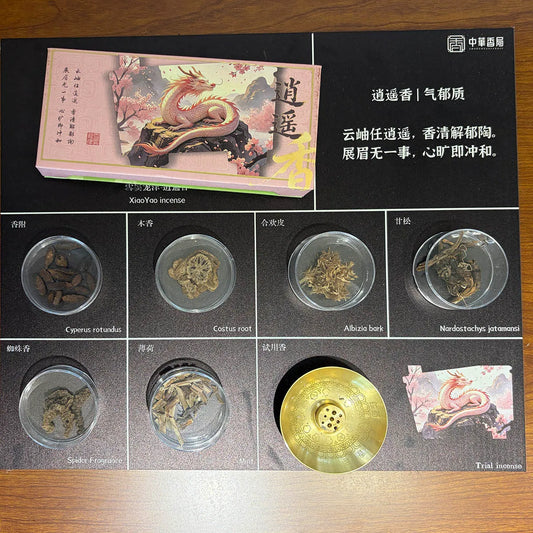
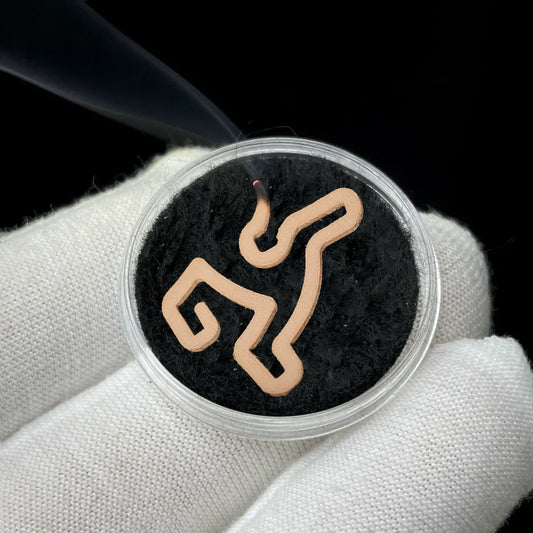
Is this the same craft as your incense sticks? Cousins, not twins. Sticks are rolled and burned; tablets and beads are pressed and worn. The shared core is the old he xiang method: blending multiple aromatic materials into one balanced scent. Our fall incense guide covers the burned side of the family.
What was the point of the garlic and gourd shapes? Legibility. Garlic countered the five poisons in folk belief, the gourd trapped misfortune and punned on fortune, and the Daoist master subdued demons. A shape was a sentence everyone at court could read without a label.