What Is Incense Jewelry? A Guide to Incense Beads Bracelets, Pendants & Earrings
If you like the idea of carrying a natural aroma with you but do not want to wear perfume or keep adding essential oil to a diffuser bracelet, you may have come across a less familiar category: incense jewelry.
The name can be confusing. Is it aromatherapy jewelry? Is it scented jewelry? Does it contain essential oils? And if the beads themselves are made from incense, how does that actually work?
Incense jewelry takes a different approach to wearable fragrance. Instead of applying fragrance to a finished piece of jewelry or adding essential oil to a porous bead, the aromatic incense material itself becomes part of the piece you wear.
For Panda Incense, that means traditional herbal incense is formed into wearable pieces such as incense bead bracelets and incense pendants. There is no need to burn the piece, add essential oils, or spray it with perfume.
This makes incense jewelry less about creating a strong fragrance cloud and more about keeping a small, personal aroma close to you throughout the day.
What Is Incense Jewelry?
Incense jewelry is a form of portable fragrance made from or incorporating aromatic incense materials. Depending on the design, it can be worn as a bracelet, pendant, or pair of earrings, or used as a small aromatic accessory in places such as a car, handbag, or wardrobe.
The term covers several forms, but the most relevant are incense bead bracelets, incense necklaces and incense earrings.
The defining feature is not simply that the finished jewelry smells good. It is where the aroma comes from.
With many forms of scented jewelry, the jewelry is made first and fragrance is added afterward. An essential-oil diffuser bracelet, for example, may use porous beads designed to absorb a few drops of oil.
With traditional herbal incense jewelry, the aromatic material is part of the object itself.
What Is Incense Jewelry Made From? Why It Makes a Different Kind of Jewelry?
Traditional incense jewelry is made from pure herbs, but not made from one particular plant or fragrance.
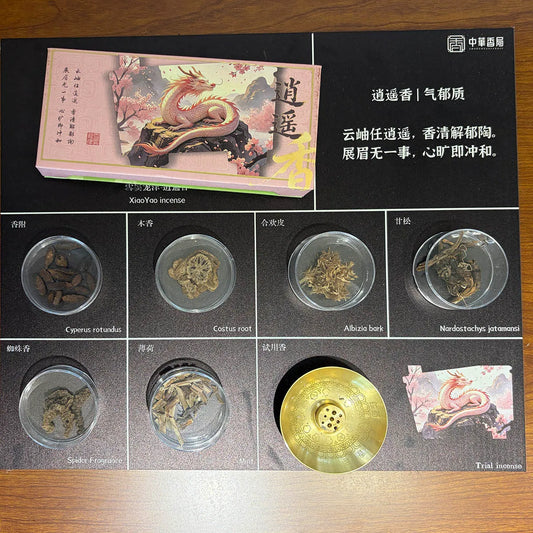
The idea behind incense jewelry is simple, but the material behind it is not. Across different incense traditions, aromatic materials have included woods, roots, leaves, seeds, flowers, spices, and resins. Different cultures developed distinct materials, preparation methods, and uses for incense.
Traditional Chinese incense has a long history of preparing mixtures from raw aromatic materials. Their historical incense culture describes kneaded incense mixtures were formed into small balls. Also, Japanese does it too.
An incense bead is not simply an ordinary bead with fragrance sprayed onto its surface. In a traditional incense formulation, aromatic materials are processed and combined as a material that can itself become the source of fragrance. That is the principle behind herbal incense beads.
Panda Incense approaches wearable incense from the same material-first perspective. The goal is not to take a conventional bracelet and make it smell good. It is to take traditional herbal incense material and give it a form that can be worn. That difference affects everything from the texture of the finished piece to the way its aroma is experienced.
It also means the product should be understood as something between two familiar categories: part incense, part jewelry. The jewelry makes the incense portable. The incense gives the jewelry its aromatic character.
What Are Incense Beads?
Incense beads are beads formed from aromatic incense materials.
Instead of using glass, plastic, or ordinary wood as the primary bead and adding a fragrance afterward, an incense bead is made from an incense formulation that has been processed into a stable form.
The exact ingredients and manufacturing process vary between formulas and makers. Traditional incense may involve aromatic woods, herbs, roots, resins, spices, and other botanical materials.
This also explains why natural incense beads may not look or smell exactly like conventional jewelry beads.
Natural botanical materials can have their own variation in color, texture, density, and aroma. The scent is also generally more nuanced than a strongly projected perfume.
For a consumer, the most useful question is therefore not simply:
“Are these beads scented?”
It is:
“What is actually creating the scent?”
If the answer is an essential oil added to the beads, you are looking at an oil-based diffuser format.
If the answer is fragrance applied to the surface, you are looking at scented jewelry.
If the bead itself is formed from an aromatic incense blend, you are looking at incense beads.
What Forms Can Incense Jewelry Take?
1. Incense beads bracelet
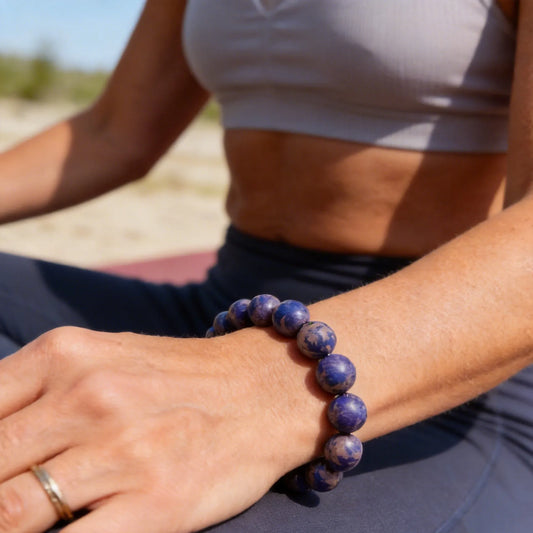
An incense bead bracelet is a bracelet made with aromatic incense beads. It combines the tactile quality of a beaded bracelet with the aroma of traditional incense.
The format is particularly suited to everyday wear because it does not require a separate burner or preparation. You put it on like a normal bracelet and carry the aromatic material with you.
It also creates a different relationship with fragrance. A perfume is usually something you deliberately apply. An incense bead bracelet can simply become part of what you are already wearing.
That can be useful during an ordinary workday when you enjoy fragrance but do not want to make an entire office, shared workspace, or room smell like incense.
It can also work well for quiet activities such as reading, journaling, meditation, or an evening routine where you want something subtle rather than another strong fragrance in the room.

Panda incense's bracelet is made from pure herbs, rather than ordinary beads treated with perfume or designed to be refilled with essential oil. The aroma is subtle and can be different because of different formulas.
2. Herbal Incense Pendant
An incense pendant is a compact piece of aromatic incense material designed to be carried, worn, or hung. While a pendant can be worn from a necklace, it does not have to stay around your neck.
Depending on its shape and attachment, the same type of incense piece can become a personal accessory, a bag charm, a car charm, or an aromatic hanging piece for a wardrobe.
| How you use it | Where it fits |
|---|---|
| Necklace pendant | Worn as a personal accessory |
| Bag charm | Hung from a handbag, backpack, or tote |
| Car charm | Hung inside a vehicle as a personal aromatic accessory |
| Wardrobe hanging piece | Placed or hung in a closet or wardrobe |
| Personal charm | Carried as a small aromatic or symbolic object |
The “aroma necklace” and “aromatherapy necklace” are commonly associated with fragrance-diffusing jewelry, particularly designs intended to hold essential oils, but Panda Incense's pendant is made from traditional herbal incense itself, describing it as an herbal incense pendant tells the consumer more about what the product actually is.

3. Incense Earrings
All are forms of wearable incense, but they suit different preferences. Check Panda Incense's earrings.
How Does Incense Jewelry Create Its Aroma?
There are three useful ways to understand wearable fragrance.
1. Applied fragrance
Perfume is applied to the body, clothing, or another surface.
The jewelry itself does not need to contain the fragrance.
2. Diffused fragrance
An absorbent material holds a separate fragrance source, such as essential oil.
The wearer adds or refreshes the fragrance as needed.
3. Incense-based fragrance
The aromatic material is part of the wearable object itself.
That is the principle behind traditional incense jewelry.
It explains why an incense bead bracelet can have its own aroma without requiring a bottle of essential oil. It also explains why the scent experience tends to be personal rather than room-filling. You are wearing a relatively small amount of aromatic material close to you rather than burning incense in a room or applying perfume over a larger area.
Does Incense Jewelry Use Essential Oils?
It does not have to. Traditional herbal incense jewelry can create its aroma from the incense material itself.
Panda's incense jewelry follows this approach. The incense beads and wearable incense pieces are made from traditional herbal incense material; they do not require essential oils, fragrance refills, or burning to experience their aroma.
This is one of the most important distinctions between incense jewelry and many products marketed as aromatherapy bracelets or diffuser jewelry.
FDA also cautions against assuming that something is safe simply because an ingredient is plant-derived or described as “natural.” The agency notes that plant-derived fragrance ingredients can still cause irritation or allergic reactions in some people.
For Panda, that is another reason to keep the product description precise: the incense is a wearable aromatic material, not a medical or therapeutic treatment.
We do not need to turn a traditional incense product into a collection of unsupported wellness claims.
Incense Jewelry vs. Aromatherapy Jewelry vs. Perfume
These products can all be used because someone enjoys fragrance, but they are not the same thing.
| Incense Jewelry | Essential-Oil Diffuser Jewelry | Perfume | |
|---|---|---|---|
| Primary aroma source | Incense material | Essential oil or another added fragrance | Perfume/fragrance formula |
| Essential oils required | No | Usually | No |
| Requires burning | No | No | No |
| Fragrance added after making the object | Not necessarily | Yes, when oil is added | Yes, applied separately |
| Worn as jewelry | Yes | Yes | No |
| Aroma experience | Close and personal | Close and personal | Can be more noticeable/projecting |
| Traditional incense materials | Yes | Usually not | No |
| Needs fragrance to be reapplied | Not necessarily | Usually | Usually |
The important point is not that one format is universally better.
They solve different problems.
Someone who enjoys perfume may want a fragrance that is clearly noticeable. Someone who enjoys essential oils may prefer the flexibility of changing oils. Someone who enjoys traditional incense but does not want to burn it every time may prefer incense jewelry.
Why Wear Incense Instead of Burning It?
Traditional incense is often associated with burning: a stick, cone, coil, or other form releases fragrance into a room.
That is still the right format when you want to scent a space.
But it is not always practical.
You may work in a shared office. You may live with someone who prefers a fragrance-free room. You may be staying in a hotel. You may be traveling. Or you may simply want to enjoy the character of an incense material without setting up a burner every time.
Incense doesn't always have to be burned. Wearable and portable incense offers a different option. They are shaped into small pieces designed to stay close to you, travel with you, or hang in a personal space. You do not burn it. You do not need a burner. And you do not need to scent an entire room.
The aroma stays associated with the piece you are wearing rather than becoming the fragrance of the surrounding space.
That makes incense jewelry particularly interesting for people who enjoy incense but want a more personal and portable format.
How to Wear Incense Jewelry in Everyday Life
Incense jewelry does not require a complicated ritual. Wearing incense is a sensory ritual. It can simply be part of an ordinary routine.
During Work
If you enjoy fragrance while working but do not want to burn incense at your desk, a bracelet gives you a much more personal way to keep an aromatic material nearby.
While Reading or Journaling
A familiar scent can become part of a repeated routine without requiring a separate fragrance product or a burning ritual.
During Meditation
Some people already associate incense with meditation. A wearable form allows the aromatic object to be present without introducing smoke or an open flame.
While Traveling
Traditional incense usually requires more than the incense itself: you need a suitable place to burn it and, depending on the form, a burner or holder.
A bracelet or pendant is considerably simpler to carry.
During an Evening Routine
You might put on the same bracelet while reading, stretching, journaling, or winding down for the evening.
How to Care for Incense Jewelry
Incense jewelry should be treated more like an aromatic material than conventional waterproof jewelry.
For Panda's incense jewelry:
- Keep it away from prolonged exposure to water.
- Avoid soaking the beads or pendant.
- Do not apply essential oils.
- Avoid spraying perfume directly onto the incense material.
- Keep it away from strong competing fragrances.
- Store it somewhere dry when you are not wearing it.
The reason is straightforward: the aromatic material is part of the product.
You do not want to treat it like a piece of glass jewelry that can simply be washed and exposed to whatever products happen to be nearby.
Natural incense materials can also change subtly with time, handling, temperature, and storage. A change in appearance or a gradual change in aroma does not automatically mean that the material is defective.
Choosing Your Incense Jewelry
If you are new to the category, start with the form that fits naturally into your existing routine.
Choose an incense bead bracelet if you like beaded jewelry, want something tactile on your wrist, or prefer a casual everyday accessory.
Choose an herbal incense pendant if you normally wear necklaces or prefer a more understated wearable form.
In either case, look beyond words such as natural, aroma, or aromatherapy on the product page.
Ask three practical questions:
- What is the aromatic material?
- Does the product require essential oils or refills?
- Is the aroma part of the material itself, or is it applied afterward?
Those questions will tell you much more about the product than the word “scented” alone.
What Incense Jewelry Is—and What It Isn't
Because this is still an unfamiliar category for many shoppers, a few distinctions are worth making.
It is not an essential-oil diffuser bracelet.
You do not need to add drops of essential oil to traditional herbal incense beads.
It is not perfume in jewelry form.
The aroma comes from the incense material rather than a perfume applied to the finished piece.
It does not need to be burned.
The jewelry is designed to be worn as-is.
It is not a medical or therapeutic device.
Panda's incense jewelry is offered as a wearable aromatic product and part of an everyday sensory ritual, not as a treatment for anxiety, insomnia, pain, or any other medical condition.
Frequently Asked Questions
Are incense beads made from incense?
In traditional incense bead products, the beads themselves are formed from an aromatic incense material or blend. They are not simply ordinary beads with perfume sprayed onto the surface.
Do incense beads need essential oils?
No. Traditional herbal incense beads can have their own aroma from the incense materials themselves. Panda incense do not require essential oils.
Do you burn an incense bead bracelet?
No. An incense bead bracelet is designed to be worn without burning.
Is an incense bracelet the same as an aromatherapy bracelet?
Not necessarily. Many aromatherapy or diffuser bracelets are designed to receive essential oils. An incense bead bracelet can instead derive its aroma from the incense material itself.
Can you wear incense jewelry every day?
It can be worn as an everyday accessory, provided you follow the care instructions for the particular material. Keep it dry and avoid exposing the incense material to perfume, oils, or strong competing fragrances.
How long does the scent of incense jewelry last?
There is no single lifespan that applies to every incense material. Aroma perception depends on the formulation, storage, handling, environment, and the individual wearer. You can scrub beads to deliver stronger scent. It is more accurate to think of natural incense aroma as something that gradually changes rather than as a fixed fragrance with a guaranteed duration.
Can incense jewelry get wet?
It is best to keep traditional incense jewelry dry and avoid soaking it. Water can affect the physical integrity and aromatic character of incense materials.
Is incense jewelry the same as scented jewelry?
No. Scented jewelry is a broad term that can include jewelry using perfume, fragrance oils, essential oils, or aromatic materials. Incense jewelry specifically refers to wearable pieces associated with incense materials.
A More Personal Way to Wear Incense
Incense has traditionally been used to scent spaces, accompany rituals, and engage the senses. Museums documenting incense traditions show how widely aromatic materials have been used across cultures and how varied the forms and materials can be.
Incense jewelry takes one part of that tradition—the aromatic material—and changes its format.
Instead of burning incense in a room, you can wear it.
Instead of adding essential oil to a bracelet, the incense itself can become the material of the bracelet.
Instead of treating fragrance as something that has to project outward, you can keep it closer to yourself.
For someone who enjoys traditional herbal incense but does not always have the right setting to burn it, that is the real appeal of wearable incense: the incense does not have to stay in the incense burner.
Sources & Further Reading
- U.S. Food & Drug Administration — Aromatherapy — regulatory context for aromatherapy, essential oils, intended use, and health claims.
- U.S. Food & Drug Administration — Fragrances in Cosmetics — fragrance, essential oils, labeling, and safety information.