Low Smoke Incense: How to Avoid Overwhelming Smoke
You may love the aroma of incense without loving the amount of smoke that comes with it.
When a room quickly fills with visible smoke, the fragrance can become difficult to enjoy. This is especially noticeable in a bedroom, apartment, home office, or other small space where there is less room for smoke to disperse.
That is why low smoke incense has become an important consideration for people who want the atmosphere of burning incense without an overwhelming cloud of smoke.
The important question is not whether an incense stick produces absolutely no smoke. Burning incense is a combustion process, so smoke and particulate matter are part of the process. The more useful question is whether the incense gives you the aromatic experience you want without producing more visible smoke than your space can comfortably handle.
Smoke and Fragrance Are Not the Same Thing
One of the easiest mistakes when choosing incense is assuming that stronger fragrance means more smoke.
They are not the same thing.
The aroma comes from the volatile and aromatic materials released during heating and combustion, while visible smoke is made up of particles and gases produced during the burning process. The relationship between the two depends on the formulation and how the incense burns.
This means an incense stick can have a noticeable fragrance without producing an equally noticeable amount of visible smoke.
For someone who dislikes incense with too much smoke, this distinction matters.
You are not necessarily looking for the weakest-smelling incense. You are looking for a better balance between aroma intensity and visible smoke.
Why Does Some Incense Produce More Smoke?
There is no single factor that determines how much smoke an incense stick will produce.
The formulation, materials, physical structure, combustion conditions, and burning environment can all affect emissions.
Laboratory studies have found substantial differences between incense products. One study testing six brands reported PM2.5 emission factors ranging from 0.4 to 44.5 mg per gram of incense burned. Another study testing 23 types of incense reported PM2.5 emission factors ranging from 5 to 56 mg per gram.
Those figures should not be treated as a universal ranking of today's incense products. The studies used specific samples and controlled experimental conditions.
What they do demonstrate is useful for consumers:
Different incense products can produce very different amounts of particulate emissions.
So the assumption that all incense burns alike is not supported by the available measurements.
What Actually Matters When Choosing Low Smoke Incense?
If heavy smoke is your main complaint, don't choose incense based only on words such as “premium,” “natural,” or “strong fragrance.”
Look at several characteristics together.
| What to check | Why it matters | What to look for |
|---|---|---|
| Smoke level | Determines how much visible smoke you experience | A clearly stated low-smoke burning characteristic |
| Fragrance intensity | A small room can make strong aromas feel much stronger | Moderate or subtle fragrance if you prefer a quieter atmosphere |
| Ingredients | Tells you what creates the aromatic profile | Clear information about woods, herbs, flowers, resins, or other materials |
| Burn time | Longer burning means a longer period of combustion | A burn time that matches your actual ritual |
| Stick size | Physical structure can affect burning behavior | Consistent, appropriately sized sticks |
| Usage instructions | Burning conditions affect the experience | Clear guidance on holder placement, ventilation, and use |
No single item in this table proves that an incense is low smoke. Together, however, they give you a much better basis for evaluating a product than marketing language alone.
A Simple Way to Evaluate Incense at Home
If you are comparing incense products, you can make a simple observation under consistent conditions.
This is not a laboratory emissions test. It is simply a practical way to compare your personal experience.
Use the same room and incense holder each time. Burn one stick rather than several, keep it away from strong drafts, and observe the incense from lighting through the end of the burn.
Pay attention to:
| What you observe | What it tells you |
| Large, persistent visible smoke | The incense may feel too smoky for your space |
| Fragrance appears gradually | The aroma may be easier to experience without overwhelming the room |
| Burnt smell dominates the fragrance | The burning experience may not suit your preference |
| Smoke spreads quickly through the room | Airflow and room size may be amplifying the experience |
| Aroma remains noticeable without a heavy smoke plume | This may be closer to the low-smoke experience you want |
Again, this is a consumer observation, not a measurement of PM2.5 or other emissions.
If a company claims a specific emission performance, laboratory testing is the appropriate way to substantiate that claim.
Why Low Smoke Matters More in Small Spaces
The same incense can feel completely different in different rooms.
A spacious living room with good air exchange may feel comfortable with an incense that seems too smoky in a small bedroom.
This is one reason low smoke incense for small spaces is a useful category to consider.
| Your space | What to prioritize |
| Small bedroom | Low smoke + softer fragrance |
| Studio apartment | Low smoke + moderate fragrance + manageable burn time |
| Home office | Subtle fragrance + controlled smoke |
| Meditation corner | Fragrance you find calming + controlled burning |
| Larger living room | Fragrance character may become more important than smoke alone |
The room itself does not change the incense. It changes how quickly you notice what the incense produces.
What Is Low Smoke Incense?
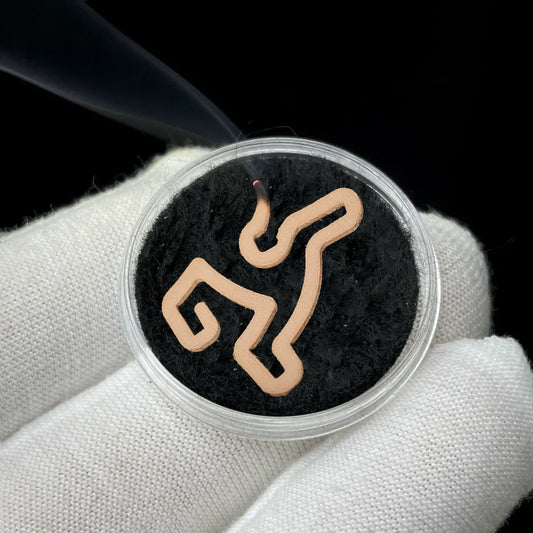
Low smoke incense generally refers to incense formulated or designed to produce a relatively small amount of visible smoke during normal burning.
It does not mean that the incense produces zero emissions.
Any burning incense involves combustion, so it is still important to use incense responsibly and maintain appropriate ventilation.
The U.S. Environmental Protection Agency lists burning incense among indoor activities that can contribute to particulate matter and recommends appropriate ventilation when burning incense indoors.
For everyday use, therefore, the more useful question is not:
“Does this incense make absolutely no smoke?”
Instead, ask:
“Does this incense provide the aroma I want without producing an excessive amount of visible smoke in my space?”
That is the practical reason many people look for low smoke incense sticks.
How to Avoid Overwhelming Smoke
Choosing the right incense is only part of the solution.
Your burning setup matters too.
Burn One Stick at a Time
If you are using incense in a small apartment or bedroom, start with one stick.
Burning several sticks at once increases the amount of combustion taking place. There is rarely a reason to start with multiple sticks simply because you want a stronger fragrance.
Give the Stick Enough Space
Use an appropriate incense holder and position it away from curtains, bedding, books, paper, furniture, and other combustible materials.
Pay Attention to Airflow
A strong fan or air-conditioning vent can change how smoke travels through a room.
You want enough ventilation to avoid allowing combustion products to accumulate, without placing the incense directly in a strong draft.
The U.S. Environmental Protection Agency specifically recommends adequate ventilation when burning incense indoors.
Don't Confuse Ventilation With More Smoke
Opening a window does not make a high-smoke incense a low-smoke incense.
Ventilation helps manage indoor pollutants; it does not change the inherent emission characteristics of the product.
That distinction is important.
What About “Natural” or Herbal Incense?
If you prefer natural incense sticks or herbal incense sticks, look beyond the word “natural.”
Ask what materials are actually being used.
Traditional incense formulations can incorporate aromatic woods, herbs, flowers and resins. Sandalwood, agarwood and frankincense each have distinctive aromatic characteristics, while blended herbal incense can combine several materials into a more complex profile.
But “natural” by itself does not prove that an incense produces less smoke.
The smoke characteristics of the finished product still matter.
This is another reason ingredient transparency and actual product information are more useful than broad marketing claims.
Low Smoke Incense for Relaxation
If you use incense during an evening routine, heavy smoke can become particularly distracting.
A more restrained incense experience can fit naturally into activities such as reading, tea, journaling, stretching, or simply stepping away from screens.
The incense does not need to be the main event.
It can simply mark the beginning of a quieter part of the day.
For this type of ritual, many people prefer woody, herbal, or resinous aromas. Sandalwood can provide a warm woody profile, while agarwood tends to be deeper and more resinous.
The right choice is the aroma you personally find pleasant.
Low Smoke Incense for Meditation
Incense has long been used in contemplative and ritual settings.
For a modern meditation practice, the practical role can be very simple: the familiar aroma becomes a sensory cue that helps separate meditation time from the rest of the day.
If you are looking for incense sticks for meditation, consider smoke level as well as fragrance.
A strong smoke plume can become a distraction. A more controlled burning experience may be easier to incorporate into a small meditation space.
One stick, a suitable holder, and appropriate ventilation are usually a better starting point than burning multiple sticks.
Low Smoke Incense for Bedtime
If incense is part of your nighttime routine, the bedroom environment deserves particular attention.
A bedroom is often smaller and less ventilated than a large living area, so heavy smoke can become noticeable quickly.
Rather than choosing the strongest fragrance available, consider:
- Low visible smoke
- A softer aromatic profile
- A manageable burn time
- Appropriate ventilation
- Burning the incense before settling into bed rather than leaving it unattended
Incense can be part of a bedtime ritual, but it should not be presented as a treatment for insomnia or other sleep conditions.
Why Panda Incense Uses a Low-Smoke Approach
At Panda Incens, low smoke is not limited to one collection or one fragrance.
Our incense sticks are made as low-smoke traditional herbal incense, reflecting our approach to bringing the tradition of Chinese medicinal-herbal incense into everyday rituals.
Traditional incense is not simply about making a room smell strong. Different herbs, woods, resins, and other aromatic materials contribute different characteristics to an incense formula. The goal is to create a balanced aromatic experience that can be appreciated gradually rather than overwhelming the space with heavy smoke.
This matters especially in modern indoor settings.
A small bedroom, apartment, meditation corner, or home office has very different requirements from a large ceremonial space. For everyday use, we believe incense should complement the environment rather than dominate it.
That is why low smoke is a characteristic across Panda Incense incense sticks.
If you are specifically looking for low smoke herbal incense, you can explore the Sleep & Relaxation for incense selected around evening rituals or browse our full range of Incense Sticks., like Shan hai Guardians.
A Better Way to Choose Incense
If heavy smoke is what made you stop enjoying incense, don't start by searching for the strongest fragrance.
Start with the experience you actually want.
| If your priority is... | Start by looking for... |
| Less overwhelming smoke | Low smoke incense |
| A small apartment | Low smoke + moderate fragrance |
| Meditation | Controlled smoke + a fragrance you enjoy |
| Evening relaxation | Softer herbal or woody aroma |
| Natural fragrance | Transparent botanical ingredient information |
| Comparing products | Consistent burning conditions and clear product information |
There is no universal “best incense.”
The better choice is the product that fits your room, your tolerance for visible smoke, your preferred aroma, and the amount of time you actually want to spend burning incense.
Final Thoughts
You do not have to choose between enjoying incense and tolerating a room full of smoke.
If heavy smoke is the problem, look specifically for low smoke incense, but evaluate more than the label.
Consider the formulation, ingredients, fragrance intensity, burn time, and how the incense behaves in your actual space.
Most importantly, remember that fragrance and visible smoke are not the same thing.
For a small apartment, bedroom, meditation corner, or evening ritual, the best incense may not be the strongest one. It may be the one that gives you enough aroma to create the atmosphere you want without making smoke the most noticeable part of the experience.