Best Incense Sticks for Meditation: Natural & Herbal Options
Why Use Incense During Meditation?
Meditation does not require incense.
But for some people, a familiar scent can become part of the ritual that marks the beginning of a meditation session.
You light the incense, put your phone aside, settle into your space, and begin. Over time, the same sequence can become a simple sensory cue for moving from everyday activity into a quieter period of attention.
That is a different idea from saying that incense itself causes relaxation or improves meditation. The experience is personal, and the role of incense is primarily ritual, sensory, and environmental.
For that reason, the best incense for meditation is rarely the incense with the strongest fragrance.
It is usually the one that gives you an aroma you enjoy without becoming the focus of your attention.
What Makes an Incense Stick Good for Meditation?
There are several things worth considering before choosing an incense stick for meditation.
| What to consider | Why it matters during meditation |
|---|---|
| Smoke level | Heavy visible smoke can become distracting, particularly in a small room |
| Fragrance intensity | A very strong aroma may dominate the sensory experience |
| Aromatic profile | Woody, herbal, resinous, and floral notes create different atmospheres |
| Burn time | A suitable duration can fit naturally into your meditation session |
| Ingredients | Helps you understand what creates the fragrance |
| Room size | A small meditation space can make smoke and fragrance feel more intense |
| Your preference | Meditation is personal; an aroma you dislike will not become better because it is traditionally used |
This is why “best incense for meditation” does not have one universal answer.
The better question is:
Which incense gives me the right amount of aroma, smoke, and ritual for the way I meditate?
Why Low-Smoke Incense Matters for Meditation
This is particularly important for indoor meditation.
Burning incense is a combustion process, and combustion produces particulate matter. The U.S. Environmental Protection Agency lists incense among indoor combustion sources and recommends adequate ventilation when burning incense indoors.
Research has also shown that different incense products can produce substantially different particle emissions. One study measuring six incense brands found PM2.5 emission factors ranging from 0.4 to 44.5 mg per gram of incense burned, with large differences between products.
Another controlled study found that particle and VOC concentrations from incense burning changed over time and were strongly influenced by ventilation and interactions with indoor surfaces.
The practical takeaway is simple:
Low smoke is not just a marketing preference. It can change how comfortable an incense ritual feels in an indoor meditation space.
If visible smoke becomes the thing you notice most, it is difficult for the incense to remain a quiet part of the ritual.
The Best Incense for Meditation Is Not Necessarily the Strongest
A common mistake is choosing incense according to fragrance strength.
A stronger fragrance is not automatically better for meditation.
Imagine sitting quietly for twenty minutes while a very intense fragrance continuously dominates the room. Even if you initially like the scent, it can become the most noticeable thing in the environment.
For meditation, a more useful balance may be:
recognizable aroma + controlled smoke + moderate intensity
That does not mean every meditator should choose a subtle scent. Some people prefer a deeper, more distinctive aroma.
The important thing is whether the fragrance supports your ritual rather than competing with it.
Natural Incense for Meditation: What Does “Natural” Actually Mean?
If you are searching for natural incense for meditation, don't stop at the word “natural.”
Look at what the product is actually made from.
Natural aromatic materials can include woods, herbs, resins, flowers, and other botanical ingredients. Different materials contribute different aromatic characteristics, and a finished incense formula may contain several ingredients rather than one single material.
A useful product description should help you understand:
- What the main aromatic materials are
- Whether the incense is a single-material or blended formula
- How long it burns
- What its fragrance profile is
- How much smoke to expect
- How it should be burned
“Natural” alone does not establish that an incense is low smoke.
Likewise, “low smoke” alone does not tell you what the incense smells like.
For an informed choice, you need both pieces of information.
Herbal Incense for Meditation
Herbal incense for meditation can be especially interesting if you prefer a more layered botanical fragrance.
Traditional Chinese incense culture includes formulas made from combinations of aromatic woods, herbs, resins, and other botanical materials. Rather than focusing on one dominant perfume-like note, a blended herbal incense can develop different aromatic characteristics as it burns.
This makes the formula itself part of the experience.
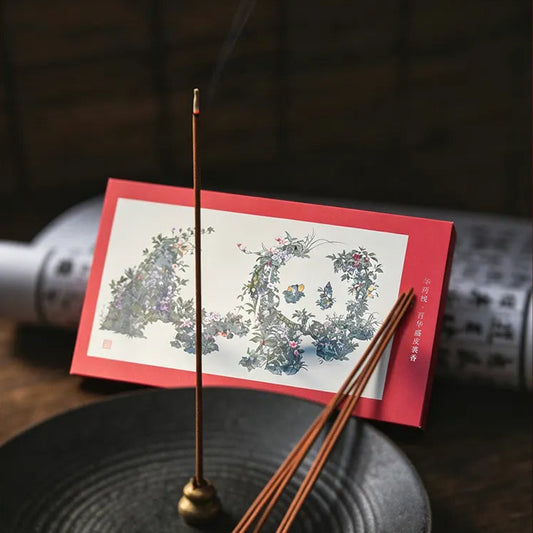
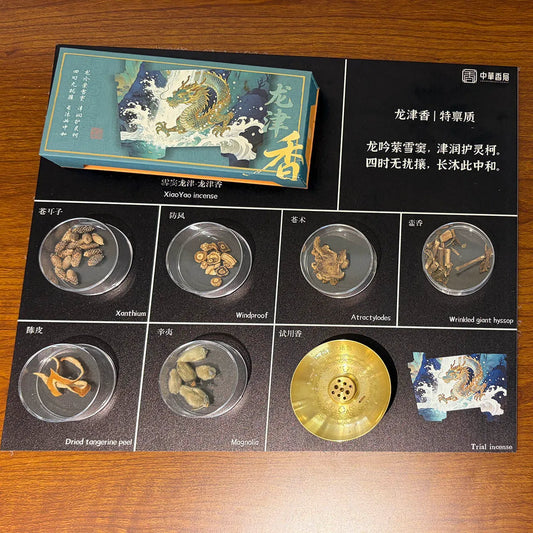
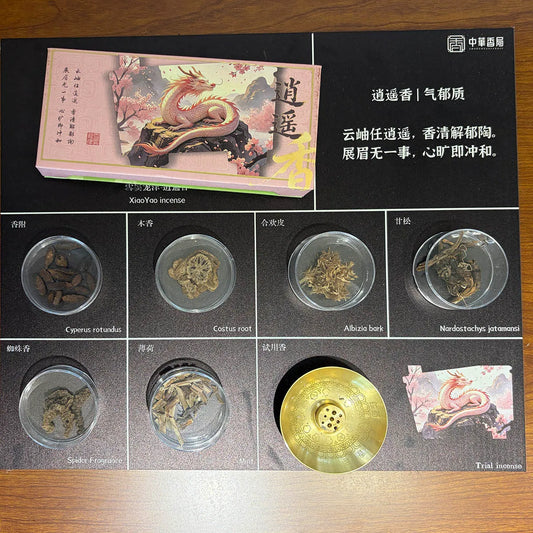
At Panda Incense, our incense sticks are traditional herbal incense with a low-smoke burning profile. The different collections use different aromatic formulas, so the right choice depends on the fragrance character you personally prefer.
This is also why we don't consider one particular scent to be “the best” meditation incense for everyone.
Sandalwood, Agarwood, or Herbal Incense: Which Is Best?
Three common directions for meditation incense are sandalwood, agarwood, and herbal blends.
They are not interchangeable.
| Incense type | General aromatic character | Consider it if you prefer... |
|---|---|---|
| Sandalwood incense sticks | Warm, smooth, woody | A softer, familiar woody atmosphere |
| Agarwood incense sticks | Deep, complex, woody-resinous | A richer and more distinctive aroma |
| Herbal incense sticks | Layered botanical character | Multiple aromatic notes and traditional herbal formulas |
| Frankincense incense sticks | Resinous, distinctive | A more pronounced resinous profile |
These descriptions are intentionally broad.
Natural aromatic materials can vary according to source, processing, formulation, and quality. Your personal response to the aroma matters more than a generic ranking.
If you already know that you enjoy sandalwood, starting with sandalwood incense is sensible.
If you prefer deeper resinous aromas, agarwood may be more interesting.
If you want a more complex botanical profile, an herbal formula may be the better starting point.
Best Incense for Different Types of Meditation
“Meditation” covers many different practices and settings.
The incense that works for a short mindfulness session may not be the same one you want for a longer evening practice.
| Meditation setting | What to prioritize | Incense direction to explore |
|---|---|---|
| Mindfulness | Controlled smoke + familiar aroma | Subtle herbal or sandalwood |
| Self-reflection | Aroma you personally associate with quiet time | Woody, herbal, or resinous |
| Breath-focused meditation | Minimal sensory distraction | Low smoke + moderate fragrance |
| Longer meditation | Manageable burn time | A formula with a steady, comfortable aroma |
| Yoga and meditation | Low smoke + fragrance that doesn't dominate movement | Herbal, woody, or softer resinous profiles |
| Evening meditation | Gentle atmosphere | Sandalwood or softer herbal profiles |
| Meditation at home | Low smoke + appropriate intensity for the room | Choose according to room size |
These are starting points rather than rules.
If a particular aroma helps you enjoy your practice, that matters more than whether a product is traditionally associated with meditation.
Incense for Mindfulness: Keep the Ritual Simple
Mindfulness does not require an elaborate incense setup.
In fact, adding too many elements can make the ritual feel more complicated rather than more focused.
A simple sequence can be enough:
- Choose one incense stick.
- Place it securely in a suitable holder.
- Light it and allow it to establish its aroma.
- Put away distractions such as your phone.
- Begin your practice.
- Extinguish the incense when you are finished.
The incense becomes a boundary between ordinary activity and the practice itself.
You don't need to make the room intensely fragrant.
You don't need multiple incense sticks.
And you don't need to burn incense for the entire day.
The ritual can be short.
Incense for Self-Reflection
A more natural concept is incense for self-reflection or incense for quiet reflection, sitting quietly and examining their thoughts.
Self-reflection can be as simple as sitting with a cup of tea, writing in a journal, thinking through a decision, or spending a few minutes without digital distractions.
For this type of ritual, the incense does not need to perform a function.
It simply helps establish the environment.
A familiar aroma can become associated with that particular time of day or activity.
Calming Incense for Meditation: What Should You Actually Look For?
The phrase calming incense for meditation is common in product searches, but “calming” can mean different things to different people.
Rather than treating “calming” as a measurable property of a particular incense, look at the characteristics that make the fragrance feel comfortable to you.
For example:
| If you find this distracting... | You may prefer... |
|---|---|
| Heavy visible smoke | Low-smoke incense |
| Very sweet fragrance | Woody or herbal profiles |
| Sharp fragrance | Softer, layered aromas |
| Fragrance that fills the room quickly | Moderate fragrance intensity |
| A scent that becomes repetitive | A more complex botanical blend |
This is a much more useful way to interpret “calming incense.”
You are choosing an environment that feels calm to you, rather than assuming that a particular ingredient has a universal psychological effect.
Incense for Yoga and Meditation
Yoga and meditation are often practiced together, but the environment needs can be slightly different.
During movement, you may notice fragrance and smoke differently because you are changing position and breathing more actively.
That makes low smoke incense for yoga and meditation particularly practical for an indoor space.
A good starting setup is simple:
one incense stick + suitable holder + adequate ventilation + enough room around the practice area
Avoid placing the incense where smoke will move directly into your face or across your exercise area.
And never place a burning incense stick where it could be knocked over during movement.
The incense should remain part of the environment, not become something you have to think about while practicing.
Incense for Meditation at Home
Home meditation creates a different challenge from meditation in a large studio.
Your meditation area might be:
- A bedroom corner
- A small home office
- A studio apartment
- A reading area
- A dedicated meditation room
In smaller spaces, smoke and fragrance can become noticeable more quickly.
The EPA notes that indoor particulate levels are influenced by factors including ventilation, filtration, and indoor sources, and recommends source control and ventilation as key strategies for improving indoor air quality.
That means your incense choice and your room setup should work together.
A simple home setup
Use one stick.
Place it in a stable, heat-resistant holder.
Keep it away from curtains, bedding, books, paper, and other combustible materials.
Keep it away from strong air-conditioning or fan airflow.
Provide appropriate ventilation.
And never leave burning incense unattended.
If the smoke feels overwhelming, don't simply open a window and continue burning the same amount of incense.
First ask:
Am I burning too much for this room?
Reducing the source is often more useful than trying to compensate for it afterward.
How Long Should You Burn Incense During Meditation?
There is no universal meditation length that requires a particular incense burn time.
Instead, choose a burn time that fits your routine.
If your meditation is short, you may not need a long-burning incense stick.
If you practice for longer, a longer-burning format may make more sense.
The important point is not to treat the end of the incense as a timer you must obey.
You can end your meditation whenever your practice ends.
If you need to extinguish the incense earlier, do so safely.
The ritual should fit your meditation—not the other way around.
A Simple Way to Find Your Best Meditation Incense
If you're trying several incense sticks, don't judge them only by the first few seconds after lighting.
Use a consistent setup.
| Keep consistent | Compare |
|---|---|
| Same room | Smoke level |
| Same incense holder | Fragrance intensity |
| One stick | Aroma character |
| Similar ventilation | How quickly the fragrance fills the room |
| Similar session length | How comfortable the scent remains |
Then ask yourself four questions:
- Is the smoke distracting?
- Is the fragrance too strong?
- Do I actually enjoy the aroma?
- Does the incense fit naturally into my meditation routine?
These questions are more useful than asking whether one incense is objectively “the best.”
Why Panda Incense Uses Low-Smoke Traditional Herbal Incense
At Panda Incense, low smoke is a characteristic across our incense sticks, not a feature limited to one collection.
Our incense sticks are rooted in the tradition of Chinese herbal incense, using botanical aromatic materials to create different fragrance profiles.
The purpose is not simply to make the strongest possible scent.
For modern indoor rituals, we believe incense should work with the space rather than overwhelm it. That is particularly relevant for meditation at home, where a heavy smoke plume can become more noticeable in a bedroom, apartment, or small meditation corner.
Different Panda Incense formulas have different aromatic personalities.
You may prefer the warm woody character of sandalwood, the deeper resinous character of agarwood, or the layered botanical character of one of our herbal formulas.
The fragrance changes from collection to collection.
The low-smoke approach remains consistent across our incense sticks.
Shan Hai Guardians is one collection within that broader range. Its traditional herbal formula can fit naturally into meditation, mindfulness, tea, reading, self-reflection, and other quiet rituals.
Explore the Incense Sticks collection to compare different formulas, or browse Focus & Clarit, Grounding & Balance, and Sleep & Relaxation according to the type of ritual you want to create.
Should You Burn Incense Every Time You Meditate?
No. Incense is an optional part of a meditation ritual. Some days you may want fragrance. Other days you may prefer a completely neutral environment.
You can also use the same incense only occasionally so that the aroma remains associated with a particular ritual rather than becoming part of the background of everyday life.
The goal is not to make meditation dependent on incense.
The goal is to use incense intentionally when it adds something meaningful to your practice.
Frequently Asked Questions
What is the best incense for meditation?
There is no single best incense for everyone. Look for an incense with a fragrance you enjoy, a smoke level that suits your space, and a burn time that fits your meditation routine. Sandalwood, agarwood, herbal, and frankincense formulas can all offer different aromatic experiences.
Is natural incense better for meditation?
“Natural” does not automatically mean better for meditation or lower smoke. Check the actual ingredients, fragrance profile, burn characteristics, and product information rather than relying on the word “natural” alone.
Is herbal incense good for meditation?
Herbal incense can be a good choice if you enjoy layered botanical aromas. Traditional herbal formulas can combine woods, herbs, resins, and other aromatic materials to create a more complex fragrance.
What incense is good for mindfulness?
Choose an aroma that you find pleasant and not distracting. For many people, a moderate fragrance and low-smoke burning profile can make more sense than a very strong scent.
Can I use incense for yoga and meditation?
Yes. If you burn incense during yoga, place it securely away from the practice area and any location where movement could knock it over. A low-smoke incense can also be more practical for indoor practice.
What is the best incense for meditation at home?
For home meditation, consider the size of your room as well as the fragrance. A low-smoke incense with moderate fragrance intensity may be easier to manage in a bedroom, apartment, or small meditation corner.
Can incense help with self-reflection?
Incense can be incorporated into a self-reflection ritual, but it should not be presented as a treatment or guaranteed psychological aid. Its role can simply be to establish a familiar sensory environment for journaling, quiet thinking, or personal reflection.
Is sandalwood good for meditation?
Sandalwood is a popular choice for meditation because of its warm, woody aromatic character. Whether it is the right choice for you depends on your personal fragrance preference.
Is agarwood good for meditation?
Agarwood has a deeper and more complex woody-resinous character. It can suit people who prefer richer aromatic profiles, although the character varies between different materials and formulas.
Is low-smoke incense completely smokeless?
No. “Low smoke” should not be interpreted as “no combustion” or “zero emissions.” Burning incense is a combustion process. The practical distinction is the amount of visible smoke and the overall burning characteristics of a particular product.
Final Thoughts
The best incense sticks for meditation are not necessarily the strongest, most expensive, or most heavily fragranced.
They are the ones that fit your practice and your space.
For meditation at home, pay attention to smoke level, fragrance intensity, room size, burn time, and the materials used.
If you prefer botanical aromas, explore herbal incense for meditation. If you enjoy warm woody notes, sandalwood may be a natural starting point. If you prefer deeper resinous aromas, consider agarwood. For yoga and meditation, a low-smoke profile can help keep the incense from becoming a distraction.
And if your meditation practice includes mindfulness, journaling, or self-reflection, remember that incense does not have to “do” anything.
Sometimes its most useful role is simply to mark the beginning of a few quiet minutes that belong to you.
Panda Incense brings that idea into its incense sticks through traditional herbal formulas and a low-smoke burning approach—giving you different aromatic paths for meditation, mindfulness, reflection, and everyday rituals.