Best Incense Sticks for Sleep: How to Choose the Right Scent
The best incense for sleep is not necessarily the incense that smells the most relaxing.
In fact, a fragrance can be pleasant and still be wrong for bedtime. Too sweet, too smoky, too strong, and suddenly the thing you lit to help you wind down is the thing you keep noticing.
That is why choosing incense sticks for sleep is less about finding a magical "sleep scent" and more about finding an aroma that fits the last part of your evening.
For most people, warm woods, softer herbal blends and restrained resins are a better starting point than strong, perfume-heavy fragrances.
And there is one rule worth remembering:
Burn incense before sleep—not while you're asleep.
Why is incense the part of a evening ritual?
Incense has a long history in personal and spiritual practices around the world.
Today, many people use it simply as a way to create atmosphere.
The appeal is not that incense is a solution for sleep problems. It is not a replacement for healthy sleep habits.
Instead, incense can become a small sensory signal.
The same way:
- Morning coffee signals the beginning of the day
- A favorite playlist signals exercise time
- A specific place signals relaxation
A familiar evening scent can become connected with slowing down.
What makes a good sleep incense?
A good bedtime incense has a different job from incense used to scent a living room or energize a morning ritual.
You want something that can sit quietly in the background while you read, stretch, journal or simply finish the day.
| Look for | Why it matters |
|---|---|
| Soft, steady aroma | Strong fragrance can become distracting in a small bedroom. |
| Low or moderate smoke | You will usually be using it in a smaller, enclosed space. |
| Natural, recognizable materials | Wood, herbs and resins tend to feel different from heavily perfumed blends. |
| A burn time that fits your routine | The incense should mark your wind-down period, not continue through the night. |
| A scent you genuinely like | There is no universally relaxing fragrance. |
That last point matters more than the internet's lists of "best sleep scents."
One Reddit user with significant scent sensitivity, for example, found sandalwood and frankincense comfortable while lavender incense was a problem—even though lavender is one of the most commonly recommended sleep aromas.
A scent can be traditionally associated with relaxation and still be the wrong scent for you.
The best incense scents for sleep
1. Sandalwood — warm, quiet and easy to live with
If you want one place to start, sandalwood is probably the most versatile choice.
Good sandalwood has a warm, smooth, woody character. It is not trying to fill the room with sweetness or announce itself from across the house.
That makes it particularly suitable for:
- reading before bed
- meditation
- quiet reflection
- winding down after work
- a regular evening ritual
Sandalwood also has an advantage for people who find floral fragrances too obvious. In Reddit discussions, users frequently describe natural sandalwood as warm, subtle and preferable to heavily perfumed incense.
If your goal is to create a scent that you can use almost every night without getting tired of it, sandalwood is a strong starting point.
2. Lavender — familiar, but not automatically better
Lavender is probably the first scent most people think of when they hear "incense for sleep."
It makes sense as a starting point if you already enjoy lavender's soft floral-herbal character.
But don't choose it simply because every sleep guide recommends it.
Lavender incense can smell very different from lavender oil or dried lavender. Some blends lean soft and botanical; others can smell smoky, perfumed or surprisingly sharp once burned. Incense users have reported both experiences.
So the useful question isn't: "Is lavender good for sleep?"
It is: "Do I actually enjoy lavender when it is burned?"
If yes, it can be an excellent bedtime scent. If not, there is no reason to force it.
3. Frankincense — for a slower evening
Frankincense has a deeper personality.
It is resinous, warm and slightly mysterious, which makes it particularly suited to the part of the evening when you want to stop doing things rather than start something new.
Try it with:
- evening meditation
- prayer or reflection
- journaling
- quiet reading
- a slower nighttime ritual
It is also a good example of why "relaxing" does not have to mean "floral."
For some people, a dry resinous aroma feels considerably calmer than a sweet bedroom fragrance. Reddit users regularly mention frankincense and sandalwood among scents they personally find gentler or more comfortable.
4. Herbal blended incense — when you want something less predictable
Traditional herbal incense is worth considering if you don't particularly enjoy single-note fragrances.
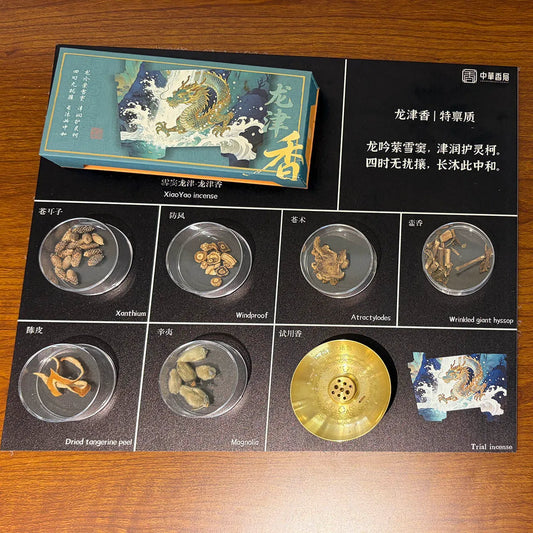
Instead of trying to reproduce the smell of lavender or sandalwood alone, an herbal formula can combine other ingredients, like woods, roots, flowers, and resins, with them (they can be the core role of formulas).
The result can be earthy, woody, slightly sweet, dry or medicinal depending on the formula.
That complexity can be particularly appealing at night because the aroma changes gradually instead of smelling like a room spray.
A good evening blend should still feel easy to live with in a bedroom.
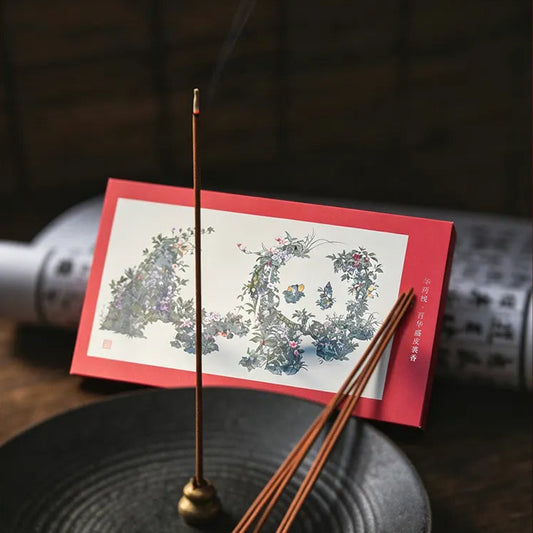
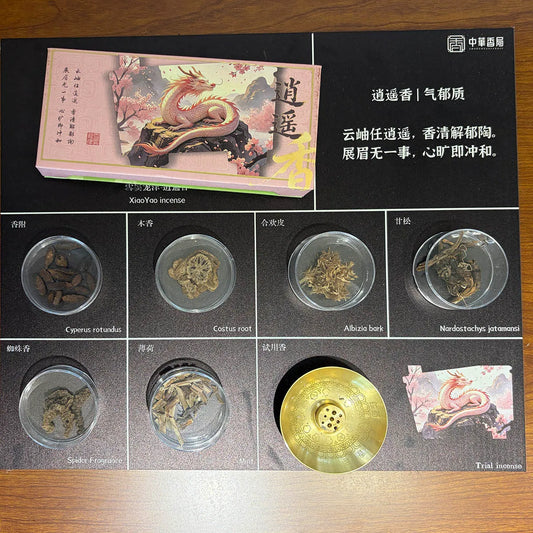
For a quieter evening ritual → Moonlit Rest, Piqiu incense sticks or Xiao Yao incense sticks.
Which incense is best for your kind of evening?
Instead of ranking scents from #1 to #10, choose according to the atmosphere you actually want.
| You want your evening to feel... | Try... |
| Warm and grounded | Sandalwood or herbal blends |
| Soft and floral | Lavender or herbal blends |
| Quiet and contemplative | Frankincense or herbal blends |
| Earthy and herbal | Traditional herbal blends |
| Clean and woody | Hinoki, light woods or herbal blends |
| Rich and resinous | Frankincense or agarwood blends, or herbal blends |
There is no prize for choosing the most "sleep-inducing" scent.
The better choice is the one you don't get tired of after 20 minutes.
When should you burn incense before bed?
This is where many sleep-incense guides get the advice backwards.
Don't light an incense stick and then get into bed.
Light it while you are still awake and doing something quiet.
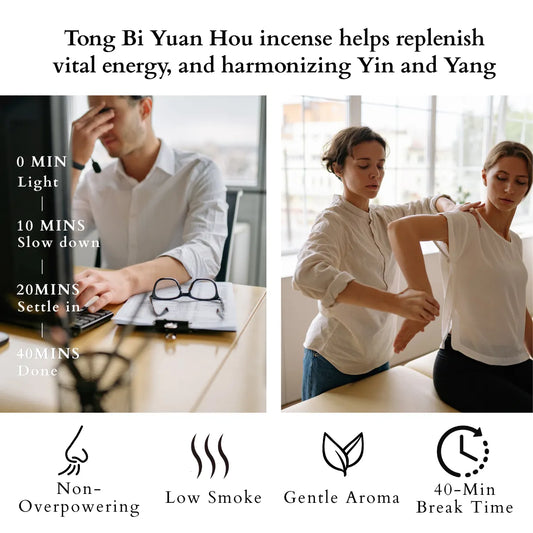
A simple routine might look like this:
- 9:30 — finish work and put the phone away
- 9:35 — lower the lights and light one incense stick
- 9:40 — read, journal or stretch
- 10:00–10:15 — extinguish the incense and prepare for bed
The exact timing is less important than the sequence.
The incense becomes a boundary between "the day" and "bedtime."
You are not asking the smoke to make you fall asleep.
You are giving yourself a repeatable reason to stop doing things.
That distinction also explains why some incense users report enjoying incense as part of their nighttime routine while specifically recommending against falling asleep with it burning.
How much incense should you burn?
More is not better.
Bedrooms are usually smaller than living rooms, and scent accumulates quickly.
If one full stick feels too strong, there is nothing wrong with using less—especially if the particular incense allows you to burn a shorter section safely.
One Reddit discussion about sandalwood incense describes exactly this issue: the scent was enjoyable, but a small bedroom allowed it to spread into the hallway, leading the user to suggest burning only part of a stick.
That is a useful rule: Start with less fragrance than you think you need.
You can always use more another evening.
You cannot make an over-scented bedroom feel less intense instantly.
Should you burn incense in your bedroom?
You can use incense as part of a bedroom routine, but the bedroom is exactly where you should be more careful about how you burn it.
Use:
- a stable, heat-resistant incense holder
- a clear area away from bedding and curtains
- reasonable ventilation
- one stick rather than several
- enough time for the incense to finish or be safely extinguished before you sleep
Never fall asleep while incense is burning.
This is not a minor detail.
A nighttime incense ritual should end before sleep begins.
If you are especially sensitive to smoke or fragrance, consider burning the incense earlier in the evening and letting the room air out before going to bed.
The goal is a comfortable bedroom—not a bedroom that still smells strongly of incense when you wake up.
Incense sticks for sleep vs. incense for relaxation
These terms are often used interchangeably, but there is a useful difference.
Relaxation incense is about how you feel during a particular moment.
You might burn it after a stressful meeting, while taking a bath, or during meditation.
Sleep incense is more about transition.
It belongs to the repeated sequence that tells you:
work is over → stimulation is going down → bedtime is approaching.
That means your favorite "relaxing" incense may not necessarily be your best bedtime incense.
A bright citrus or highly aromatic fragrance might be wonderful after a stressful afternoon and completely wrong at 10:30 p.m.
For sleep, think quieter, softer and more familiar.
A better way to choose your bedtime incense
Instead of buying whatever product has "sleep" printed on the label, test the scent in the context in which you will actually use it.
Try the same incense for several evenings.
Pay attention to three things:
1. Do you look forward to the scent?
If you already dislike it, no sleep ritual will fix that.
2. Do you stop noticing it after a few minutes?
That's usually a good sign. A bedtime scent should become part of the room rather than demanding attention.
3. Does the room feel comfortable after the incense is gone?
This is especially important. If the room feels smoky, heavy or overly perfumed afterward, the incense may be too strong for your space—even if you loved the first five minutes.
Why natural herbal incense is different
There is a reason traditional incense does not always smell like modern home fragrance.
A conventional fragrance product is often designed for immediate impact: you spray it, and the room smells like the advertised scent.
Traditional herbal incense takes a different approach.
Its aroma comes from the materials themselves—woods, roots, herbs, flowers and resins—combined according to a particular formula. There's no any synthetic and artificial fragrance.
The result can be less predictable and less "perfume-like."
For someone building a nightly ritual, that can be part of the appeal.
You are not trying to make your bedroom smell like "sleep."
You are creating a familiar sensory marker for the end of the day.
That distinction is central to how we approach incense at Panda Incense: traditional herbal formulas and pure natural aromatic materials, rather than creating a synthetic fragrance designed to imitate a particular mood.
The incense is not the sleep solution.
The ritual is the point.
The short answer
If you're looking for incense sticks for sleep, start with a scent that feels quiet enough to live with.
For a warm, grounded evening, try sandalwood.
For a familiar floral-herbal profile, try lavender.
For a deeper, more contemplative ritual, try frankincense.
For something less conventional, explore a traditional herbal blend.
Then use it before bed—not after you are already in bed—and keep the fragrance lighter than you think you need.
The best bedtime incense isn't the one that promises to put you to sleep. It's the one that helps you stop being busy.
For a quieter evening ritual → Moonlit Rest incense sticks, Piqiu incense sticks, Xiao Yao incense sticks or Gan Lu incense sticks.
Frequently Asked Questions About Incense for Sleep
What is the best incense for sleep?
Sandalwood is a strong starting point because it has a warm, smooth woody character that works well in a quiet evening setting. Lavender, frankincense and softer herbal blends are also popular choices. The best option depends on which aromas you personally find comfortable.
Do incense sticks help you sleep?
Incense should not be treated as a treatment for insomnia or other sleep disorders. Its more practical role is as part of a consistent bedtime routine that helps separate the evening from daytime activity.
What incense is good to burn before bed?
Sandalwood, lavender, frankincense and softer herbal incense are common choices. For a bedroom, prioritize a moderate aroma rather than a strong fragrance.
Is sandalwood incense good for sleep?
Sandalwood is one of the most versatile choices for an evening incense ritual. Its warm, woody aroma works particularly well for reading, meditation and quiet time before bed.
Is lavender incense good for bedtime?
Lavender is a popular bedtime scent, especially for people who already enjoy floral and herbal aromas. However, lavender incense can smell very different depending on the formula, so personal preference matters.
How long should you burn incense before bed?
There is no universal duration. A practical approach is to burn one stick during your wind-down routine and make sure it is fully extinguished before you go to sleep. If the fragrance becomes too strong, use less.
Can I sleep with incense burning?
No. Do not leave a burning incense stick unattended or burn incense while you are asleep. Use it as part of the period before bed and extinguish it before sleeping.
Is incense safe to use in a bedroom?
Use incense carefully in a bedroom: place it on a stable, heat-resistant holder, keep it away from bedding and other flammable materials, and maintain reasonable airflow. If smoke or fragrance bothers you, stop using it or burn it earlier in the evening and ventilate the room.