Does Incense Actually Work? The Science, Tradition, and Ritual Behind Incense
When Incense “Works,” What Exactly Is Doing the Work?
You light an incense stick.
Smoke begins to rise. The room slowly fills with fragrance. Maybe the space feels calmer, cleaner, or simply different.
But what actually happened?
Did the incense change the air?
Did the scent change your mood?
Did your intention change the experience?
Or did the ritual itself create the feeling that something had shifted?
These questions sit behind many of the reasons people search for incense for cleansing, incense sticks to remove negative energy, or simply wonder: does incense actually work?
The answer depends on what we mean by work.
There is a physical side to incense. There is a sensory and psychological side. And there is a cultural and spiritual side that cannot simply be measured in a laboratory.
Understanding the difference between these layers is what makes incense more interesting—not less.
What Does It Mean for Incense to “Work”?
When someone asks whether incense works, they may actually be asking four different questions.
| Meaning | The question |
|---|---|
| Physical | What does burning incense do to the air? |
| Sensory | Can fragrance change how a space feels? |
| Psychological | Can scent and ritual influence mood or attention? |
| Spiritual | Can incense cleanse a space or remove negative energy? |
These claims should not be judged by the same standard.
We can measure particles released during combustion. We can study how people respond to odors. We can investigate how rituals affect psychological states.
But a spiritual belief such as “incense removes negative energy” belongs to a different category. Science has not established supernatural negative energy as a measurable substance, so it cannot currently establish that incense removes it.
That does not make the tradition meaningless.
It simply means we should be honest about what kind of claim we are making.
Is It the Smoke, the Scent, or the Intention?
Perhaps the more interesting question is not whether incense works, but what part of the experience is actually doing the work.
Is it the material?
The smoke?
The scent?
Your intention?
Or the ritual itself?
The answer may involve several of these—but in very different ways.
Does Incense Smoke Actually Cleanse a Space?
Smoke has a long history of being associated with purification.
Across cultures, aromatic smoke has been used in religious ceremonies, offerings, household rituals, meditation, and other spiritual practices.
But there is an important distinction between symbolic cleansing and air purification.
When incense burns, combustion releases particles and gases into the indoor environment.
A 2024 study examining incense burning in a California residence found PM2.5 emission factors ranging from approximately 7 to 31 mg per gram of incense burned, with substantial variation between incense types. The researchers also observed interactions between incense-generated particles and other indoor compounds.
In other words: Incense smoke is physically real.
It changes the composition of indoor air.
That leads to an important correction:
Burning incense is not the same thing as purifying indoor air.
If your goal is air quality, ventilation and appropriate air filtration are more relevant tools than relying on incense smoke.
So why does smoke feel cleansing to so many people?
Part of the answer may have nothing to do with air chemistry.
Smoke is visible. It moves through a room. You can watch it enter a space and disappear.
As a ritual symbol, that makes the invisible idea of “cleansing” tangible.
Science can describe the smoke. Tradition gives the smoke meaning.
Those are two different things.
Can Scent Change How You Feel?
This is where the scientific evidence becomes more interesting.
Our sense of smell has strong connections with emotion and memory. Research suggests that odors can influence mood and emotional experience, while emotional state can also influence how odors are perceived.
That does not mean every incense fragrance will make everyone calm.
It means something more subtle:
The experience of fragrance is psychologically real.
A familiar scent can remind you of a place.
A particular aroma can become associated with meditation.
A woody fragrance may signal quietness because you have repeatedly experienced it in quiet environments.
And a ritual scent can become a cue that tells you:
This is the moment when I slow down.
This may also explain why two people can burn the same incense and describe completely different experiences.
The fragrance is the same.
The experience is not.
Does Intention Make a Difference?
This question appears frequently in spiritual and incense communities.
People who use incense for cleansing often debate whether the material itself matters, or whether intention is the most important part of the ritual.
That disagreement is revealing.
People are not only asking which incense smells best.
They are asking where the meaning of the ritual comes from.
There is also a scientific reason to take the ritual component seriously.
Research into ritual psychology suggests that rituals can serve functions related to emotion regulation, performance-related mental states, and social connection.
This gives us another way to understand incense.
Suppose you light an incense stick every evening.
You put your phone away.
You sit quietly.
You breathe more slowly.
You watch the smoke rise.
You spend ten minutes doing nothing else.
What changed?
Perhaps the incense itself.
But perhaps also your attention, your environment, your expectations, and the meaning you attach to the action.
Intention may not give incense a scientifically proven supernatural power. But intention can change the meaning of a ritual—and meaning can change psychological experience.
That distinction matters.
What Science Can—and Can't—Tell Us About Incense
It helps to separate the evidence.
What science supports
-
Odor can influence mood and emotion.
Research supports an interaction between olfaction, emotion, and mood. -
Ritual can have psychological functions.
Research in ritual psychology suggests that ritualized behavior can help regulate emotional and goal-related states. -
Burning incense changes indoor air.
Incense combustion releases particulate matter and other compounds, and emissions vary according to materials and burning conditions. -
Aromatic plants contain biologically active compounds.
For example, Boswellia species that produce frankincense contain compounds that have been extensively studied for biological activity.
What remains a matter of tradition or personal belief
Incense removes supernatural negative energy.
A particular incense spiritually protects a home.
A specific botanical automatically produces a particular spiritual result.
These ideas may be meaningful within particular cultural or spiritual traditions, but they should not be presented as scientifically established facts.
This distinction is not a weakness.
It allows us to talk about incense without turning either science or tradition into something it is not.
Why Do People Use Incense for Cleansing?
If science cannot establish “negative energy” as a measurable substance, why has incense become so strongly associated with cleansing?
The answer is partly historical.
Aromatic materials have been used in religious and ceremonial contexts for thousands of years. Frankincense, for example, has a long history of use as a fragrant resin and in traditional medicine.
Modern research has also examined the chemistry and biological activity of Boswellia species.
But modern spiritual practices have developed their own associations between particular botanicals and particular intentions.
Three names appear frequently: Frankincense. Rosemary. Dragon's blood.
Their stories are different—and that difference matters.
1. Frankincense: Sacred Resin and Traditional Use
Frankincense is the aromatic oleo-gum-resin produced by trees of the Boswellia genus.
Its history extends across religious traditions, perfumery, incense, and traditional medicine.
Modern research has identified numerous constituents in Boswellia, including boswellic acids and other compounds that have been investigated for biological activity.
But there is an important scientific boundary:
Research on Boswellia extracts or isolated compounds does not automatically prove that burning frankincense incense produces the same biological effects.
An extract is not smoke.
A purified compound is not a burning resin.
A traditional medicinal use is not automatically a modern clinical indication.
What we can say is that frankincense has a deep historical and chemical identity beyond simply being “a nice smell.”
Its association with sacred spaces is one reason it continues to appear in cleansing and spiritual practices today.
2. Rosemary: From Herb to Symbol of Purification
Rosemary offers a different example.
It has long been associated in various European folk traditions with remembrance, protection, and purification.
There is also scientific research into rosemary aroma.
One controlled study involving 144 healthy adults found differences in certain measures of cognitive performance and mood following exposure to rosemary aroma.
But again, we need to resist the easy conclusion.
The study investigated rosemary aroma, not rosemary incense smoke.
So it would be inaccurate to say:
“Science proves that burning rosemary incense improves concentration.”
A more defensible statement is:
Research suggests that rosemary aroma can influence aspects of cognition and mood, while its association with cleansing comes largely from cultural and traditional use.
3. Dragon's Blood: When Symbolism Becomes Part of the Material
“Dragon's blood” is a traditional name used for red resins obtained from several plant sources.
Its dramatic name and deep red color have contributed to its symbolic role in various spiritual and ritual traditions, including modern practices involving protection, purification, and cleansing.
But its spiritual associations should not be confused with scientific evidence that burning dragon's blood incense removes negative energy.
In this case, tradition and symbolism are doing much of the explanatory work.
And that is okay.
Not everything meaningful has to become a laboratory claim.
Does the Material and Formula Matter?
If scent influences perception, and different aromatic materials have different chemical and sensory characteristics, does the composition of the incense itself matter?
Yes—but we need to be precise about what “matter” means.
Different woods, herbs, resins, and other aromatic materials contribute different aromas, burning characteristics, and smoke profiles. The composition of incense can also influence its combustion emissions.
So an incense stick is not simply a delivery system for “fragrance.”
The materials are part of the experience.
This becomes particularly interesting in traditional Chinese incense culture, where the goal is not necessarily to create the strongest possible fragrance.
Instead, the relationship between materials can be part of the craft.
One material may establish the leading aromatic character. Others may soften, deepen, balance, or extend the composition.
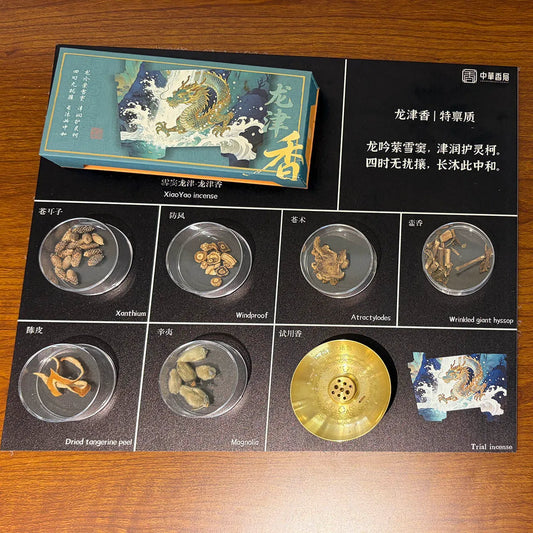
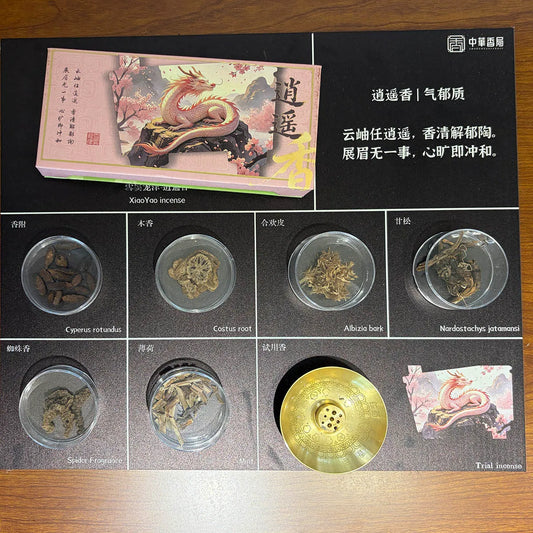
This approach is known as He Xiang (合香)—the traditional practice of combining aromatic materials into a composed incense formula.
We explore this philosophy in more depth in our guide to What is He Xiang?
The important point is not that a more complicated formula has been scientifically proven to be “more effective.”
It hasn't.
The point is that the character of an incense can depend on how its materials are composed—not simply on the ingredient named on the package.
From Ingredient to Formula: The Chinese Herbal Incense Tradition
Traditional Chinese Herbal Incense offers a different way of thinking about fragrance.
Historically, Chinese incense culture developed around aromatic woods, herbs, resins, and other botanical materials, as well as the knowledge of how different materials could be prepared and combined.
This is where Yao Xiang (药香) and He Xiang (合香) become particularly interesting.
Rather than asking only: What does this ingredient smell like?
the tradition also asks:
How should different aromatic materials be combined?
How should they be prepared?
What balance should the finished formula have?
What kind of experience should the fragrance create?
This way of thinking has roots in a much broader Chinese tradition of understanding qi, flavor, fragrance, and the relationship between aromatic materials and the body.
The Huangdi Neijing, for example, describes a traditional framework in which different flavors are associated with the five zang organs. Later scholarship on Chinese medicine has examined how this developed into theories of qi-flavor compatibility and the use of aromatic materials.
This is a traditional theoretical framework, not a modern scientific explanation of what happens when incense smoke is inhaled.
That distinction matters.
For us, the value of this tradition lies not in turning an ancient theory into a modern medical claim, but in preserving a different approach to fragrance:
materials are selected intentionally, formulas are composed deliberately, and craftsmanship is part of the incense itself.
Natural Incense vs. Synthetic Incense: What Are You Actually Burning?
This is where the word “natural” deserves more scrutiny.
Natural incense is often associated with a softer or more nuanced fragrance, while synthetic fragrance-based incense may be perceived as stronger or more immediate.
Incense enthusiasts frequently debate this difference, but one point is particularly important:
“Natural” alone does not tell you everything about an incense.
When evaluating natural incense sticks, look beyond the label.
What are the aromatic materials?
Are they woods, herbs, resins, spices, essential oils, or fragrance compounds?
Where does the fragrance come from?
Is the aroma produced primarily by the botanical materials themselves, or is added fragrance doing most of the work?
How is the incense formulated?
Are the aromatic materials actually part of the composition, or is a relatively neutral base simply fragranced?
How is it made?
Does the brand explain its process?
Are the claims specific?
A trustworthy brand should be able to explain what it means by:
- natural
- herbal
- handmade
- traditional
These words should describe something concrete.
They should not simply create an atmosphere around the product.
What Makes Our Traditional Chinese Herbal Incense Different?
For us, “natural” begins with what actually goes into the incense.
Panda incense is free from synthetic fragrance and perfume oils, and handcrafted and hand-rolled, rather than produced as a generic fragranced stick.
Take our Qing Geng incense sticks for example. We work with green Sandalwood/Verawood, Frankincense, Gansong/Spikenard, Chuanxiong/Ligusticum and develop each formula around the character of its aromatic materials.
Formulation philosophy
| Ingredient | Botanical name | Percentage | Formulation role | Function |
| Green Sandalwood | Verawood | 50% | Main-base | A warm, woody base neutralizes spiciness and dryness, stabilizing the aroma |
| Fankincense | Oblibanum | 25% | Supporting | Resin depth & warmth blends well with the wood |
| Gansong | Nardostanchys roots /Spikenard | 15% | Harmonizer | Harmonizes other fragrances, Smooths harsh notes, eases heavy stale scent |
| Chuanxiong | Ligusticum Chuanxiong | 10% | Accent | A touch of spiciness enhances the aroma's penetration, breaking up any dullness. |
Handcrafted process
For us, “handcrafted” means the process matters. All the incense sticks from Panda Incense follow a traditional-inspired process that begins with the materials themselves.
01 — Selecting the Materials
02 — Preparation and Processing
03 — Grinding
| Ingredient | Quality standard | Pre-processing |
|
Green Sandalwood /Verawood |
Dense hear-wood only, reject rotten sapwood | Ground to 80-100 mesh, sifted to remove debris |
| Frankincense | High-grade resin tears, low-fragment content | No high-speed industrial grinding. Slow-grind to prevent resin melting |
| Gansopng /Spikenard | Non-sulfured dried roots, free of mold and grit | Cleaned, sorted, then finely milled |
| Ligusticum Chuanxiong | Mature root stock, reject oil-rancid material | Purified and finely ground, reduce harsh bitter notes |
After blending all powers: incense-dough receives extensive hand-kneading for full-aroma-harmoization.
04 — Formulation
This is where He Xiang becomes more than a concept.
05 — Mixing and Awakening
After formulation, the materials are thoroughly mixed before the incense dough enters the next stage.
| Condition | Specifications | Function |
| Duration | usually 4-6 hrs for incense sticks | Allow moisture evenly penetrate powers. Improve dough flexibility, reduce cracking; initial blending of herbal-resin aroma |
| Environment | Sealed container, cool and dark room-temperature. Keep away from direct sunlight and heat | Prevent surface drying-out |
06 — Hand-Rolling
07 — Natural Drying
| Condition | Specifications | Function |
| Duration | usually 7-15 days for incense sticks | Mellow raw sharp notes; enable botanicals-resin aromas fully meld; deliver smoother balanced scent performance |
| Environment | Cool dark place, stored within wooden/ceramic vessel. Avoid heat, sunlight and air-conditioner blast | Slow-aging for well-rounded natural fragrance |
We avoid rushing this stage because the final incense needs to reach the appropriate condition before it can be selected and packaged.
08 — Selection and Packaging
If you need to know more about Qing Geng incense sticks, check more details here >
Explore our incense sticks for cleansing >
Does “Natural” Mean Safer?
Not automatically.
This is one of the easiest mistakes to make when shopping for incense.
Natural does not mean harmless.
Incense burns.
Combustion produces particulate matter regardless of whether the original material came from a plant.
Research has found that PM2.5 emissions vary substantially between incense types and depend on materials and burning conditions.
Even incense enthusiasts recognize this distinction: natural materials are not automatically safer, and synthetic materials are not automatically more dangerous.
So if you burn incense indoors:
- Use it for reasonable periods.
- Keep the space appropriately ventilated.
- Avoid unnecessary smoke accumulation.
- Place burning incense on a stable, heat-resistant holder.
- Follow the manufacturer's safety instructions.
The goal is not to pretend combustion has no physical consequences.
The goal is to use incense deliberately.
So, Does Incense Actually Work?
After separating the claims, the answer becomes much clearer.
If “work” means changing the physical air:
Yes—but not necessarily in the way “cleansing” implies.
Burning incense measurably changes indoor air and introduces particulate matter and other combustion products.
If “work” means changing how a space smells and feels:
Yes. Research supports the idea that odors can influence perception, mood, and emotional experience.
If “work” means helping create a particular mental or emotional state:
It can. The combination of sensory cues, attention, expectation, and ritual may contribute to psychological effects.
If “work” means removing supernatural negative energy:
Science has not established that claim.
It belongs to spiritual tradition, personal belief, and individual experience.
And that does not make the experience meaningless.
It simply means the claim belongs to a different category of knowledge.
Incense Is More Than a Scent
Perhaps this is why the question “Does incense actually work?” is more complicated than it first appears.
An incense stick is a physical object.
It contains materials.
It burns.
It releases smoke.
It produces fragrance.
Those things can be studied.
But incense can also become something else.
A signal that the workday is over.
A moment of stillness before meditation.
A way of marking the beginning of a morning.
A ritual for preparing a room.
A reminder of a cultural tradition.
A scent associated with someone, somewhere, or some period of your life.
And for people who practice spiritual cleansing, it can represent something deeper: the intention to let go of what no longer belongs in a space.
The physical smoke may be measurable.
The meaning you give it is personal.
And the ritual exists somewhere between the two.
A Different Way to Think About Incense
Maybe the better question isn't: Does incense work?
Maybe it is:
What happens when material, scent, smoke, intention, ritual, and meaning come together?
Science can help us understand some of those layers.
Tradition helps us understand others.
Personal experience adds another.
None of these needs to erase the others.
What matters is knowing which one you are talking about.
So the next time you light an incense stick, pay attention.
Notice the first aroma.
Notice how it changes as it burns.
Notice the smoke.
Notice how the room feels before and after.
And notice what you were intending when you lit it.
You may find that the most interesting part of incense is not whether it possesses some mysterious power.
It is that a small amount of fragrant material can change what you notice, how you feel, and how you mark a moment.
That may be a quieter definition of “working.”
But perhaps it is a more honest one.
Explore traditional Chinese Herbal Incense
Inspired by the traditional Chinese art of aromatic composition, our incense brings together natural botanical materials, traditional formulation, and handcrafted technique for a more intentional incense experience.
Each stick is handcrafted and hand-rolled, and our formulas are made without synthetic fragrance or perfume oils.
Explore our traditional Chinese herbal incense sticks →
Frequently Asked Questions
Does incense actually work?
It depends on what you mean by “work.” Research supports effects of odors on mood and emotion, while ritual can have psychological functions. Burning incense also measurably changes indoor air. There is not established scientific evidence, however, that incense removes supernatural negative energy.
Does incense remove negative energy?
The idea of removing negative energy through incense belongs to spiritual and cultural traditions rather than established scientific evidence. Many people nevertheless use incense as part of cleansing rituals because the practice carries personal, symbolic, or spiritual meaning.
What are incense sticks used for cleansing?
Incense sticks are used in many traditions as part of rituals associated with purification, prayer, meditation, protection, or creating a transition between different states of mind. The meaning varies by culture and individual practice.
What is natural incense?
Natural incense generally refers to incense made primarily with naturally derived aromatic materials such as woods, herbs, resins, and other botanicals. However, “natural” is not a complete description of a product. It is worth looking at the actual ingredients, fragrance sources, and manufacturing process.
Is natural incense safer?
Not automatically. Natural materials can still produce smoke and particulate matter when burned. Incense should be used thoughtfully, with appropriate ventilation and according to safety instructions.
What is Traditional Chinese Herbal Incense?
Traditional Chinese Herbal Incense refers to incense rooted in Chinese traditions of using aromatic woods, herbs, resins, and other botanical materials in composed fragrance formulas. It is a cultural and craft tradition, not a claim that incense should be used as a medical treatment.
What is He Xiang?
He Xiang (合香) refers to the traditional practice of combining different aromatic materials into a composed incense formula. Rather than relying on a single ingredient, the character of the finished incense comes from the relationship between its materials. Read: What Is He Xiang? →