How to Choose High-Quality Incense Sticks: Materials, Ash & Burning
Share
Walk into any online marketplace and you will find thousands of incense sticks that look almost identical. Some are made from precious woods, some contain dozens of botanical ingredients, and others rely mainly on added fragrance. Yet from the outside, it is often difficult to tell the difference.
A higher price does not always mean better incense. A stronger smell does not always mean better ingredients. Even common “quality tests,” such as checking whether the ash turns white, can be misleading.
High-quality incense is the result of several factors working together: the materials used, the balance of the formula, the way it burns, and the craftsmanship behind its production.
For anyone choosing incense for meditation, relaxation, home fragrance, or daily rituals, the better question is not “Which incense smells the strongest?”, but is “What kind of experience was created through the materials and craftsmanship behind this incense?”
1. The Four Foundations of High-Quality Incense
A good incense stick is not defined by one visible feature. Its quality comes from the relationship between ingredients, formulation, burning behavior, and craftsmanship.
| Factor | What to Examine | Why It Matters |
|---|---|---|
| Ingredients | Are the botanical materials clearly identified? | Transparent ingredients help consumers understand what they are burning |
| Formula | Are materials balanced rather than simply added for stronger fragrance? | Traditional incense relies on harmony between ingredients |
| Burning performance | Does it burn evenly with a manageable level of smoke? | A well-made incense should create a comfortable experience in your space |
| Craftsmanship | Are grinding, blending, aging, and shaping carefully controlled? | Natural materials require skill to transform into a consistent incense stick |
A high-quality incense stick is not simply a mixture of aromatic materials. It is a carefully designed formula where each ingredient contributes to the final aroma and burning experience.
2. Start With Ingredients: What Is Actually Inside Your Incense?
The first step in evaluating incense is understanding its ingredients.
Many consumers assume that “natural” automatically means better. However, natural materials vary significantly in quality depending on their origin, processing, and proportion within a formula.
Traditional incense commonly uses three major categories of aromatic materials:
| Category | Examples | Role in Incense |
|---|---|---|
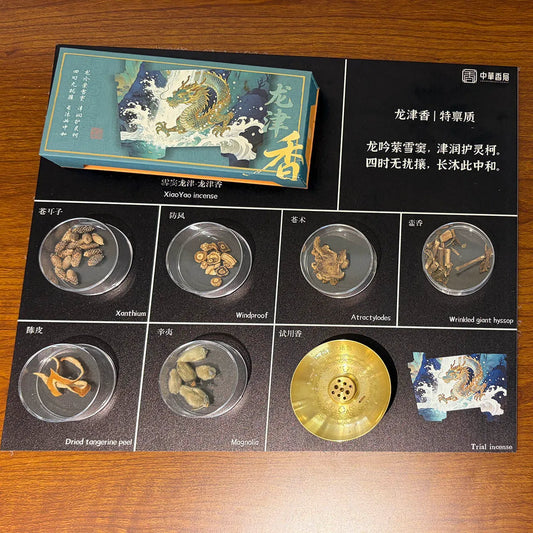
| Woods | Sandalwood, agarwood, cedar | Provide depth, warmth, and a lasting base aroma |
| Resins | Frankincense, benzoin | Add richness, sweetness, and complexity |
| Herbs & botanicals | Spikenard, patchouli, clove, aromatic roots | Create character and balance within the formula |
The quality of these materials matters, but the formula matters just as much.
A rare ingredient used incorrectly does not automatically create a better incense. Similar to perfume making, tea blending, or culinary traditions, the final result depends on how different elements work together.
3. Traditional Chinese He Xiang: The Art of Blending Aromatic Materials
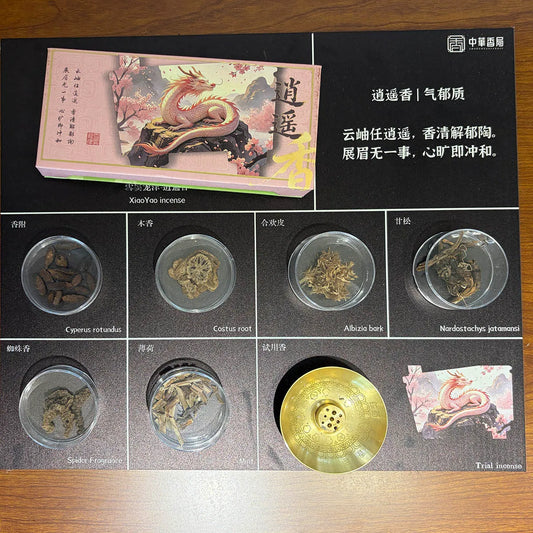
One of the biggest differences between traditional Chinese incense and many modern incense products is the concept of He Xiang(合香) — blended incense.
Many modern products focus on a single dominant aroma:
- sandalwood incense
- lavender incense
- rose incense
Traditional Chinese incense takes a different approach. Instead of creating one strong scent, practitioners combine multiple aromatic materials to create balance, depth, and gradual development during burning.
Single-Ingredient Incense vs Traditional He Xiang
| Single-Ingredient Incense | Traditional Chinese He Xiang | |
|---|---|---|
| Formula | Mainly centered around one aromatic material | Multiple woods, herbs, and resins combined |
| Aroma | Usually dominated by one main note | Layered and evolving |
| Main focus | Highlighting the character of one material | Creating balance between different materials |
| Similar concept | Single-origin tea | A carefully blended tea formula |
| Craft challenge | Selecting excellent raw material | Creating harmony between ingredients |
A well-designed He Xiang formula is not created by simply adding more ingredients. The challenge is knowing how each material interacts.
For example:
- Sandalwood can provide a smooth woody foundation.
- Frankincense can add resinous brightness.
- Benzoin can bring warmth and sweetness.
- Herbal ingredients can adjust the overall character.
The result is not just a stronger smell, but a more balanced aromatic experience.
4. Natural Aromas vs Synthetic Fragrance: Why They Smell Different
One reason consumers often notice a difference between traditional herbal incense and commercial fragrance incense is the way aromas develop.
Synthetic fragrances are often designed to create an immediate and recognizable scent. This can produce a strong first impression, similar to a perfume sprayed in a room.
Natural aromatic materials behave differently.
They contain complex combinations of naturally occurring compounds that are released gradually as heat interacts with the material.
For example:
| Material | Important Aromatic Components | Typical Aroma Character |
|---|---|---|
| Sandalwood | Santalols | Creamy, woody, smooth |
| Frankincense | Terpenes and resin compounds | Bright, resinous, slightly citrus-like |
| Benzoin | Resin aromatic compounds | Warm, sweet, vanilla-like |
Because natural materials contain many aromatic compounds, their scent can change during burning. The first few minutes may smell different from the later stages.
This is why traditional incense is often described as having “layers” rather than a single fixed fragrance.
5. Smoke Matters: What Does Low-Smoke Incense Really Mean?
Smoke is one of the most misunderstood aspects of incense.
A common assumption is:
Less smoke always means better incense.
That is not necessarily true.
Smoke production depends on many factors:
- ingredient composition
- moisture content
- density of the incense stick
- burning temperature
- airflow in the room
A properly made incense should create a comfortable balance: enough aroma to be appreciated, but not excessive smoke that overwhelms the space.
Like candles, fireplaces, and other products involving combustion, incense affects indoor air conditions. The U.S. Environmental Protection Agency notes that indoor particulate matter can come from combustion sources, making ventilation an important consideration when using burning products indoors.
For everyday use, many consumers prefer incense designed with:
- natural aromatic materials
- balanced formulas
- clean and consistent burning behavior
The goal is not “zero smoke,” because combustion naturally produces smoke. The goal is a more pleasant and controlled experience.
6. Bamboo Core vs Coreless Incense: Why the Base Matters
One detail that many first-time incense buyers overlook is whether the incense stick contains a bamboo core.
Traditional incense comes in different forms. Some sticks are made by applying aromatic material around a bamboo stick, while others are made entirely from the incense mixture itself.
Bamboo-Core Incense vs Coreless Incense
| Bamboo-Core Incense | Coreless Incense | |
|---|---|---|
| Structure | Aromatic material wrapped around a bamboo stick | Entire stick is made from the incense formula |
| Burning experience | Bamboo can influence the overall aroma | Allows the botanical materials to dominate |
| Common use | Popular for everyday commercial incense | Often preferred for traditional herbal incense |
| Production | Easier to manufacture at scale | Requires more control during shaping and drying |
A bamboo core is not automatically a sign of poor quality. Many incense traditions use bamboo-core sticks successfully.
However, for consumers specifically looking for the aroma of woods, herbs, and resins, coreless incense can provide a cleaner expression of the formula because there is no additional bamboo scent introduced during burning.
This is one reason many traditional Chinese herbal incense makers continue to produce coreless incense despite the more demanding manufacturing process.
7. Can You Judge Incense Quality by Ash Color?
One of the most common online discussions about incense quality is the “white ash test.”
The idea is simple:
White ash means high-quality incense.
However, this is an oversimplification.
Ash color is influenced by multiple factors, including:
- mineral content naturally present in plant materials
- combustion temperature
- formulation
- moisture content
- burning conditions
Common Ash Myths Explained
| Common Belief | What Actually Happens |
|---|---|
| White ash always means premium incense | Ash color alone cannot determine ingredient quality |
| Dark ash means poor incense | Some natural materials naturally create darker ash |
| More ash means more ingredients | Ash quantity depends on the formula and combustion process |
| Ash appearance proves purity | Ingredient transparency is a more reliable indicator |
Ash can be an interesting observation, but it should not be the main reason you choose an incense.
A better evaluation method is to consider:
- Are the ingredients disclosed?
- Does the aroma feel natural and balanced?
- Does the incense burn consistently?
- Is the production process explained clearly?
8. How to Choose Incense Based on How You Actually Use It
The “best” incense depends on where and why you use it.
A meditation space, bedroom, and home office each have different needs. Instead of choosing based only on fragrance strength, consider the environment and experience you want to create.
Choosing Incense for Different Moments
| Your Purpose | What to Look For | Why It Matters | Avoid |
|---|---|---|---|
| Meditation and mindfulness | Balanced woody, resinous, or herbal aromas with gradual development | A subtle aroma supports focus without becoming distracting | Extremely strong perfume-like fragrances |
| Home office and study | Clean-burning incense with moderate intensity | Long sessions require an aroma that remains comfortable over time | Heavy sweet scents that become overwhelming |
| Evening relaxation | Gentle woods, resins, and softer herbal notes | A calmer atmosphere usually comes from subtle aromas rather than intensity | Sharp synthetic-smelling fragrances |
| Everyday home use | Consistent burn and ingredient transparency | Reliability matters when incense becomes part of a daily routine | Products with unclear ingredients |
| Collecting and appreciation | Traditional formulas, aged materials, craftsmanship | Some incense is valued for history and complexity | Mass-produced incense designed only for strong scent |
The right incense is not necessarily the strongest-smelling one.
For many experienced users, quality is recognized through balance:
- the aroma does not dominate the room,
- the smoke feels comfortable,
- the fragrance develops naturally over time.
9. A Simple Checklist Before Buying Incense
Before purchasing incense online, these questions can help separate carefully made products from mass-produced alternatives.
| Question | Why It Matters |
|---|---|
| Are the ingredients clearly listed? | Transparency shows how much the maker understands their materials |
| Does the brand explain its sourcing and process? | Quality incense requires knowledge beyond adding fragrance |
| Is the aroma natural or perfume-like? | Different formulas create very different experiences |
| Is it designed for daily use or occasional appreciation? | Purpose affects what type of incense is appropriate |
| Does the company explain burning characteristics? | Responsible makers consider the user experience |
A good incense maker should be able to explain not only what ingredients are used, but why they are used.
10. The Craft Behind Traditional Herbal Incense
Traditional incense making is closer to a craft than simple fragrance production.
The process often involves several stages:
- Selecting and preparing aromatic materials
- Grinding ingredients into suitable powders
- Creating a balanced formula
- Blending and aging the mixture
- Shaping and drying the incense carefully
Each step affects the final result.
For herbal incense, the challenge is not simply making a stronger aroma. It is creating a formula where different materials complement each other.
This approach has a long history in Chinese culture. Classical Chinese incense traditions developed alongside tea, medicine, and perfumery, with written records describing aromatic materials and their uses for centuries.
Modern consumers may approach incense differently today — using it for meditation, home atmosphere, relaxation, or personal rituals — but the craftsmanship behind a well-made incense remains the same.
Why Traditional Herbal Incense Is Different
Modern fragrance products are often designed around immediate scent impact.
Traditional herbal incense follows another philosophy:
- fewer but carefully selected materials
- attention to balance rather than intensity
- respect for the characteristics of each botanical ingredient
- craftsmanship passed through generations
For consumers who appreciate natural materials, incense is not only a fragrance product. It is a small daily experience built around time, patience, and craftsmanship.
Explore our incense sticks to compare different formulas, or explore Piqiu incense sticks, or Shan Hai Guardians and Xuedou Dragon Stream series. For a broader range of traditional incense, browse our incense beads bracelet and incense pendant amulet collection to find the aromatic direction that suits your ritual.
Frequently Asked Questions
How can I tell if incense is natural?
Look for ingredient transparency. High-quality incense usually identifies the botanical materials used instead of only listing generic terms such as “fragrance” or “parfum.”
Does stronger-smelling incense mean better quality?
Not necessarily. Strong scent can come from concentrated fragrance compounds. Natural incense often develops more gradually and may feel more subtle.
Is white ash a sign of premium incense?
No. Ash color is affected by many factors and should not be used as the only measure of quality.
What makes Chinese incense different from regular incense?
Traditional Chinese incense often uses the concept of He Xiang (合香), where multiple woods, herbs, and resins are blended to create a balanced aroma rather than focusing on one dominant scent.
Is low-smoke incense completely smokeless?
No. Any burning material produces some smoke. Low-smoke incense means the formulation is designed to create a cleaner and more comfortable burning experience.
Why are handmade incense sticks more expensive?
Handmade incense often requires more careful preparation of raw materials, smaller production batches, and more attention to formulation and drying conditions.
Can incense be used every day?
Many people use incense as part of daily routines. The best choice depends on the room, ventilation, and personal preference.
Sources & Further Reading
- U.S. Environmental Protection Agency (EPA). Indoor Particulate Matter and Indoor Air Quality.
- National Center for Complementary and Integrative Health (NCCIH). Traditional approaches involving botanical materials.
- Studies on incense smoke emissions and indoor air quality published in environmental health research literature.