Why Does TCM Incense Smell Like a Pharmacy?
Share
Real traditional Chinese incense smells like a pharmacy because it is made from the same things a pharmacy sells. Dried roots, barks, and tree resins go into the stick. The stick then smells like the drawer they came from. A candle smells sweet because it burns a fragrance oil mixed in a lab. Incense burns plant tissue, and plant tissue smells like the plant.
What Does Chinese Incense Actually Smell Like?
Start with the smell itself, because the word pharmacy is doing more work than most people notice. A pharmacy smells dry, like a tea tin left open long. That is the note people mean when they say incense stick smells medicinal. It is quiet rather than loud, and it sits at the back of your nose instead of the front.
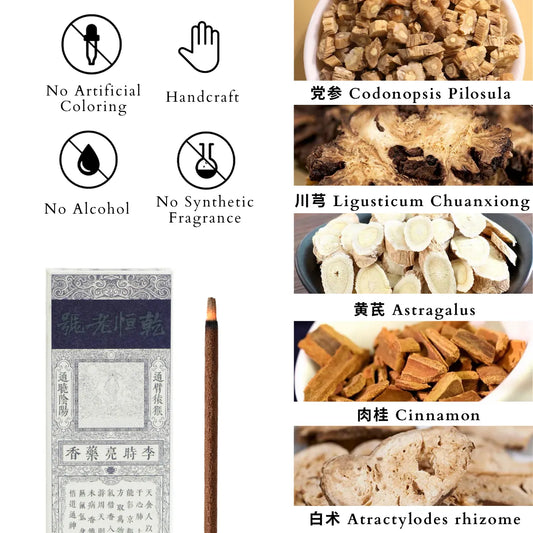
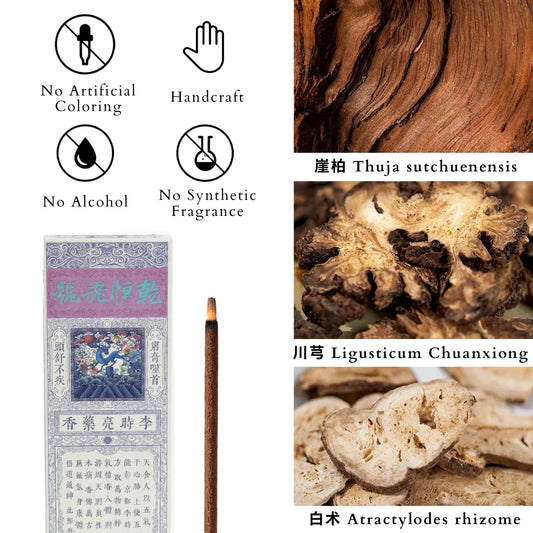
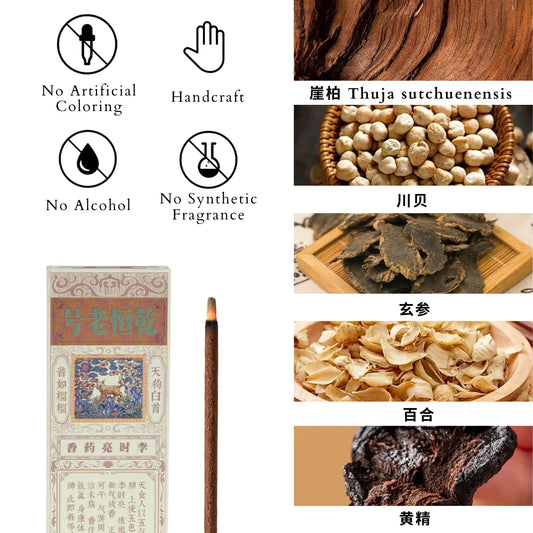
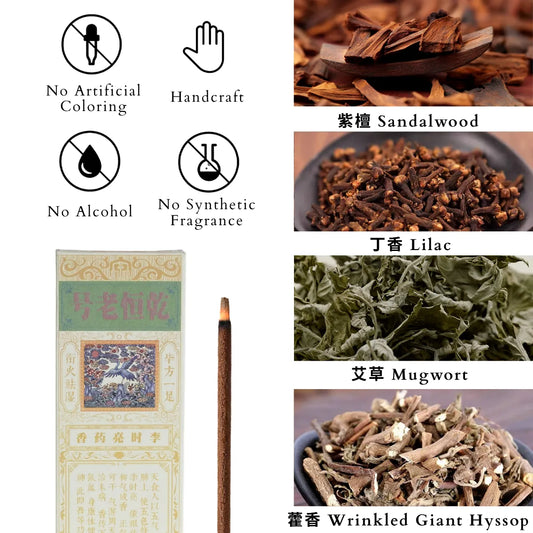
Three kinds of material build that note. Resins give the warm base. Frankincense reads bright and resinous, with a citrus edge. Benzoin is warmer and almost vanilla-like. Roots and rhizomes give the dry, bitter floor, and that is the pharmacy part people are pointing at. Heartwoods finish the stick, and sandalwood is dry and creamy while agarwood is darker and deeper.
Walk into a Chinese herbal shop and you are standing in front of all three at once. The drawers hold the same roots, the same barks, the same chunks of resin. So when a stick smells like that shop, it is not imitating anything. It is carrying the same material in a different form. The quiet part matters, because people often brace for something heavy and get the opposite. A pharmacy is not a loud place. The smell there is dry and still, and it stays in the background until you go looking for it. Real Chinese incense behaves the same way. If a stick hits you at the doorway, you are smelling what was added to it.
Why a Chinese Incense Blend Smells Like a Prescription
The pharmacy note also comes from how a stick is put together. A blend is not a pile of nice smells mixed until they add up. It follows a rule borrowed from the way Chinese medicine writes a prescription, and the rule is called jun chen zuo shi (君臣佐使). One material leads and sets the tone. The others support it or hold it back, so nothing runs away with the room.
The rule comes from an old medical text, the Plain Questions. There, the leading ingredient serves the main pattern. The second supports it, and the rest respond to the second. A blend built this way carries the shape of a prescription.
One material on its own cannot do this. Burn a single herb and you get one line of smell. It starts well and flattens in the middle, because the oils in one plant come off in a fixed order and then stop. Nothing is left to carry the second half.
Perfume has structure too, built for effect. The Chinese rule is built for balance instead. The leading material rarely shouts. It holds the rest in place, and the blend reads as finished because every part has a job.
The dry note opens the stick, and the woods leave a tail after the smoke has thinned. In between, the resins carry the middle.
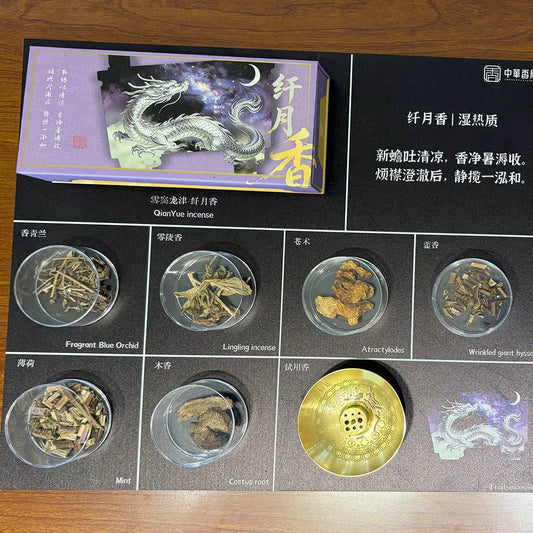
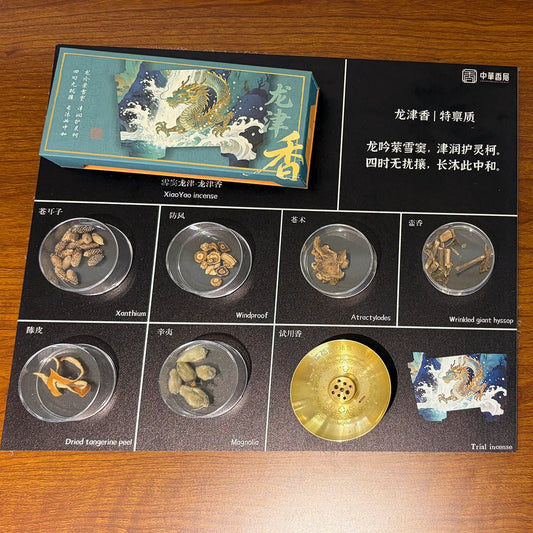
The Shan Hai Guardians collection is built on this rule. Each blend is led by a different material, so no two sticks lean on the same note.
If It Smells Like a Pharmacy, Is the Incense Real?
A sweet smell proves nothing either way. A dipped stick is a scentless core with a coat of fragrance oil on the outside. That stick can smell closer to a candle. So a natural Chinese incense is what real material does when nothing has been added to soften it.
Two things you can check yourself. Smell the stick cold, before you light it. A dipped stick throws off a lot of scent while unlit, because the oil sits on the surface. A traditional blended incense stick smells quieter cold, since the material runs through the whole body.
Then look at the color. Ground plant material lands inside a dull band of browns and tans. A bright red or vivid green had help getting there, usually oil or dye. Treat color as a clue and not a verdict, because experienced natural incense maker also can adjust its color.
Whether the material is good or whether the maker balanced it well, you can tell once the stick is burning. Our guide to natural versus synthetic incense goes deeper on how each kind is built.
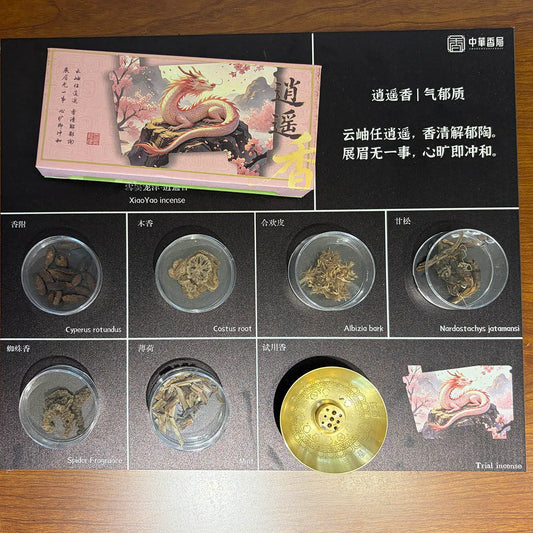
The Xuedou Dragon Stream collection is a fair first test. Set a blended stick next to the dipped ones on your shelf, and the difference shows up in the first minute.
The pharmacy note sits in the middle of a stick. The deeper material takes a while to heat up, so the first few seconds are mostly ignition and light resins. A minute in, the dry root note arrives. The base is warm and slow, and it is the part most people end up liking.
Every stick we make follows the same idea. Whole materials are pressed through the body of the stick, with no core dipped in oil. You can see the full range in our incense stick collection.