Natural vs. Synthetic Incense: How to Choose Quality Incense for Your Home
Walk into any incense shop and you will find products that look remarkably similar but can smell, burn, and develop in completely different ways.
Some are made primarily from woods, herbs, roots, and resins. Others use manufactured fragrance compounds to create recognizable scents such as rose, vanilla, fruit, or ocean-inspired aromas. Some emphasize traditional materials and craftsmanship, while others are designed for strong and consistent fragrance.
So, what is the actual difference between natural and synthetic incense?
The answer is more complicated than simply saying one is “better.” To evaluate incense properly, you need to look beyond the word natural and understand what goes into the incense, where its fragrance comes from, how it is formed, and how it behaves when burned.
This guide explains the differences between natural and synthetic incense and gives you a practical framework for choosing quality incense based on ingredients, craftsmanship, fragrance, and burn characteristics.
If you are new to incense, you may also want to read our complete guide: The Complete Guide to Natural Incense
What Is Natural Incense?
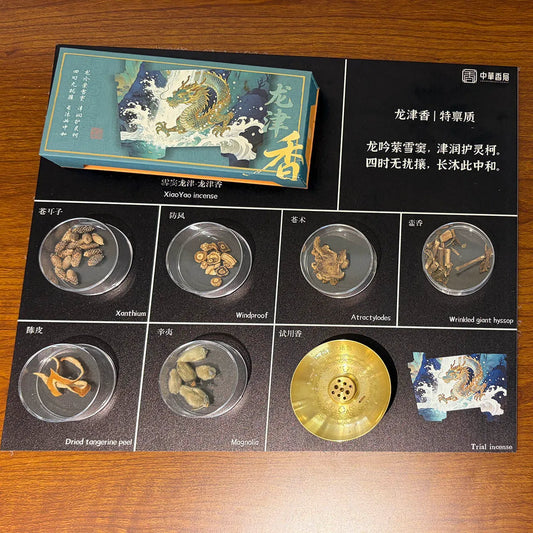
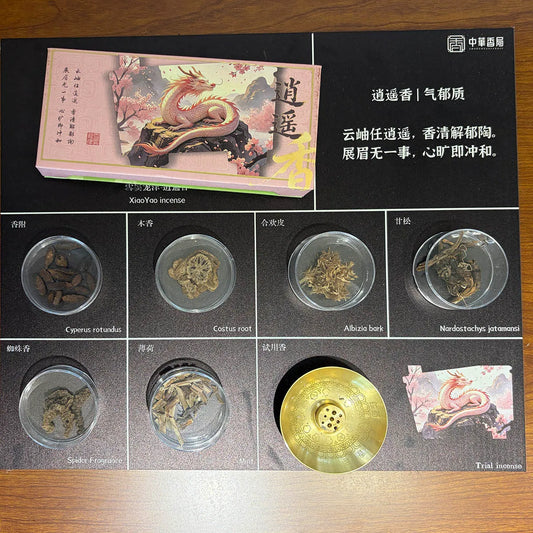
Natural incense is generally made from botanical and naturally derived aromatic materials. Depending on the tradition and formulation, these can include aromatic woods, herbs, roots, flowers, spices, and resins.
Common incense ingredients include:
- Sandalwood
- Agarwood
- Cedarwood
- Frankincense
- Herbs and roots
- Botanical powders
- Natural resins
In a botanical incense, the fragrance comes primarily from the characteristics of these materials rather than from a perfume-style fragrance being added to create a specific scent.
This distinction matters because natural materials can have considerable complexity. Sandalwood may smell warm, creamy, woody, and slightly sweet. Agarwood can develop deeper resinous, woody, and sometimes smoky nuances. Frankincense can offer bright, resinous, balsamic notes.
Rather than producing one obvious fragrance note, natural incense can change as it burns. The aroma you notice at the beginning may not be exactly the same several minutes later.
However, “natural” is not a universal quality certification. A product being made with natural materials does not automatically tell you how it was formulated, what binders were used, how it was manufactured, or how it will perform when burned.
That is why ingredient transparency matters.
What Is Synthetic-Style Incense?
Synthetic incense typically uses manufactured fragrance compounds, either alone or alongside other incense materials, to create a particular scent profile.
This approach can be useful when a manufacturer wants a fragrance to be:
- Strong and immediately recognizable
- Consistent from one batch to another
- Designed around a specific perfume profile
- Inspired by fragrances that are difficult to reproduce using raw botanicals alone
For example, a fragrance-focused incense may be designed to smell like vanilla, rose, fresh linen, fruit, or another familiar fragrance category.
Synthetic fragrance does not automatically mean poor quality, just as natural ingredients do not automatically mean high quality. These products are simply made with a different formulation philosophy.
The more useful question is not “Is synthetic bad?”
It is: What ingredients are being used, and does the product deliver the experience you actually want?
Natural vs. Synthetic Incense: What’s Actually Different?
The difference between natural and synthetic incense becomes clearer when you look at several parts of the product rather than focusing on the label alone.
1. Ingredients
The most obvious difference is the source of the aromatic materials.
Natural botanical incense may use woods, herbs, roots, and resins as part of its fragrance composition. Synthetic-style incense may use manufactured fragrance compounds to achieve a specific scent.
But incense is rarely just “fragrance.”
A finished incense product may also contain a combustible base, binder, core, or other materials that determine how the product holds together and burns.
That means a meaningful ingredient list should tell you more than simply the name of the fragrance.
If a product is described as “sandalwood incense,” for example, it is worth knowing whether sandalwood is actually part of the formulation or whether the product is primarily a manufactured fragrance designed to smell like sandalwood.
2. Source of Fragrance
This is one of the most important distinctions for consumers.
Ask: Where does the fragrance actually come from?
With botanical incense, aromatic woods, herbs, and resins contribute their own natural scent compounds.
With fragrance-focused incense, manufactured aroma compounds may be used to create a particular scent profile.
Neither approach automatically guarantees a better product. The difference is in what you are choosing to experience.
If you enjoy discovering the character of individual woods and resins, botanical incense may be more interesting.
If you want a strong and recognizable fragrance, a fragrance-focused incense may better match your preference.
3. Binder and Incense Structure
An incense stick needs more than aromatic ingredients to hold its shape and burn properly.
Depending on the formulation and manufacturing method, incense may contain materials that help bind the ingredients together and control how the stick burns.
This is an area that is often overlooked in simplified discussions about natural versus synthetic incense.
A product can contain natural aromatic ingredients and still have other components in its formulation. Conversely, the presence of a manufactured component does not, by itself, tell you whether an incense is well made.
If a brand is serious about transparency, it should be willing to explain what goes into its products rather than relying entirely on broad claims such as “natural” or “premium.”
4. Fragrance Development
Natural botanical incense often has a more evolving fragrance profile because multiple aromatic compounds are released as the materials heat and burn.
You may notice an initial woody note followed by warmer, resinous, herbal, or earthy nuances.
Synthetic fragrance systems can be designed to deliver a more immediate and recognizable scent. Their character may also remain more consistent from beginning to end.
This creates two very different fragrance experiences.
One is not objectively better.
The better choice depends on whether you want to explore the material itself or simply enjoy a specific fragrance in your space.
5. Craftsmanship and Manufacturing
Natural incense has a long history across Asia and other parts of the world, with different traditions developing their own approaches to material selection, grinding, blending, forming, drying, and burning.
Craftsmanship can influence the final experience just as much as the ingredient list.
Particle size, moisture, formulation, compression, drying, and other manufacturing variables can affect how evenly an incense burns and how its aroma develops.
This is why two incense products made with similar ingredients can still perform differently.
Quality is not determined by ingredients alone. It is also determined by how those ingredients are formulated and made.
Does “Natural” Mean Safer?
This is where incense marketing often becomes misleading.
Natural does not automatically mean smoke-free, risk-free, or safer to burn.
Incense is a combustion product. When any combustible material burns, it can generate particulate matter and other compounds. Research measuring different incense products has found substantial variation in PM2.5 emissions, and more recent research has characterized a range of organic compounds in incense smoke.
That means it is not scientifically responsible to tell consumers that a natural incense is automatically harmless simply because its ingredients come from plants.
At the same time, this does not make the natural-versus-synthetic distinction meaningless.
Ingredient transparency still matters because consumers deserve to understand what materials are being used to create the product they are burning.
A more useful way to think about it is:
Natural describes ingredient origin. It does not describe every aspect of combustion or indoor air quality.
Use incense responsibly, maintain appropriate ventilation, and avoid treating any burning fragrance product as completely risk-free.
What Happens When Incense Burns?
This is one reason incense is fundamentally different from products such as perfume or a passive fragrance diffuser.
You are not simply releasing fragrance into the room. You are heating and burning a formulated material.
The resulting smoke can contain particulate matter and a complex mixture of organic compounds. Research has found that the emissions produced by incense vary depending on the materials and formulation, which means two products that look similar can produce different emission profiles.
For consumers, the practical takeaway is simple:
Do not judge incense quality solely by whether the label says “natural.”
Look at the ingredients, formulation, manufacturing information, and the way the product is intended to be used.
And when burning incense indoors, use a stable holder, maintain reasonable airflow, and avoid placing the incense close to your face or in an enclosed, poorly ventilated area.
How Can You Tell If Incense Is Truly Natural?
There is no reliable visual test that can prove an incense is natural.
Color, smoke appearance, ash shape, or fragrance intensity may tell you something about how a product burns, but none of these characteristics can establish the origin of its ingredients on their own.
Instead, use a more reliable checklist.
1. Read the Ingredient Information
Look for specific information about the materials used.
For botanical incense, this might include names such as sandalwood, agarwood, frankincense, herbs, roots, or other plant materials.
The more specific the ingredient information, the easier it is for you to understand what you are buying.
A vague phrase such as “natural fragrance” tells you much less than a clearly described formulation.
2. Find Out What Creates the Fragrance
Ask whether the fragrance comes from the botanical materials themselves or from an added fragrance composition.
For example, an incense marketed around sandalwood should ideally make clear whether sandalwood is actually part of the formulation or whether the product is simply designed to reproduce a sandalwood-like aroma.
This distinction is especially useful when comparing products at different price points.
3. Understand the Binder
A good ingredient list should not make you guess what holds the incense together.
If a brand provides information about its binder and production method, that is a positive sign of transparency.
You do not need to become a chemist to evaluate incense. You simply need enough information to understand what you are putting into your home.
4. Look Beyond the Packaging
Words such as:
- Natural
- Pure
- Premium
- Traditional
- Clean
- Handmade
can describe a product, but they should not replace meaningful ingredient information.
Packaging can communicate a brand's aesthetic. It cannot tell you the complete formulation.
5. Look for Manufacturing Information
A transparent brand should be able to explain, at least at a general level, how its incense is made.
Information about ingredient selection, blending, forming, drying, and craftsmanship can tell you much more about a product than a photograph of smoke rising from a beautiful incense holder.
Can You Tell Natural Incense by Its Smoke or Ash?
Not reliably.
You may hear claims that natural incense always produces thin smoke, white ash, a particular ash shape, or a specific burning speed.
These characteristics can vary with the formulation, moisture content, airflow, incense shape, and burning conditions.
Most importantly, they cannot prove whether an incense contains synthetic fragrance.
So use smoke and ash as observations of burn behavior, not as a chemical authenticity test.
If you want to know whether an incense is genuinely botanical, ingredient and manufacturing transparency are much stronger signals.
Natural vs. Synthetic Incense: Which Should You Choose?
The right choice depends on what you value.
| If you care most about... | You may prefer... |
|---|---|
| Exploring the character of woods and resins | Natural botanical incense |
| Clear information about botanical ingredients | A transparent natural incense brand |
| Strong and recognizable fragrance | Fragrance-focused incense |
| A consistent perfume-like scent | Synthetic fragrance-based incense |
| Traditional incense craftsmanship | Botanical incense made using traditional methods |
| Understanding what materials you are burning | Products with detailed ingredient disclosure |
There is no need to treat this as a moral choice between “good” and “bad” incense.
Instead, think about the experience you want and the information you expect from the brand.
For many incense enthusiasts, the appeal of botanical incense is not simply that it is labeled natural. It is the opportunity to experience the character of woods, herbs, and resins directly and to understand where that aroma comes from.
How to Choose High-Quality Natural Incense
If you decide that natural botanical incense fits your preferences, there are several additional factors worth considering.
1. Start With the Ingredient
If you are new to incense, begin with a recognizable material rather than a complicated blend.
- Sandalwood is a good starting point if you enjoy warm, smooth woody aromas.
- Frankincense offers a brighter resinous character.
- Cedarwood tends to feel drier and more forest-like.
- Agarwood is more complex and can be a rewarding choice for people who want to explore deeper traditional incense profiles.
- Panda Incense use pure botanical ingredients, delivering layered herbal aroma. and can be a good choice if you are sensitive to smoke and full of curiosity.
Starting with individual materials makes it easier to understand your own preferences.
2. Pay Attention to the Burn
A quality incense should be enjoyable throughout the burn, not only during the first few minutes.
Notice whether the aroma changes gradually, whether the smoke feels excessively heavy, and whether the fragrance remains balanced as the incense progresses.
These observations do not prove whether an incense is natural, but they can help you decide whether the product itself is well suited to your preferences.
3. Look for Ingredient Transparency
The more a brand explains about its materials and manufacturing, the less you have to rely on marketing language.
A good incense brand should make it reasonably easy for customers to understand what they are purchasing.
That is a better measure of quality than expensive packaging or an impressive product description.
Why Ingredient Transparency Matters at Panda Incense
At Panda Incense, we believe choosing incense should begin with understanding the materials behind the fragrance.
Our approach is rooted in botanical ingredients, traditional incense craftsmanship, and the idea that fragrance should come from the character of the materials rather than simply from creating the strongest possible scent.
That means we care about more than calling an incense “natural.”
We want the materials, craftsmanship, and intended fragrance experience to have a clear relationship.
Our collections explore ingredients and traditions including sandalwood, agarwood, frankincense, herbs, and other botanical materials, giving you different ways to experience incense according to your own preferences.
If you are choosing incense for the first time, start with the ingredient that naturally appeals to you. If you already know what you like, explore how different woods, resins, and herbal combinations develop when burned.
The goal is not to find the incense with the best marketing claim. It is to find the incense whose materials, craftsmanship, and fragrance experience make sense to you.
Explore Panda Incense‘s botanical collection and find a fragrance that fits your personal ritual.
Frequently Asked Questions
Is natural incense better than synthetic incense?
Not automatically. Natural and synthetic incense use different approaches to fragrance and formulation. Natural botanical incense may appeal to people who want to experience the character of woods, herbs, and resins, while synthetic fragrance-based incense can offer stronger or more specific scent profiles. The best choice depends on your preferences and how much ingredient transparency you expect.
Is natural incense safer than synthetic incense?
“Natural” should not be treated as a guarantee of safety. Burning incense produces smoke and particulate matter regardless of whether its ingredients are natural or synthetic. Research has found significant variation in emissions between incense products. Use incense responsibly and provide appropriate ventilation.
How can I tell if incense is natural?
Start with the ingredient list and look for specific information about botanical materials, fragrance sources, binders, and manufacturing. Smoke color, ash appearance, and fragrance strength cannot reliably prove that an incense is natural.
Does natural incense contain synthetic fragrance?
It depends on the product. Some botanical incense is formulated without added synthetic fragrance, while other products may combine natural materials with fragrance components. Check the manufacturer's ingredient and formulation information rather than assuming from the word “natural” alone.
What is incense made of?
Incense can contain aromatic woods, herbs, roots, flowers, resins, binders, combustible materials, fragrance components, or combinations of these. The exact formulation varies by incense type and manufacturing tradition.
Does natural incense produce smoke?
Yes. Natural incense is still a combustible product, so burning it produces smoke and particulate matter. “Natural” does not mean smoke-free.
What is the best natural incense for beginners?
Sandalwood, cedarwood, and frankincense are approachable starting points because each offers a relatively recognizable fragrance profile. If you prefer deeper and more complex aromas, agarwood can be a good next step.
Can natural incense be completely smoke-free?
No. If an incense stick is designed to burn, some smoke and combustion products are expected. If you want fragrance without combustion, consider a non-burning fragrance format instead. Explore our wearable incense bracelets and necklace.
Continue Your Incense Journey
The Complete Guide to Natural Incense
Learn how to choose incense, understand fragrance styles, and create a balanced incense ritual. → Link
7 Best Incense Scents for Beginners
Discover beginner-friendly incense scents and find your preferred fragrance profile. → Link
Chinese VS. Japanese incense
Learn the difference between them by different traditions. → Link