Same Blend, Six Years Apart
This fall, we set up long tables at a local senior center and invited our neighbors to grind herbs, knead the incense paste, and roll their own Qing Geng incense sticks. Many of the hands at that table were in their forties, fifties, and beyond. Hopefully, these will help them get through the season safely and steadily.
Most of them did not know this blend carries an older, harder story. In February 2020, at the height of the COVID-19 outbreak in China, incense maker Li Shiliang (the 5th inheritor) and his mother(the 4th inheritor) processed more than ten tons of herbal raw materials into traditional incense and gave it away, free of charge, to residents, hospitals, and police stations. China News Service reported the numbers on February 27, 2020. Among the items listed: 3,000 boxes of Qing Geng incense.

Same blend, six years apart. One version was boxed up and sent out in a crisis. The other was made, slowly, by people sitting around a table.
February 2020: the donation
Li Shiliang is a representative inheritor of traditional incense-making craft, item Ⅷ-224 on China's national intangible cultural heritage list. His family has made incense since the mid-Qing dynasty.
In the early weeks of the outbreak, the family worked late into the night, milling and packing incense by hand, every night. The free distribution list, as reported:
- Bi Wen Dan, a formula from the family archive: 20,000 portions
- Duanyang incense: 51 boxes
- Qing Geng incense: 3,000 boxes
- Chi Kao Ma Hou incense: 3,000 boxes
- Jiaolan incense: 5,000 boxes


Deliveries went to residents, district hospitals, and police stations. Ten boxes of assorted incense went to the Xicheng District health authority for distribution. The following week, on March 2, Li and staff from Beijing's municipal culture and traditional Chinese medicine authorities brought more than 1,700 sets of incense to 1,700 medical workers at You'an Hospital, one of Beijing's infectious-disease hospitals.

He also took the craft online. On February 22, 2020, he fronted a free public video class produced with Beijing's municipal culture and tourism bureau, walking housebound viewers through a simple five-ingredient home incense recipe and encouraging them to make it themselves.
It was not the first time. In 2003, during the SARS outbreak, his family gave away nearly six tons of incense.
What changed in six years, and what did not
Back then, the incense left the workshop as finished product: boxed, sealed, delivered. This fall it left the table unfinished, in the hands of the people who made it.
We did not hand out the same kindness twice. The first time, the kindness was in the giving. This time it is in the caring and teaching: once someone knows how to grind, knead, and roll, the craft stops being a product they receive and becomes something they own.
Same incense. A different shape of care.
Make it part of your fall
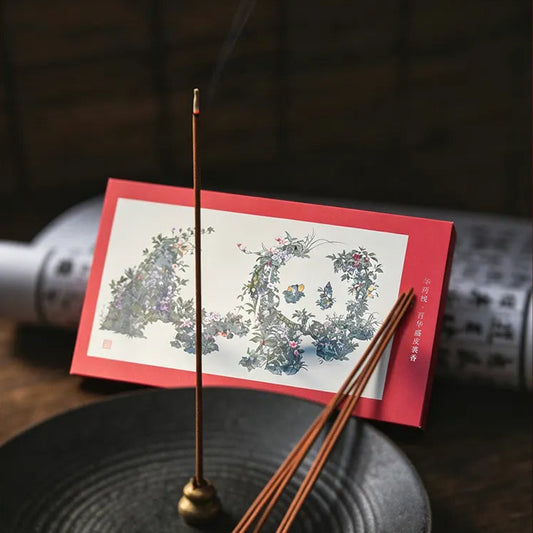
If you would like to try the blend itself, Qing Geng incense is here. Its companion from that same 2020 list, Chi Kao Ma Hou incense is here too. And if you are building out your autumn shelf, start with our Fall Guide.