Daily Detox Support: Can Wearable Aromatherapy Help Your Body Cleanse?
"Detox" might be the most overused word in wellness. Juice cleanses, foot pads, charcoal drinks, infrared saunas — the market is saturated with products promising to "flush toxins" from your body. Most of them do little, and some are actively harmful.
So let's be precise. The Swirl incense bracelet is not a detox product. It won't flush anything from your body. What it does is something more subtle — and arguably more useful: it provides continuous, gentle aromatic support that follows the Traditional Chinese Medicine principle of 凉血消肿 — "cooling the blood and reducing swelling."
To understand what that means — and why it's more relevant to your daily life than any juice cleanse — we need to look at two TCM concepts: cooling blood and heart-kidney fire disharmony.
What "Cooling Blood" Means
In TCM theory, blood isn't just the red fluid that circulates through your veins. It's a functional concept that includes the blood itself, the nutritive substances it carries, and the body's inflammatory state. When TCM says the blood is "hot" (血热), it means there's an inflammatory excess — a pattern of hyperactivity in the body's circulatory and immune systems.
Manifestations of "blood heat" include:
- Skin inflammation — redness, rashes, breakouts, sensitivity
- Restlessness and irritability — the feeling of being "wired"
- Dryness — mouth, skin, eyes
- Warmth that isn't from external temperature — feeling flushed without a fever
- Swelling — inflammatory fluid retention, puffy face, stiff joints
Modern parallels: chronic stress increases inflammatory markers (C-reactive protein, interleukin-6, cortisol). Elevated cortisol drives systemic inflammation, which manifests as exactly the kind of symptoms TCM categorizes as "blood heat." (Source: American Psychological Association, chronic stress and inflammatory marker research — widely documented in psychoneuroimmunology literature)
"Cooling blood" in TCM means using specific herbs to reduce this inflammatory pattern. Many of these herbs contain compounds with documented anti-inflammatory properties in laboratory settings: flavonoids, tannins, and volatile compounds that modulate inflammatory pathways.
Heart-Kidney Fire: When Anxiety Meets Exhaustion
The incense bead bracelet's TCM classification includes 泻火除烦(心肾之火) — "clear fire and relieving restlessness, specifically heart-kidney fire." This is a more specific diagnosis than general "heat," and it's worth understanding because it describes a state most modern adults will recognize.
In TCM's five-element system:
- The heart corresponds to the fire element. It governs the spirit, consciousness, and sleep. When the heart is overactive, you get anxiety, racing thoughts, and insomnia.
- The kidney corresponds to the water element. It's the body's deepest energy reserve — what modern medicine might call adrenal function. The kidney's cooling water is supposed to anchor the heart's fire, keeping it from flaring out of control.
Heart-kidney fire disharmony occurs when the kidney is too depleted to cool the heart. The result: anxiety combined with exhaustion. You're wired and tired simultaneously. Your mind races but your body feels depleted. You can't sleep, but you can't function either.
If that sounds familiar, it should. It maps almost perfectly onto what functional medicine calls HPA axis dysregulation (hypothalamic-pituitary-adrenal axis dysfunction) — the state where chronic stress has depleted the adrenal system's ability to regulate the stress response, resulting in a paradoxical state of exhaustion + hyperarousal. (Source: Endocrine Society, HPA axis and chronic stress research — established concept in endocrinology and psychoneuroimmunology)
The TCM solution — "clearing heart-kidney fire" — involves herbs that simultaneously calm the heart (reducing anxiety and racing thoughts) and nourish the kidney (supporting the body's deepest energy reserves). It's a two-pronged approach: not just sedating the overactive system, but supporting the depleted system that allowed it to become overactive in the first place.
What Wearable Aromatherapy Actually Does
Clear expectations: A herbal incense bracelet is not a treatment for HPA axis dysregulation, adrenal fatigue, or any medical condition. If you're experiencing chronic anxiety, insomnia, or exhaustion, consult a healthcare provider.
What a wearable herbal bracelet can do is provide continuous, low-level aromatic support that works through two mechanisms:
1. Olfactory-limbic pathway: As we've covered in detail in our scent and mood article, the olfactory nerve connects directly to the limbic system — the brain's emotional center. Cooling, clean, herbaceous scents reaching the limbic system throughout the day provide a continuous signal to reduce stress activation. Lower stress = lower cortisol = less inflammatory burden on the blood.
2. Pattern interrupt: When you notice the scent — particularly when you roll the beads and intensify the release — it serves as a sensory cue to pause, breathe, and reset. This interrupts the stress escalation cycle before it peaks. Over time, the act of touching the beads becomes a conditioned relaxation response.
The indirect logic: chronic stress impairs liver function, lymphatic flow, and digestive elimination. By reducing the stress response through continuous aromatic support, you reduce the burden on these natural detoxification systems. This isn't "detox" in the marketing sense — it's stress reduction that indirectly supports the body's own cleansing processes.
The Swirl Incense Bracelet's Visual Identity
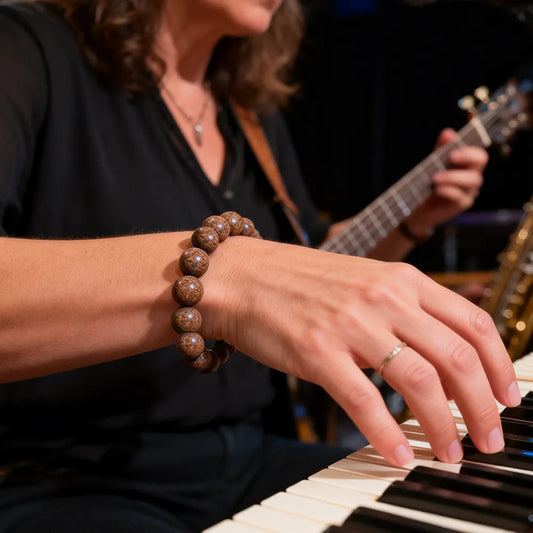
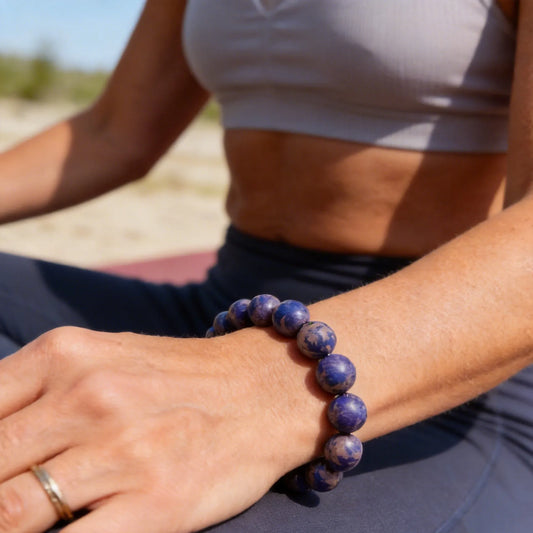
Beyond its formula, the swirl incense bracelet has a distinctive visual character, emerald-yellow flowing pattern beads. The compressed herbal material creates natural swirls of green and gold in each bead, with organic patterns that vary from bead to bead.
This isn't decorative dye or paint. The color variations come from the natural pigments in the herbal ingredients themselves — plants that contain chlorophyll (green), curcumin or similar compounds (yellow/gold), and tannin-rich materials (brown/amber). When the herbal powders are mixed, pressed, and cured, these pigments create swirling patterns that no machine could replicate.
The visual effect reinforces the formula's purpose: the green suggests cooling, herbal vitality; the gold suggests warmth and nourishment. The two together visually represent the balance the formula seeks to create — cooling the excess heat while nourishing the depleted reserves.
How to Use a Cleanse-Support Bracelet
During inflammatory flare-ups: When your skin is acting up, your digestion is off, or you're feeling the "wired and tired" pattern of heart-kidney fire, wear the bracelet consistently. The clean, herbaceous scent profile helps maintain the parasympathetic state that allows your body's natural anti-inflammatory processes to function.
Post-stress recovery: After a period of intense work, travel, or emotional strain — when your system is depleted and inflamed — use the bracelet as part of a recovery routine. Roll the beads, breathe deeply, and let the cooling scent remind you to slow down.
Seasonal transitions: TCM associates "heat" with summer. As seasons change, the body's internal state shifts. A cooling bracelet can support the transition from the high-energy summer months into the more restful autumn and winter periods.
Pair with genuine detox habits: The bracelet works best alongside real detoxification practices: adequate water intake, sufficient sleep, regular movement (which supports lymphatic flow), and limiting inflammatory inputs (processed foods, excessive alcohol, chronic stress). The bracelet supports these practices; it doesn't replace them.
The Swirl incense bracelet is formulated for cooling blood, reducing swelling, and clearing heart-kidney fire. Natural emerald-yellow swirling patterns — each bead is unique. TCM classification: cooling blood, reducing fire, relieving restlessness. Hand-pressed from pure herbal powders. View the Swirl Cleanse Bracelet →
Frequently Asked Questions
What does "cooling blood" mean in traditional Chinese medicine?
In TCM, "cooling blood" refers to reducing inflammatory excess in the bloodstream. "Blood heat" in TCM theory manifests as skin inflammation, restlessness, and irritability. Cooling blood herbs are used to reduce this inflammatory pattern through compounds with documented anti-inflammatory properties.
What is "heart-kidney fire" disharmony in TCM?
In TCM, the heart (fire element) should be cooled by the kidney (water element). When the kidney is deficient — often from chronic stress and adrenal fatigue — it cannot cool the heart, resulting in "heart-kidney fire": anxiety, restlessness, insomnia, and irritability. This maps closely to what modern medicine describes as HPA axis dysregulation — chronic stress combined with adrenal exhaustion.
Can a bracelet actually help with detoxification?
A herbal incense bracelet provides very low concentrations of aromatic compounds. It is not a detox treatment. What it can do is provide continuous, gentle aromatic support that may help reduce the stress response — and since chronic stress itself impairs liver function, lymphatic flow, and digestive elimination, reducing stress indirectly supports the body's natural detoxification systems.
What does the Swirl bracelet's visual pattern mean?
The Swirl incense bracelet features natural emerald-yellow swirling patterns in the compressed herbal beads. These patterns occur naturally during the pressing and curing process from the pigments in the herbal ingredients, making each bead unique.