Sandalwood Bracelet Benefits: What 28 Herbs Do That Plain Wood Can't
Walk into any wellness shop in the US and you'll find sandalwood bracelets — strands of polished wooden beads, sometimes sandalwood-scented, sometimes not. They look nice. They smell nice, for a while. Then the scent fades, and you're left with what is essentially a wooden beaded bracelet.
That's not nothing. Sandalwood has been used in meditation and religious practice across Asia for over 4,000 years. But here's the thing: when you wear a plain sandalwood bead bracelet, you're getting one scent from one material. The aromatic compounds in sandalwood — primarily alpha-santalol and beta-santalol — are real and measurable, but they exist in a fairly narrow range.
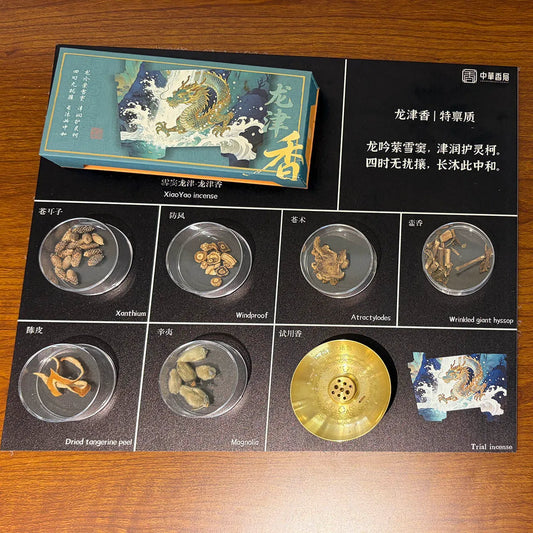
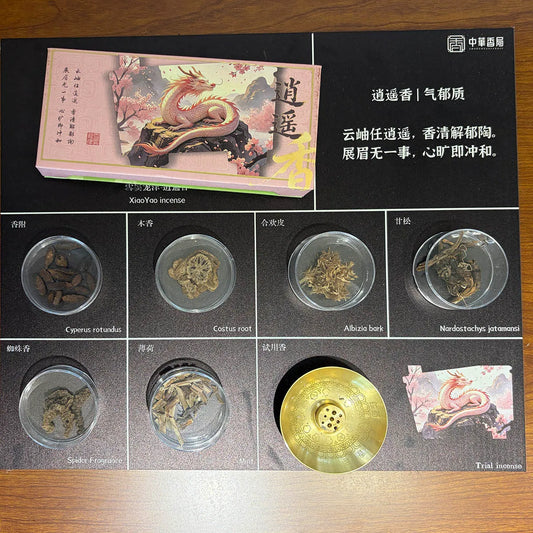
Now consider a different approach: instead of a single type of wood, what if each bead was a compressed blend of 28 different herbs, resins, and aromatic materials — each chosen for a specific therapeutic property, formulated according to a thousand-year-old principle of herbal compounding?
That's what a herbal incense bead bracelet is. Not wood. Not essential oil on lava stone. A solid bead made entirely from ground herbs, pressed and cured, that releases a complex, multi-layered aroma when warmed by your skin.
What Research Actually Says About Sandalwood
Several studies have examined sandalwood's effects on the human body and mind. Here's what the evidence shows — and where it falls short.
Alertness
A study published in Planta Medica found that sandalwood oil can increase pulse rate and blood pressure — physiological markers associated with heightened alertness. This doesn't mean sandalwood is a stimulant; rather, it suggests the scent promotes a state of "relaxed alertness" — awake but calm.
Anxiety Reduction
Research published in Complementary Therapies in Clinical Practice suggested that sandalwood oil may help reduce anxiety. The study's sample size was small, so the authors themselves described the results as "promising" rather than conclusive.
Brain Wave Activity
Inhalation of sandalwood scent has been shown to increase alpha brain waves — the pattern associated with a meditative, relaxed-but-aware state. This is the same brain wave state meditation practitioners spend years trying to achieve.
Skin Healing
A study from Ruhr-Universität Bochum in Germany found that human skin cells contain olfactory receptors that respond to sandalwood. When sandalwood compounds bind to these receptors, wound healing rates increased.
The honest caveat: These studies typically use sandalwood essential oil, not wooden beads. The concentration of aromatic compounds in a wooden bracelet is far lower than in a drop of essential oil. This is precisely why a herbal incense bead — where the entire bead is made from aromatic materials, not just a wooden shell — may offer more consistent aromatic exposure.
The He Xiang Principle: Why a Formula Beats a Single Ingredient
In Traditional Chinese Medicine, there's a principle called He Xiang, then is君臣佐使 (Jun-Chen-Zuo-Shi), which roughly translates to "sovereign, minister, assistant, and courier." It describes how a well-formulated herbal blend works:
- Jun (sovereign): The primary ingredient that addresses the main concern
- Chen (minister): Supports the sovereign, enhancing its primary effect
- Zuo (assistant): Modifies the formula — reducing side effects or adding secondary benefits
- Shi (courier): Guides the formula to where it needs to go
This isn't mysticism. It's a pharmacological principle that modern medicine recognizes: drug interactions matter. A single compound can do one thing; a well-designed combination can do several things simultaneously, with each ingredient modulating the others.
According to Li Zegeng, Director of the Respiratory Disease Prevention Institute at the Anhui Academy of Chinese Medicine Sciences, wearing herbal incense beads works through a mechanism called "treating illness through fragrance" (闻香治病), forming a "mild, long-lasting micro-stimulation" on the body's meridian points and respiratory system. (Source: Tencent News, July 2025, quoting Li Zegeng, 国家中医药管理局慢阻肺重点研究室主任)
The 28-Herb Formula in the Sandalwood Zen Bracelet
The Sandalwood Zen bracelet follows this principle. Its formula includes:
- Sandalwood (紫檀) as the sovereign — the grounding, calming base note
- Agarwood (沉香) as the minister — deepens the calming effect, adds aromatic complexity
- Cypress seed (柏子仁) and sour jujube seed (酸枣仁) as assistants — both are traditionally used in TCM to calm the spirit and support restful sleep
- Licorice (甘草) and patchouli (佩兰) as couriers — licorice harmonizes the formula; patchouli lifts and circulates the aroma
In total, 28 herbs are ground, blended, and pressed into each bead. When the bead warms against your skin, the combined aromatic compounds release in layers — not all at once, but in sequence, as different materials have different volatilization points.
This is why the scent of a herbal incense bead bracelet evolves throughout the day. The top notes (lighter, more volatile compounds) release first. The middle and base notes follow as body heat continues to warm the bead. You experience a progression, not a single flat note.
How This Differs From Other Aromatherapy Jewelry
Most aromatherapy jewelry on the US market works by absorption: you apply essential oil to a porous material (lava stone, felt pad, untreated wood) and the material slowly releases the scent. This works, but it has limitations:
- You have to reapply oil — usually every 1-2 days
- One scent at a time — you can't easily layer multiple oils
- Scent intensity varies — strong right after application, then fades
- Oils can irritate skin — direct contact with concentrated essential oils is a known sensitivity risk
A herbal incense bead bracelet works differently. The aromatic materials are the bead itself — not applied to it. You don't need to add anything. The fragrance is built in, and because the beads are solid compressed herbs (not porous stone absorbing liquid), the scent lasts far longer — months, not days.
The global aromatherapy bracelet market was valued at $356.2 million in 2025, projected to reach $912.7 million by 2034 (CAGR 11.2%). (Source: IntelMarketResearch, Aromatherapy Bracelets Market Report, 2025) The beaded diffuser bracelet segment accounts for 19.6% of that market. (Source: MarketIntelo, Diffuser Bracelet Market Report, 2025) Herbal incense beads represent a natural evolution of this category — combining the wearable aromatherapy concept with traditional herbal compounding.
How to Use a Sandalwood Herbal Bracelet
The bracelet works through body heat. Your skin warms the beads, and the aromatic compounds release gradually. Here's how to get the most from it:
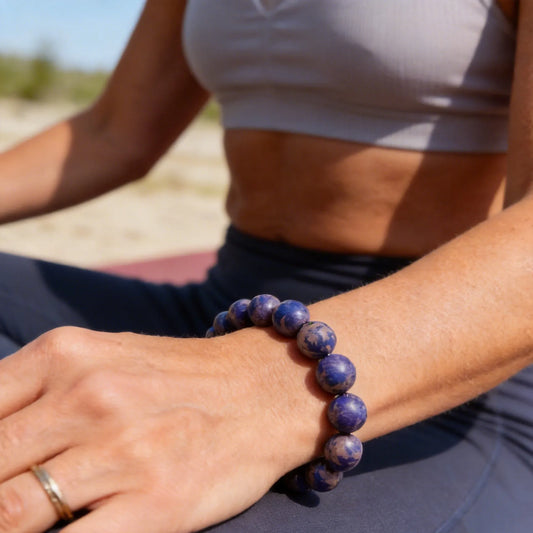
Wear it on your wrist. The inner wrist has good blood flow and warmth, and it's close to your nose when you rest your chin on your hand or bring your wrist near your face. The Neiguan point (内关穴), located on the inner forearm about three fingers from the wrist crease, is a traditional acupoint associated with calming — which is why Chinese medicine practitioners suggest wearing aromatic beads there.
Roll the beads between your fingers. This isn't just fidgeting. The physical act of rolling beads is a grounding technique used in meditation across cultures. The tactile sensation brings attention back to the body, interrupting anxious thought loops. When you roll the beads, you also warm them faster with friction, intensifying the scent release.
Use it as a mindfulness cue. Every time you catch the scent, let it remind you to take one conscious breath. This is how a wearable scent becomes more than decoration — it becomes a pattern interrupt for stress.
Store it properly. When you're not wearing it, keep the bracelet in a sealed bag or small box. The aromatic compounds will continue to evaporate slowly even when not worn. Keep it away from water — the beads are compressed herbal powder, and moisture will soften them.
What to Look For When Choosing a Sandalwood Bracelet
Not all sandalwood bracelets are created equal. Here's what matters:
Solid herbal beads vs. wooden beads. If the product description says "sandalwood beads" or "wooden beads," you're getting wood. If it says "herbal incense beads" or "compressed herbal beads," you're getting a formula. The difference is significant.
Number of herbs. More isn't automatically better, but a formula with 15-28 herbs suggests genuine compounding, not a simple mix. Ask the seller for the ingredient list — reputable makers will share it.
Sourcing. Indian sandalwood (Santalum album) is now a protected, strictly regulated species due to over-harvesting. Look for brands that disclose their sourcing and use sustainable materials.
No synthetic fragrance. This is the most common shortcut: cheap bracelets use chemical fragrance oils to mimic sandalwood scent. The real thing has a complex, woody, slightly sweet aroma. If the scent is overwhelmingly strong and one-dimensional, it's likely synthetic.
The Sandalwood Zen bracelet is a 28-herb compressed incense bead bracelet formulated with sandalwood, agarwood, cypress seed, sour jujube seed, and 24 additional botanical materials — following the traditional Jun-Chen-Zuo-Shi principle. No synthetics. No fillers. Each bead is 100% herbal material. View the Sandalwood Zen Bracelet →
Frequently Asked Questions
How long does the scent last?
With proper care (keeping dry), the fragrance in herbal incense beads typically lasts 6-36 months. Unlike essential oils on lava stone, which fade in 1-2 days, the compressed herbal material is dense and releases slowly. Over time, the scent will become subtler but won't disappear entirely.
Can I add essential oils to the beads?
No, it's not necessary. The beads already contain their own aromatic materials. Adding oil may overpower the formula's layered scent and could soften the compressed powder. To refresh the scent, gently warm the beads by rolling them in your hands for a few minutes.
Is this safe for sensitive skin?
The beads are made from natural herbal powders. However, some people are sensitive to specific plant materials. If you have known allergies to any ingredient, check the full list before purchasing. As with any new wearable, wear it for a short period first to test your skin's reaction.
Can I wear it in the shower?
No. The beads are compressed herbal powder, and water will soften and damage them. Remove before showering, swimming, or washing hands.
Does this replace medical treatment for anxiety?
No. Aromatherapy — whether through a bracelet, diffuser, or incense — is a complementary approach that may support relaxation and mood. It is not a treatment for anxiety disorders, insomnia, or any medical condition. If you're experiencing persistent anxiety, sleep problems, or other health concerns, consult a healthcare provider.