"Clearing Heat" in Traditional Chinese Medicine: A Modern Guide to Herbal Cooling
There's a feeling that most adults know but few can name precisely: the sense that your system is running too hot. Not a fever — something subtler. Your mind races. Your patience thins. Small irritations flare into disproportionate reactions. You feel wired, frayed, overstimulated.
In Traditional Chinese Medicine, this state has a name: heat (热). And the practice of addressing it — clearing heat (清热) — is one of TCM's most relevant concepts for modern, chronically stressed lives.
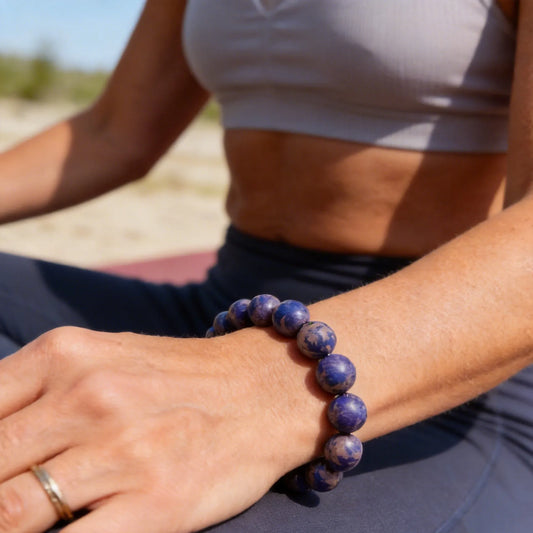
The Blazing Palette incense bracelet was formulated for exactly this state. Its TCM classification is 清热解毒、安神养脑 — "clearing heat, detoxifying, calming the spirit, and nourishing the brain." Its scent profile is deliberately cool, clean, and herbaceous. Think of it as an olfactory reset button for when everything feels like too much.
What "Heat" Means in TCM (And Why It's Not Just Temperature)
In Western medicine, "heat" means elevated body temperature — a measurable, objective metric. In TCM, "heat" is broader. It describes a pattern of hyperactivity, inflammation, and excess stimulation in the body's functional systems. You can have "heat" without a fever.
Common manifestations of "heat" in TCM include:
- Mental restlessness — racing thoughts, inability to settle, feeling "wired"
- Emotional irritability — short fuse, disproportionate reactions to minor stressors
- Physical inflammation — redness, swelling, skin flare-ups, digestive inflammation
- Sleep disruption — difficulty falling asleep, vivid or agitated dreams
- Dryness — dry mouth, dry skin, thirst that water doesn't fully quench
Modern parallels are striking. Chronic stress activates the sympathetic nervous system (the "fight or flight" response), which increases cortisol production, raises heart rate and blood pressure, and promotes systemic inflammation.
The overlap between TCM's "heat pattern" and what stress researchers call "sympathetic hyperactivation" is not a coincidence. Both describe the same physiological state from different frameworks. TCM's solution — "clearing heat" — maps roughly onto what modern stress researchers recommend: activating the parasympathetic nervous system (the "rest and digest" response) to bring the system back to baseline.
How "Clearing Heat" Works
In TCM, clearing heat involves two strategies:
1. Cooling: Introducing herbs with cooling properties — materials that, in TCM classification, reduce internal heat and calm hyperactive systems. These are often herbs with menthol, camphor, or similar volatile compounds that produce a physically cooling sensation. The olfactory experience of a cool, clean scent itself triggers a relaxation response through the olfactory-limbic pathway.
2. Detoxifying (解毒): In TCM, "toxins" (毒) refer to accumulated metabolic waste and inflammatory byproducts — not poisons in the Western sense. Detoxifying herbs support the body's natural elimination pathways (liver, kidneys, skin, respiration). The aromatic compounds in these herbs often have documented antimicrobial and anti-inflammatory properties in laboratory settings.
The Blazing Palette bracelet's incense formula combines both strategies. Its scent is described as "cool, clean, herbaceous — like a gentle breeze on a warm day." This isn't accidental. The cooling sensation of certain aromatic compounds (menthol-type compounds, camphoraceous herbs) creates an immediate sensory experience of relief — which, through the olfactory-limbic connection, translates to a physiological relaxation response.
Honest framing: TCM concepts like "heat" and "toxins" are part of a traditional medical system, not equivalent to Western medical diagnoses. A herbal bracelet provides very low concentrations of aromatic compounds. Its primary mechanism is through the olfactory-limbic pathway (scent → emotion → stress response) rather than direct pharmacological action. If you're experiencing persistent inflammation, sleep disruption, or other health concerns, consult a healthcare provider.
The Science Behind Cooling Scents and Stress
While the Blazing Palette's specific formula is proprietary, the category of "cooling" aromatic herbs in TCM overlaps with compounds that modern research has studied for stress relief:
Menthol-containing herbs (like peppermint, which appears in several formulas in this product line): Research suggests peppermint scent can improve alertness and cognitive performance while also producing a subjective sense of cooling and refreshment. The cooling sensation itself may serve as a pattern interrupt — a sensory signal that something has changed in the environment, breaking the cycle of stress escalation.
Camphoraceous herbs (like borneol, which appears in several formulas): Borneol has been used in TCM and Ayurveda for centuries as a "cooling, opening" agent. In modern research, borneol has demonstrated anti-inflammatory and analgesic properties in laboratory studies.
The olfactory-limbic pathway: As covered in detail in our article on scent and mood, the olfactory nerve connects directly to the limbic system — the brain's emotional center. A cool, clean scent reaching the limbic system within seconds of inhalation can interrupt an escalating stress response before it peaks. This is the core mechanism behind any aromatherapy approach to stress.
How to Use a Cooling Bracelet
During high-stress periods: Wear the incense bead bracelet during demanding work projects, deadline periods, or any time you feel chronically "overheated." The cool, herbaceous scent provides a subtle, continuous signal to your nervous system that not everything requires maximum activation.
The "overwhelm reset": When you feel stress cresting — the moment when everything feels like too much — roll the beads between your fingers for 30-60 seconds and bring your wrist near your nose. Take three slow breaths. The cooling scent serves as a pattern interrupt: a sensory input that breaks the stress spiral and gives your prefrontal cortex (the rational, decision-making part of your brain) a moment to re-engage.
Summer and warm climates: The TCM concept of "heat" has a seasonal dimension. In hot weather, the body's cooling systems work harder, and the "heat pattern" is more likely to manifest. A cooling bracelet is particularly useful during summer months or in warm, humid climates.
Post-workout or post-caffeine: When your system is physiologically activated (elevated heart rate, cortisol, adrenaline from exercise or caffeine), a cooling scent can help transition your nervous system from sympathetic activation back to parasympathetic rest.
What "Detoxifying" Really Means Here
The word "detox" has been so overused in wellness marketing that it's nearly meaningless. Here's what it actually refers to in the TCM context:
Your body has natural elimination systems — the liver processes metabolic waste, the kidneys filter blood, the lymphatic system drains cellular byproducts, and the skin excretes through sweat. When stress is chronic, these systems can become less efficient. Elevated cortisol affects liver function, lymphatic flow, and digestive elimination.
"Detoxifying" herbs in TCM aren't a substitute for these organs. They're supportive compounds that may help reduce the inflammatory burden on the system — primarily through their antimicrobial and anti-inflammatory properties (documented in lab studies) and through their stress-reducing effect (which indirectly supports natural detoxification by lowering the cortisol load on the liver and lymphatic system).
A wearable herbal bracelet provides very gentle, continuous, low-level exposure — not a concentrated dose. Think of it as ambient support, not a treatment.
Choosing a Cooling or "Heat-Clearing" Bracelet
Scent profile matters. If you're looking for a "cooling" bracelet, the scent should be described with words like cool, clean, fresh, herbaceous — not warm, resinous, or sweet. The olfactory experience of coolness is itself part of the mechanism.
TCM classification. Look for products that reference 清热 (clearing heat) or 解毒 (detoxifying) in their formulation description. These indicate the formula was designed for the "heat pattern" rather than general relaxation.
Not all "cooling" scents are equal. A peppermint candle is "cooling" but provides only intermittent exposure. A herbal incense bead bracelet provides continuous, body-heat-activated release that follows you throughout the day.
The Blazing Palette bracelet is formulated for moments when everything feels like too much. Cool, clean, herbaceous scent profile. TCM classification: clearing heat, detoxifying, calming the spirit, nourishing the brain. Hand-pressed from pure herbal powders. View the Blazing Palette Bracelet →
Frequently Asked Questions
What does "clearing heat" mean in traditional Chinese medicine?
In TCM, "heat" (热) refers to a pattern of hyperactivity, inflammation, and overstimulation in the body — not just temperature. "Clearing heat" (清热) means calming this hyperactive state using cooling, soothing herbs. Modern parallels include chronic stress activation of the sympathetic nervous system and elevated inflammatory markers.
How does the incense bracelet work for stress?
The Blazing Palette aroma bracelet is formulated with cooling, clean, herbaceous herbs that follow the TCM principle of clearing heat and calming the mind. The scent profile — cool, clean, and centering — provides an olfactory pattern interrupt when stress builds and the mind feels overheated.
Can aromatherapy reduce inflammation?
Some essential oils and aromatic compounds have demonstrated anti-inflammatory properties in laboratory studies. However, wearable aromatherapy provides very low concentrations. The primary mechanism of a stress-relief bracelet is through the olfactory-limbic pathway — reducing the stress response that itself drives inflammation — rather than direct anti-inflammatory action.
When should I use a cooling bracelet?
Use a cooling bracelet during high-stress periods: demanding work projects, deadline crunches, summer heat, or any time you feel mentally overheated and frayed. The clean, herbaceous scent profile is particularly suited for moments when everything feels like too much.
Source:
- American Psychological Association, chronic stress and inflammation research — widely documented in stress physiology literature
- Journal of Ethnopharmacology, borneol pharmacological research — multiple studies documented in academic literature