Dou Xiang: The Earliest Incense Contest in Ancient China
Share
Dou xiang (斗香) is the Chinese name for an incense contest. A few people each bring one blend, everyone smells all of them, and the group picks the best one. The first time it shows up in writing, it happens at the Tang court, in the first decade of the 700s.
The record names the guests by surname only, four characters in a row (宗, 纪, 韦, 武). Read as names, they come out as Zong Chuke, Ji Chuna, Wei Wen, and Wu Sansi. These four were running the government for Emperor Zhongzong at the time. None of them was a hobbyist.
Wei Wen won, and he won more than once. The record gives one line for why (惟韦温挟椒涂所赐,常获魁). Jiao tu (椒涂) is the empress's private rooms. The word comes from an old building trick. Pepper was ground up and mixed into wall plaster. It held warmth and left the rooms smelling faintly of pepper, so an empress's quarters were called jiao fang (椒房). The line says Wei Wen's incense came out of those rooms. He was also the empress's cousin. The verb it uses, xie (挟), means to tuck something under your arm, and it also means to lean on it. Nowhere does the record say his blend smelled best.
A Ming book takes the same evening up again. Zhou Jiazhou's Xiang Cheng (香乘), printed in 1641, tells it in the same three steps: gather, bring a fine incense, compare. The only change is the last word. Where the early record says dou xiang, this one ends with xiang hui (香会), an incense meeting. Two books, one evening, two labels for it.
Dou Xiang Was Still Being Held in the Qing Dynasty
Kong Shangren (孔尚任) wrote a book of seasonal customs, Jie Xu Tong Feng Lu (节序同风录), in the Kangxi period. Under the first day of winter (立冬), he wrote down a dou xiang.
He begins with the table under the pines, and an old bronze ding and a Xuande censer are laid out (松下陈古鼎宣炉). Then the incense of twelve names, and after them a phrase for blends mixed at court (焚檀、降、沉、苏、栈、生、黄熟、牙速、伽南、安息、唵叭、脑片、宫制各种名香). All six (沉, 栈, 生, 黄熟, 牙速, 伽南) are agarwood, sorted into grades from the ordinary up to the top. So half of that list was one wood compared against itself, grade by grade, like six bottlings of the same grape at a tasting.
Then he gives the point of the evening. He gathered recluses to try incense, they compared better and worse, and the pastime was called dou xiang (集幽人为试香会,比试优劣,曰斗香).
The Half of a Dou Xiang You Could Watch
Smelling is invisible, so the same entry shows what was put out for a room to watch. The women of the household were the audience for incense plays (闺阁士女看香戏).
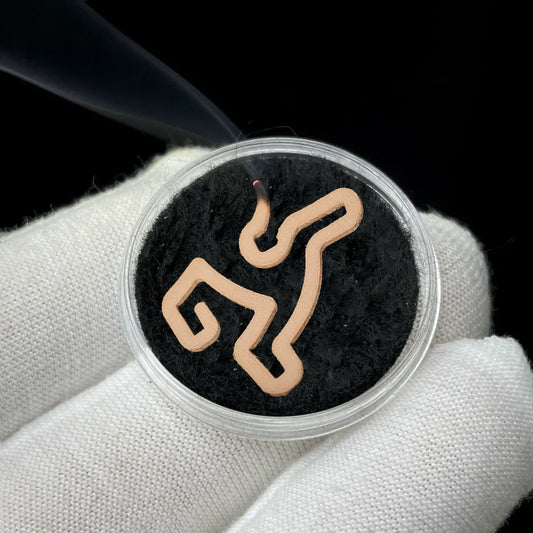
Two of them are burned in the shape of an animal, a lion (狻猊香) and a rabbit (玉兔香). You light the tail, and the smoke leaves the mouth (口中吐出香烟). When it finishes, the ash keeps the shape it had, gold or jade white, standing upright instead of falling over (焚完,灰如黄金、如白玉、立坐不仆).
The rest of the list goes the same way, each one a picture made of smoke. There is a toad spitting flame (金蟾吐焰), a cloud going home into a cave (白云归洞), a pavilion (楼阁香), cranes and phoenixes in flight (鹤飞鸾舞). One is called a hundred years together (百岁团圆), which reads as a wish for a family to stay whole.
One of these animals still has its recipe. Gao Lian's Zun Sheng Ba Jian (遵生八笺) and the Ming Xiang Cheng both carry it under the name jinni yutu xiang (金猊玉兔香). Incense goes into a hollow belly, and the mouth is bored through on a slant, which the recipe calls the trick of it. The finished animal is left standing in the censer, and the books say the ash holds for a month before it drops. They also say what it is (虽非大雅,亦堪幽玩), a toy rather than an art. Either way, a dou xiang had two halves. One went up the nose, and the other one the whole room could watch.
The Same Incense Smelled Like Scorpions to Someone Else
This is the trouble with deciding a contest by nose. Two people can stand at one burner and walk away with two different answers.
In 1086, in the capital at Kaifeng, Huang Tingjian was given a blend that had come down from the Southern Tang palace. He liked it enough to write poems in praise of it. Somebody else smelled the same incense and said it smelled like a neighbor simmering scorpions. His answer survives in a couplet (海上有人逐臭,天生鼻孔司南). Noses, it says, are born pointing different ways, the way a compass points.
Put those two at the same table and there is nothing to write down. One of them has a poem, the other has a complaint about the neighbor's cooking, and they are describing the same stick of incense.
The Incenses Had Names
A contest is an argument, and an argument needs words. Everyone at an incense contest brought a named incense (名香 ming xiang).
Four of the best known are collected under one heading in the Chen Family Incense Manual (陈氏香谱). The heading is the four incenses of Huang the Grand Historian (黄太史四香 huang taishi si xiang). Huang Tingjian had served as a court historian, which is where the heading comes from. None of the four were blends he made. They became famous because he wrote about them.
One arrived from a friend who asked for poems in return (意和香). One had come down under a palace woman's name, and he renamed it (意可香). One was blended for him as a farewell gift (深静香). One was made by admirers of a man who liked to close his shutters and burn incense alone (小宗香).
Read the four names side by side and you get harmony, approval, quiet depth, and a school of one. Not one of them says what is in the box.
What Words Did Song Writers Use for an Incense?
They reached for mood and weather and character. Of the first, Huang Tingjian wrote that it was clear and unhurried, with a natural air of wealth (清丽闲远,自然有富贵气). Of the third he wrote that it was faint and solitary, and that the world did not admire it. Burning one stick behind a closed curtain, he said, was like seeing the man himself (此香恬淡寂寞,非世所尚。时时下帷一炷,如见其人). Neither sentence names an ingredient. One describes a mood, and the other describes a friend.
Try It: One Incense Stick, Two People, Two Answers
The closest thing to that old evening costs one stick and about ten minutes. Light it, sit with somebody, and have each of you say what you smell before either of you says anything else. Then put the two answers side by side.
How to Describe an Incense You Cannot Name
Do not reach for the material. Say what room it makes you think of, or what kind of afternoon it belongs to. Say whether it is loud or quiet, near or far, familiar or strange. Then listen to the other description and notice where it disagrees with yours.
Swap sticks if you want the exchange to be fair. If you both sit with one stick all evening, your nose stops reporting on the incense and starts reporting on the room.
After that, the only question left is which one you are. Some people want the clear, unhurried blend with an air of wealth about it. Some want the faint one the world does not admire. The way to find out is to smell them next to somebody who disagrees.
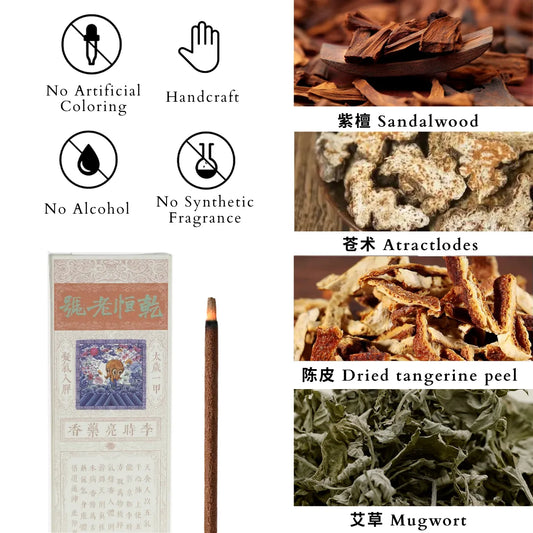
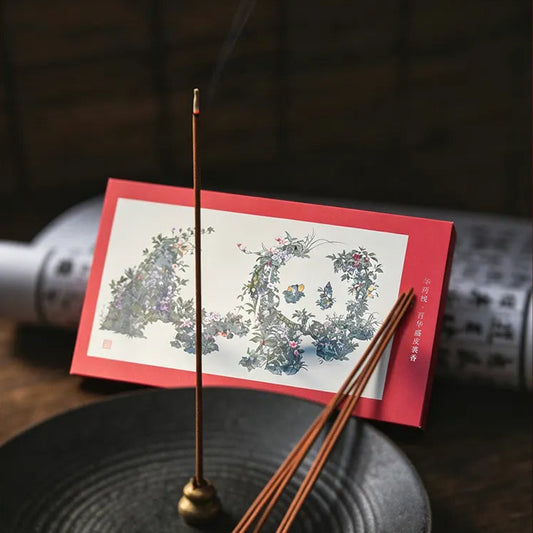
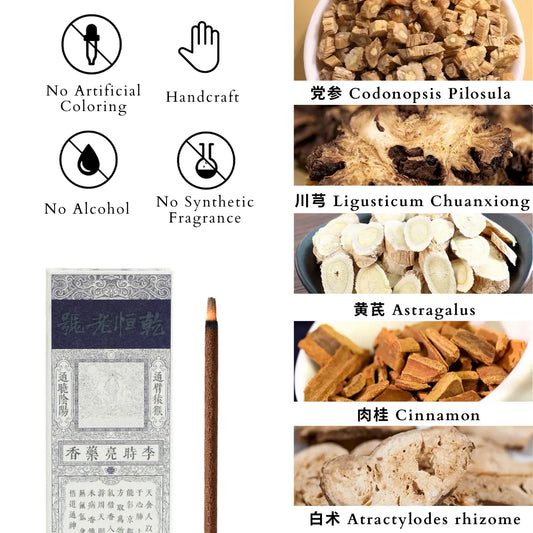
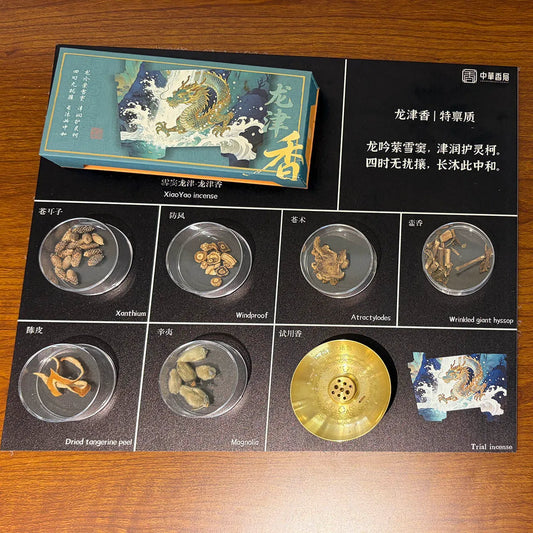
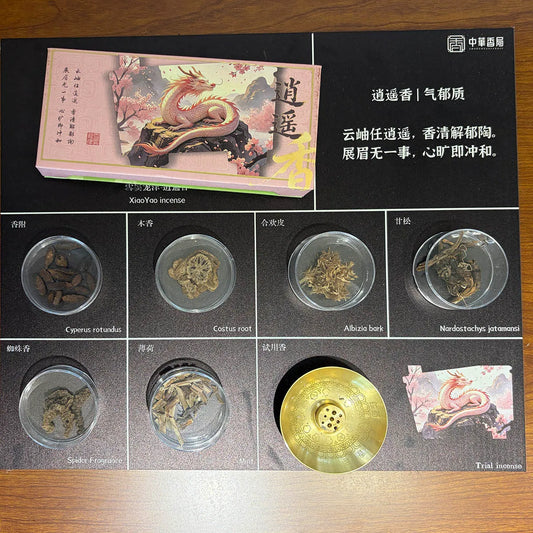
Our blended incense sticks are pressed by hand from woods, roots, resins, and flowers. Start with two.
Frequently Asked Questions
Why do Chinese burn incense?
The reasons in these texts are social and personal. An incense was a gift, an evening's entertainment, and a way to keep a person in mind after they moved. There was also a trade in it, with a state office that supplied materials and burners for court banquets. We tell that story in the history of the Xiang Yao Ju. The wider picture is in the six domains of Chinese incense culture.
How many sticks should I burn?
One at a time. Two people can smell one stick. No particular number changes what the incense is doing.