Best Incense Sticks for Study: How to Choose a Scent for Focus
There is a particular kind of distraction that has nothing to do with your phone.
You sit down to study, open the book, and five minutes later you are reading the same paragraph for the third time. The room is quiet, but your mind is not.
This is one reason some people use incense while studying. Not because a burning stick can do the studying for you, and not because a particular fragrance is a shortcut to better grades. The more useful role of incense is much simpler: it can help make the beginning of a study session feel distinct from the rest of the day.
The important part is choosing the right kind.
For study, the best incense sticks are usually not the strongest ones. They are the scents that remain pleasant in the background, don't compete with the work in front of you, and can become part of a repeatable routine.
What makes incense good for studying?
A study scent has a slightly different job from an incense you might burn simply to perfume a room.
When you're relaxing, you may want something rich and noticeable. When you're studying, too much fragrance can become another source of stimulation.
A useful study incense should pass three tests:
| What to look for | Why it matters |
|---|---|
| Moderate aroma | You should notice it without repeatedly thinking about it. |
| A clean, natural scent profile | Complex perfume-like blends can become tiring during a long session. |
| A predictable burn | A consistent burn can become a useful boundary for a study block. |
That last point is easy to overlook.
People often think of incense only as fragrance. But a burning stick also gives a study session a beginning, a middle and an end. Some incense users describe using a stick as an analog timer: when it finishes, they reassess what they are doing rather than relying on another digital notification.
That makes incense surprisingly useful for people who struggle with getting started—or with losing track of time once they do.
The best incense sticks for study, by task
There isn't one universally "best" incense for studying.
Reading a difficult textbook, memorizing vocabulary and writing a paper are different kinds of mental work. The scent you enjoy for one may not be the scent you want for another.
Sandalwood — the easiest place to start
If you are buying incense specifically for studying and don't know where to begin, sandalwood is one of the safest starting points.
Its character is usually warm, smooth and woody rather than sharp or sugary. That makes it relatively easy to keep in the background while reading or writing.
Sandalwood is particularly suited to:
- long reading sessions
- essay writing
- research
- reviewing notes
- quiet desk work
There is also a practical reason sandalwood comes up repeatedly in discussions about incense and studying. In Reddit's incense community, people looking for a study scent repeatedly mention sandalwood, including users who say they use it while studying or practicing music.
That doesn't prove that sandalwood improves academic performance. It does tell us something useful: the scent profile tends to work for people who want calm rather than stimulation.
Frankincense — for slower, more reflective work
Frankincense is a different proposition.
It is resinous, deeper and more distinctive than a straightforward woody scent. If sandalwood feels like a quiet wooden desk, frankincense feels more like a library or a place of reflection.
It can suit:
- close reading
- philosophy or humanities
- journaling
- reviewing notes
- planning and reflection
Reddit users also describe frankincense as calming and useful for focus, although experiences vary considerably from person to person.
That variation is worth paying attention to. If you find yourself noticing the fragrance every few minutes, it is probably too prominent for the task.
Herbal incense — when you want something less heavy
Herbal incense can be a better fit if conventional woody incense feels too dense.
Traditional herbal formulas can contain combinations of roots, woods, flowers, spices and aromatic botanicals. Instead of smelling like a single fragrance note, they can develop gradually as the stick burns.
This is particularly interesting for people who don't want their study space to smell like a modern room fragrance.
But there is an important distinction:
Natural does not automatically mean subtle.
A natural incense can still be intense. For studying, the quality of the blend and the amount you burn matter as much as the ingredient list.
A simple guide to choosing incense for different kinds of studying
| If you're doing... | Look for... | Avoid... |
| Long reading | Soft woods, sandalwood, gentle resins | Very sharp or sweet fragrances |
| Writing | Warm woods or restrained herbal notes | Heavy, room-filling scents |
| Memorization | A familiar scent you can use consistently | Constantly changing fragrances |
| Creative work | Light, fresh or herbal profiles | Anything you keep stopping to smell |
| Late-night study | Calm, unobtrusive aromas | Strong stimulating or highly perfumed scents |
| Short review sessions | A predictable, moderate-burning stick | Burning several sticks at once |
The key word is consistent.
You don't need a different incense for every subject. In fact, constantly switching scents defeats one of the more useful reasons to include scent in a study routine: familiarity.
If the same aroma repeatedly accompanies the moment you sit down and begin working, it can become part of that transition.
Don't choose the strongest incense
This is probably the most important piece of advice in the entire guide.
A strong fragrance can feel impressive for the first five minutes and exhausting after an hour.
One Reddit discussion about using scent for concentration shows the other side of the equation: some people find background smells helpful, while others are highly sensitive to fragrance and find strong scents actively disruptive.
So instead of asking: "Which incense has the strongest scent?"
ask: "Can I stop noticing the scent after a few minutes?"
If the answer is yes, that is often a better sign for studying.
Your attention should be on the page—not on the incense.
How to use incense while studying
You don't need to burn incense for the entire time you are at your desk.
A simple routine is often better.
1. Light it before you start
Clear your desk, open the material you need, and light one stick.
The scent becomes part of the transition from everything else you were doing to the work in front of you.
2. Give the room a few minutes
Don't immediately decide that an incense is "too weak" or "too strong."
Let the fragrance develop.
If it already feels heavy in the first few minutes, it is unlikely to become more comfortable during a two-hour study session.
3. Use the burn as a natural boundary
A stick with a predictable burn time can give you a simple study block without another screen or alarm.
For example: Light → study → finish the section → when the stick ends, take a break and reassess.
Some incense users specifically describe this as a way of dealing with time blindness and avoiding getting trapped in one task for too long.
4. Don't automatically light another one
When the stick finishes, stop and check in.
Are you still focused?
Do you need a break?
Is the room becoming too fragrant?
The goal is not to keep burning incense. The goal is to create a study environment that works.
What about smoke?
This is where choosing incense for studying becomes different from choosing incense simply for fragrance.
You are sitting close to it, often for an extended period, with books, a laptop and sometimes a small room around you.
A few practical rules make sense:
Use one stick at a time.
More smoke does not create more focus.
Keep some airflow.
A study room should not become sealed with fragrance.
Use a stable, heat-resistant holder.
Ash should stay away from notebooks, keyboards and other flammable materials.
Pay attention to your own response.
If incense makes your eyes, throat or head uncomfortable, stop using it. A study aid that makes you uncomfortable is not a study aid.
And if you live in a dorm or share a room, check the building's rules and ask your roommate first. Fragrance sensitivity is real, and not everyone experiences scent in the same way.
Can incense actually help you focus?
It can become part of a focus routine. That is different from saying that incense itself makes you smarter or guarantees better concentration.
The most convincing use case is behavioral:
same desk + same scent + same preparation ritual + same type of focused work.
Over time, the scent becomes familiar.
That idea also appears naturally in discussions among people who use fragrance for concentration: some describe using scent intentionally as a grounding or focus cue, while others find fragrance distracting if it becomes too strong.
In other words, incense is best treated as an environmental cue—not a cognitive shortcut.
Why natural herbal incense can make sense for a study ritual
Modern fragrance products are often designed to make an immediate impression.
Traditional herbal incense takes a different approach.
A well-made herbal incense is built around raw aromatic materials rather than a single synthetic "study scent." Woods, roots, resins, flowers and herbs can produce a quieter and more layered aroma as they burn.
For someone using incense every day, that difference matters.
You are not trying to turn your study room into a perfume store.
You are creating a small sensory marker for a particular part of your day.
At Panda Incense, our approach comes from traditional Chinese herbal incense rather than modern fragrance-first products. The intention is not to create an artificial "focus smell," but to work with natural aromatic materials and traditional formulations in a way that fits an everyday ritual.
That makes herbal incense particularly suited to people who want their study environment to feel calm, grounded and natural rather than heavily perfumed. Explore our incense for focus & clarity collection.
A better way to find your study scent
Don't buy five different incense scents and try to decide which one makes you "more productive."
Start with one.
Use it for several study sessions under roughly similar conditions.
Notice three things:
- Do you start more easily?
- Can you forget about the scent once you begin working?
- Do you still enjoy the room after the session ends?
Those answers are more useful than a generic list of "best scents."
For most people, a good starting point is a restrained sandalwood or herbal incense. If you prefer a deeper, more contemplative atmosphere, try frankincense or another resin-forward blend.
The best incense sticks for study are ultimately the ones that become part of the background—not the main event.
Frequently Asked Questions About Incense for Studying
What is the best incense for studying?
Sandalwood is a good starting point because its warm, woody character tends to work well as a background scent during reading and writing. Herbal and frankincense-based incense can also work depending on your preference.
What incense is good for concentration?
Look for incense with a moderate, balanced aroma rather than simply choosing the strongest fragrance. Sandalwood and restrained herbal incense are practical choices for concentration-focused work.
Does incense help you study?
Incense should not be considered a replacement for effective study methods. Its more realistic role is as part of a consistent study environment or start-of-session ritual.
Is sandalwood incense good for studying?
Yes. Sandalwood is particularly well suited to reading, writing and longer study sessions because its woody aroma can remain in the background without requiring constant attention.
How long should I burn incense while studying?
There is no universal amount of time. One practical approach is to use a single stick as a study block, then stop when it finishes rather than continuously burning multiple sticks.
Can incense be distracting while studying?
Yes. If the fragrance is strong enough that you keep noticing it, it is probably too strong for your study space. People also vary significantly in fragrance sensitivity.
What is the best incense for reading?
Sandalwood is a strong starting point for reading. Frankincense can suit slower, reflective reading, while lighter herbal blends may appeal to people who prefer a fresher atmosphere.
Is incense safe to use in a dorm room?
Many students use incense in dorm rooms and small apartments. Because smaller spaces hold fragrance longer, it is important to consider ventilation, room rules, and the preferences of roommates. Always use incense responsibly and place it on a stable, heat-resistant surface.
The short answer
If you want incense sticks for study, don't look for the incense that promises to "boost your brain."
Look for the one you can light, notice for a moment, and then forget about.
A good study scent should mark the beginning of focused time without competing with it.
That is a much smaller promise—but a much more useful one.
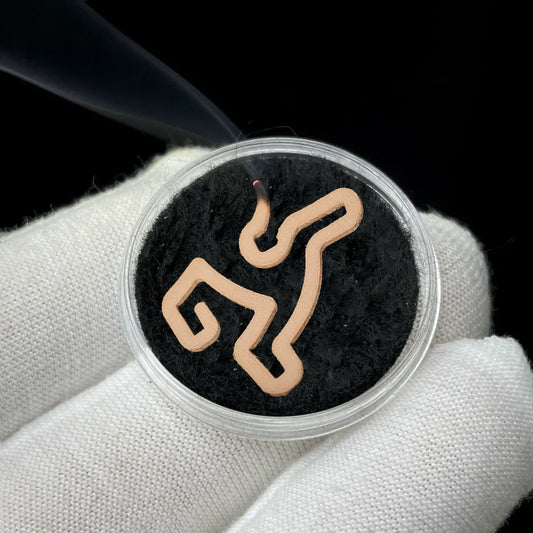
If you don't burn incense, check our wearable incense jewelry made with carefully selected natural ingredients for reading, studying, reflection, and everyday rituals.