How to Burn Incense Properly: A Beginner’s Guide to Sticks, & Cones
Lighting incense takes seconds. Burning it well takes a little more attention.
The same incense can smell soft and woody in one room, then smoky or acrid in another. A cone that burns beautifully on an open dish may struggle inside a closed burner. And when an incense stick keeps going out, the problem may have less to do with the incense itself than with the air around it.
If you're learning how to burn incense at home, start with three things: the incense, the burner, and the airflow. Get those right, and the rest is simple.
If you are still choosing your first incense, start here: → The Complete Guide to Natural Incense
The Short Answer: How to Burn Incense
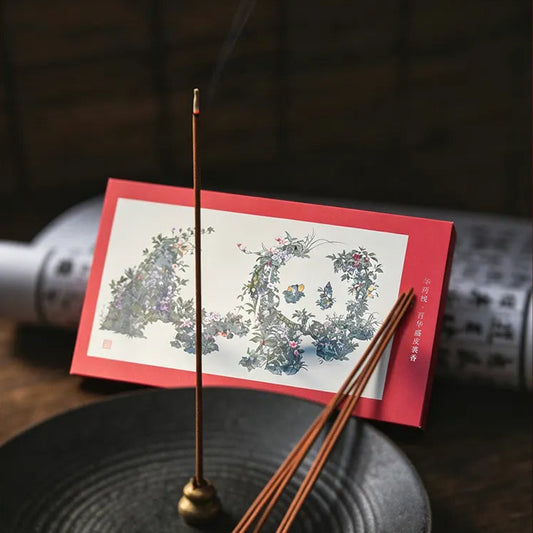
For a traditional incense stick, place the unlit end securely in an incense holder. Light the exposed tip until a small flame appears and the end begins to glow. After a few seconds, gently blow out the flame.
What remains should be a small, glowing ember with a thin stream of smoke.
That's what you want.
Incense is meant to smolder rather than burn with an open flame. From there, the quality of the experience depends on the type of incense, the burner, the amount of airflow, and how much incense you choose to burn.
What You Need to Burn Incense
You don't need much to get started:
- Incense sticks or cones
- A heat-resistant incense holder or burner
- A lighter or match
- A stable, non-flammable surface
For incense sticks, choose a holder that keeps the stick secure and catches the ash as it falls. A simple ceramic or metal holder works well.
For cones, use a flat, heat-resistant burner. Cones concentrate more burning material into a smaller area and can become quite hot as they smolder.
The holder is more than a decorative accessory. It keeps the incense stable, catches ash, and can affect how much air reaches the burning material.
This matters particularly with cones and backflow incense. A beautiful enclosed burner can sometimes restrict airflow enough to make a cone burn unevenly or go out.
If you're new to incense, an open, uncomplicated holder is often the easiest place to start.
How to Light an Incense Stick
1. Secure the stick
Place the unlit end into your incense holder. Make sure the stick is stable and that falling ash will land safely inside the holder.
Never balance a burning incense stick against a random object or place it directly on a flammable surface.
2. Light the tip
Use a lighter or match to ignite the exposed end.
Let the flame catch for several seconds. You are looking for the beginning of an even red glow at the tip rather than a large flame.
3. Extinguish the flame
Gently blow out the flame.
The tip should continue to glow and produce a thin ribbon of smoke. If the ember disappears immediately, relight the tip and give it another few seconds before extinguishing the flame.
4. Leave it alone
Once the incense is smoldering, you don't need to keep adjusting it.
Avoid repeatedly blowing on the ember. Strong airflow can make incense burn faster or unevenly, while insufficient airflow can cause it to go out.
A good burn is usually quiet: a steady ember, a light stream of smoke, and a fragrance that develops gradually.
How to Burn Incense Cones
The basic process is similar, but cones behave differently from sticks.
Place the cone upright on a heat-resistant surface with the pointed end facing up. Light the tip and allow a small flame to form. After several seconds, gently extinguish the flame and let the cone smolder.
Because a cone concentrates the incense into a smaller area, it often produces a more noticeable burst of fragrance and smoke than a slender stick.
That can be appealing when you want a shorter, more concentrated experience. In a small room, however, one cone may be more than enough.
Many incense cones burn for roughly 15–30 minutes, although the actual time depends on their size, ingredients, and density.
A note about backflow cones
Backflow cones are designed for burners that direct smoke downward, creating the familiar waterfall effect.
The visual effect is beautiful, but the burner changes the airflow around the cone. If the setup is too enclosed or the airflow path is obstructed, the cone may burn unevenly or stop before reaching the bottom.
If your backflow cone keeps going out, check the burner before assuming there is something wrong with the incense. Sometimes the problem is simply oxygen.
The Air Around Your Incense Matters More Than You Think
A room does not need to be filled with smoke for incense to smell good.
In fact, too much smoke can make the fragrance harder to appreciate.
The ideal environment is usually somewhere between a sealed room and a strong draft. A slightly open window or door can help move smoke through the room without disturbing the ember.
Avoid placing incense directly beneath an air-conditioning vent, beside a fan, or next to an open window where the airflow is strong.
This is especially important with cones. Recent incense discussions repeatedly point to insufficient oxygen and restricted airflow as reasons cones fail to burn completely.
Think of airflow as a balance:
- Too little air → smoke accumulates and the ember may struggle.
- Too much direct airflow → the incense may burn too quickly or unevenly.
- Gentle circulation → smoke disperses while the ember remains steady.
That middle ground is usually where the fragrance feels clearest.
Why Does My Incense Smell Burnt?
This is one of the most common questions beginners have. The first thing to understand is that incense does not necessarily smell the same before and during burning.
Combustion changes aromatic materials. Some ingredients become smoky, woody, bitter, or ashy when heated. The structure of the incense matters, too. Bamboo-core sticks, charcoal-based incense, wood-based incense, cones, and resin-rich blends can all produce different burning characteristics.
And sometimes the problem isn't the fragrance at all.
If a burner has accumulated sticky smoke residue, that residue can itself develop an acrid, stale-smoke smell when heated again. Incense users have reported this particularly with enclosed holders and backflow burners.
So if an incense suddenly smells worse than it did the first time, try cleaning the burner before changing the incense.
If your incense smells too smoky, try:
- Burning one stick instead of several
- Moving it farther from your face
- Increasing gentle ventilation
- Trying a different incense format
- Cleaning residue from the burner
- Comparing a stick with a cone of the same fragrance
And remember: more smoke does not necessarily mean more fragrance.
Why Does My Incense Keep Going Out?
If an incense stick or cone repeatedly goes out, check the burn before blaming the incense.
The most common possibilities are:
The ember may not be fully established.
After lighting, make sure the tip is visibly glowing before extinguishing the flame.
The burner restricts airflow.
This is particularly common with enclosed cone burners.
The incense has absorbed moisture.
Humidity can affect how some incense materials burn.
The airflow is too strong.
A fan, open window, or air-conditioning vent can disturb the ember.
For cones, airflow is particularly important because the burning material needs enough oxygen to sustain the smolder. A useful test is simple: if a cone repeatedly goes out inside one burner but burns normally on an open, heat-resistant surface, the burner is likely part of the problem.
How Long Should You Burn Incense?
There is no universal “correct” burn time.
It depends on the incense, its size and composition, the size of your room, and how much fragrance you prefer.
A long incense stick may be designed for an extended burn, while a small cone may finish within 15–30 minutes.
You also don't have to finish an entire stick.
If the fragrance becomes too strong, extinguish it and save the remaining incense for another time. A shorter burn can be more pleasant than allowing the room to become saturated with smoke.
For everyday use, start with less than you think you need.
You can always light another stick later.
Sticks, Cones, or Resin?
Different forms of incense create different kinds of experiences.
| Type | What to expect | Best for |
|---|---|---|
| Incense sticks | Gradual, controlled fragrance | Everyday use |
| Incense cones | More concentrated fragrance and smoke | Shorter sessions |
| Backflow cones | Fragrance with a visible smoke effect | Decorative rituals |
| Resin incense | Deeper, more intense aromatic smoke | Traditional burning and ritual |
If you're new to incense, sticks are usually the easiest place to begin. They burn gradually and require very little equipment. They are especially practical for reading, working, meditation, or simply adding a subtle fragrance to a room.
Resins are different. Frankincense, myrrh, oud and other loose aromatics are generally heated rather than burned like a conventional stick, often using charcoal or a specialized burner.
That is a separate technique—and worth learning on its own.
How to Choose the Right Incense for Your Space
The “best” incense isn't necessarily the strongest one.
For a bedroom or reading corner, a softer woody or herbal fragrance may feel more natural than a dense, heavily perfumed cone.
For meditation or a slower evening ritual, sandalwood, agarwood, or resinous fragrances can offer greater depth.
For a larger, well-ventilated room, you have more freedom to experiment with stronger blends.
The more useful question is not:
What smells strongest?
It's:
What smells good when it is actually burning in my space?
That distinction matters. An incense that smells beautiful in the package may behave very differently once heat and combustion enter the picture.
A Few Incense Habits Worth Keeping
Burn less. One stick is often enough.
Give the fragrance room. Don't place the incense directly beside your face.
Keep the air moving gently. A little ventilation is usually better than a sealed room or a strong draft.
Clean your burner. Ash and aromatic residue accumulate over time and can affect the next burn.
Let the incense finish naturally when possible.
If you need to stop early, extinguish it safely and allow the ember to cool completely.
Choose the burner for the incense—not the other way around.
A beautiful holder that doesn't provide enough stability, heat resistance, or airflow is not a good holder.
Don't chase the smoke.
Visible smoke is part of combustion, not a measure of fragrance quality.
How to Burn Incense Safely
Incense involves both heat and smoke, so basic fire safety matters.
Always:
- Use a stable, heat-resistant holder.
- Keep burning incense away from curtains, paper, bedding, and other flammable materials.
- Keep it away from children and pets.
- Never leave burning incense unattended.
- Place the burner somewhere it cannot easily be knocked over.
- Allow ash and the holder to cool before cleaning.
- Use appropriate ventilation rather than deliberately filling a closed room with smoke.
If the smoke feels irritating or overwhelming, extinguish the incense and increase ventilation.
There is no benefit to forcing yourself through a burn that makes the room uncomfortable.
The Best Incense Burn Is Usually the Quietest One
Incense does not need to announce itself.
A well-chosen stick can sit quietly in the corner of a room, releasing fragrance gradually as the ember moves through the material. You may notice the wood first, then something warmer or sweeter underneath. Ten minutes later, the room can smell different again.
That is part of what makes incense interesting.
The experience changes with the material, the burner, the air, and even the room itself. Learning how to burn incense properly is really learning how those elements work together.
Start with one stick. Give it space. Let the fragrance arrive before deciding whether you like it.
The strongest scent isn't always the most memorable one.
Explore Panda Incense Collection
Continue Your Incense Journey
The Complete Guide to Natural Incense
Understand ingredients, fragrance styles, and how to choose the right incense. → Blog
7 Best Incense Scents for Beginners
Discover beginner-friendly scents and find your preferred aroma. → Blog
FAQ
How do you burn incense sticks?
Place the incense stick securely in a suitable holder. Light the tip until a small flame and glowing ember appear. Gently blow out the flame and allow the incense to smolder.
How do you burn incense cones?
Place the cone upright on a heat-resistant incense burner. Light the tip for several seconds, then extinguish the flame once a glowing ember has formed. Let the cone smolder on its own.
How long does incense burn?
Burn time varies by size, ingredients and format. Many incense cones burn for around 30 minutes, while longer sticks can burn considerably longer.
Why does my incense smell burnt?
Some incense naturally develops smoky or woody notes during combustion. Excess smoke, poor ventilation, low-quality or unsuitable materials, and residue inside a burner can also contribute to a burnt smell. Cleaning the burner and improving gentle airflow are good first steps.
Why does my incense keep going out?
The ember may not be fully established, the incense may be exposed to strong airflow, or the burner may not provide enough oxygen. This is particularly common with cones in enclosed burners.
Should you open a window when burning incense?
Gentle ventilation can help prevent smoke from accumulating, especially in smaller rooms. Avoid placing the incense directly in a strong draft.
Can you burn only part of an incense stick?
Yes. If the fragrance becomes too strong, extinguish the incense safely and save the remaining portion for another burn.
Do you need an incense holder?
A proper holder is strongly recommended. It keeps the incense stable, catches ash and provides a heat-resistant surface. Cone incense should be burned on a suitable heat-resistant burner.
What is the best incense for beginners?
Incense sticks are generally the easiest starting point. They require minimal equipment and offer a slower, more controllable fragrance experience than many cones or loose resins. Learn more about best incense for beginners.