Not Every Chinese Incense Is Medicinal
Share
All medicinal incense is traditional Chinese incense. The reverse is not true. The difference is not the ingredient list. It is who makes it, and what that person knows.
What the category contains, why the craft keeps two characters both read he (合香 and 和香), is covered in our guide to agarwood and medicinal incense. This page answers a narrower question: what has to be true before a stick earns the name yaoxiang (medicinal incense).
The maker decides, not the label
Chinese incense is a broad craft. Much of it is made by people who know fragrance well and medicine not at all. That is honest incense, and some of it is good. It is not yaoxiang.
Medicinal incense asks more of its maker. Each material arrives with a record in the herbal formularies: its nature, its flavor, its traditional uses. Blending them means reasoning in that vocabulary, not in perfumery's. A yaoxiang maker needs two educations, one in the incense tradition and one in the herbal canon.
That requirement shaped the trade. In China, yaoxiang workshops often sat beside apothecaries and were run by the same families, because both trades worked from the same books.
Two educations, not one
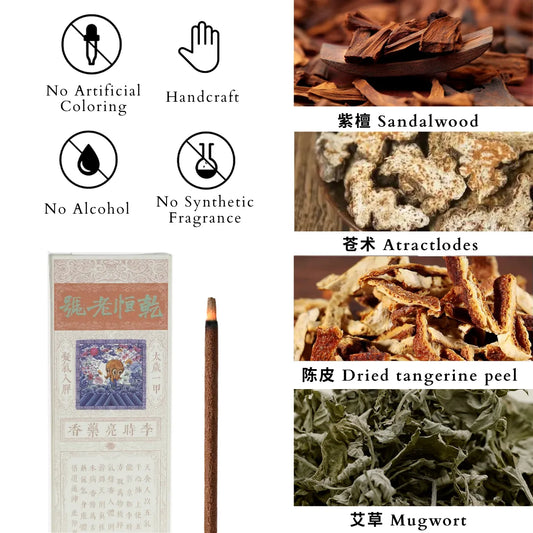
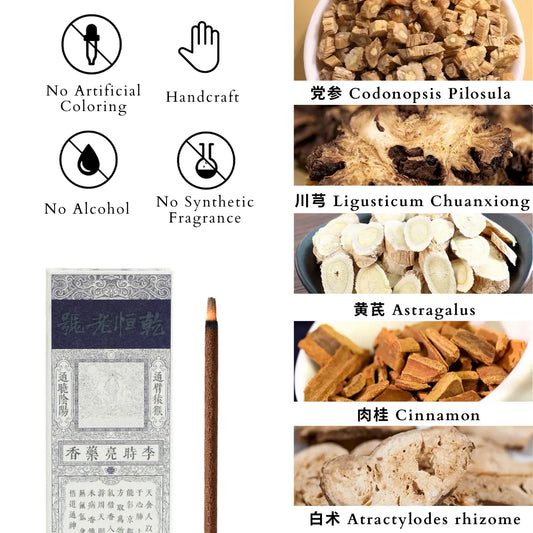
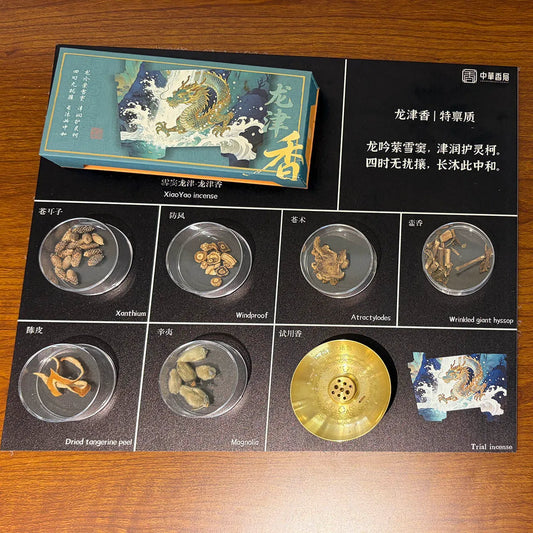
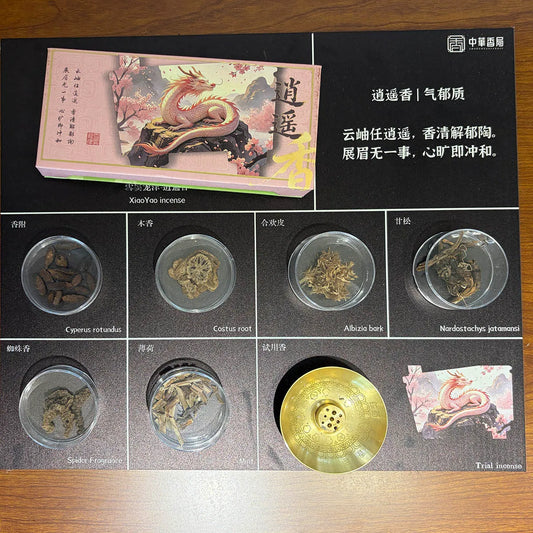
The maker reads materials the way a pharmacy reads them. Not "herbs" as a vibe, but named materials with recorded entries: sandalwood, costus, clove, cypress, osmanthus. Each is graded and processed by formulary habit, not kitchen habit. We compared the same plant on a spice rack, in a dispensary, and in an incense workshop in our guide to Chinese incense herbs.
The maker doses. No shortcut for this part. The classical manuals say plainly that some materials harm past a certain amount while others are safe in any quantity. That is dosage logic, imported from prescribing. A maker without the medical knowledge can copy proportions but cannot reason about them. The first time a material runs short or a batch burns hot, the formula drifts.
The maker stands in a lineage. No weekend course teaches this. Yaoxiang moves through apprenticeship and family lines. Our own blends descend from a workshop on China's national intangible cultural heritage list for traditional incense making, now in its fifth generation. The formulas are inherited, and what gets inherited is the dosing judgment.
治未病: what the craft was for
The tradition's own answer comes from the Huangdi Neijing: 治未病, governing illness before it exists. The Suwen puts it plainly: a sage governs those who are not yet ill, rather than those who have already fallen ill. Fragrance belonged among the gentle daily habits, with tea and sleep and the change of seasons, that kept a household level before imbalance turned into illness. Yaoxiang was made to be lived with.
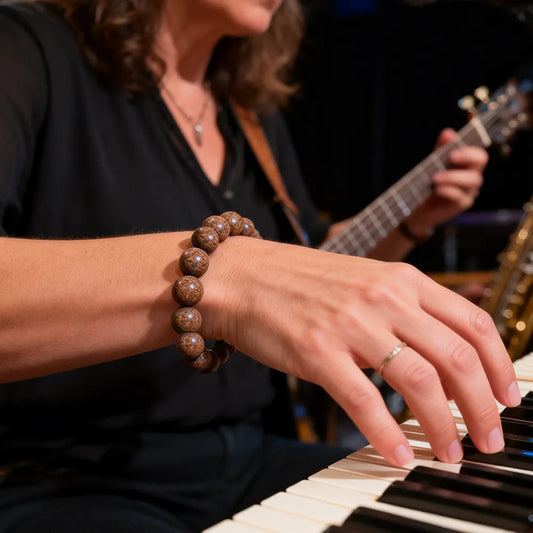
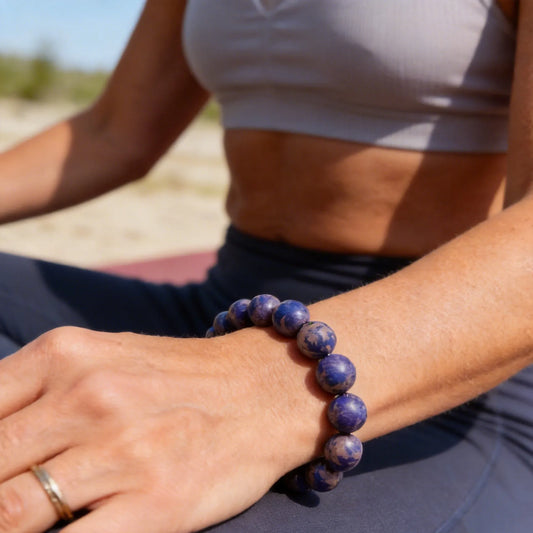
To deeply explore that idea, read our piece on incense beads and patina, where the same philosophy runs through a wearable. Here one sentence is enough: the craft's oldest purpose was prevention, and prevention in this tradition was a daily routines.
How to tell the difference when you shop
Three quick checks:
- Are the materials named, or just "natural"? Yaoxiang names its herbs and resins. Vagueness is a flag.
- Can the maker talk about the formula? Not recite it — explain it. What leads, what supports, why that material and not another. (Our agarwood guide breaks down the structure a maker should be able to speak to.)
- Who made it? A lineage, a workshop, a named maker — or a private label with no answer.
Incense made this way smells different, too: the layers are built to answer one another, which is why two people can burn the same blend and notice different things — we wrote a whole piece on that.